The Best day trips from Benidorm.
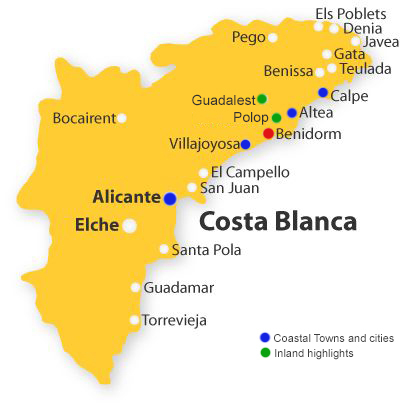
Benidorm makes for the best base if your intention is to explore the northern part of the Costa Blanca. That’s primarily because of its centralized location and because of all its transport options (it’s the biggest city in this region). I cover Benidorm as a base here.
So what are the best day trips from Benidorm? That’s the subject of this post.
Villajoyosa
We really liked Villajoyosa and it’s a very easy day trip from Benidorm.
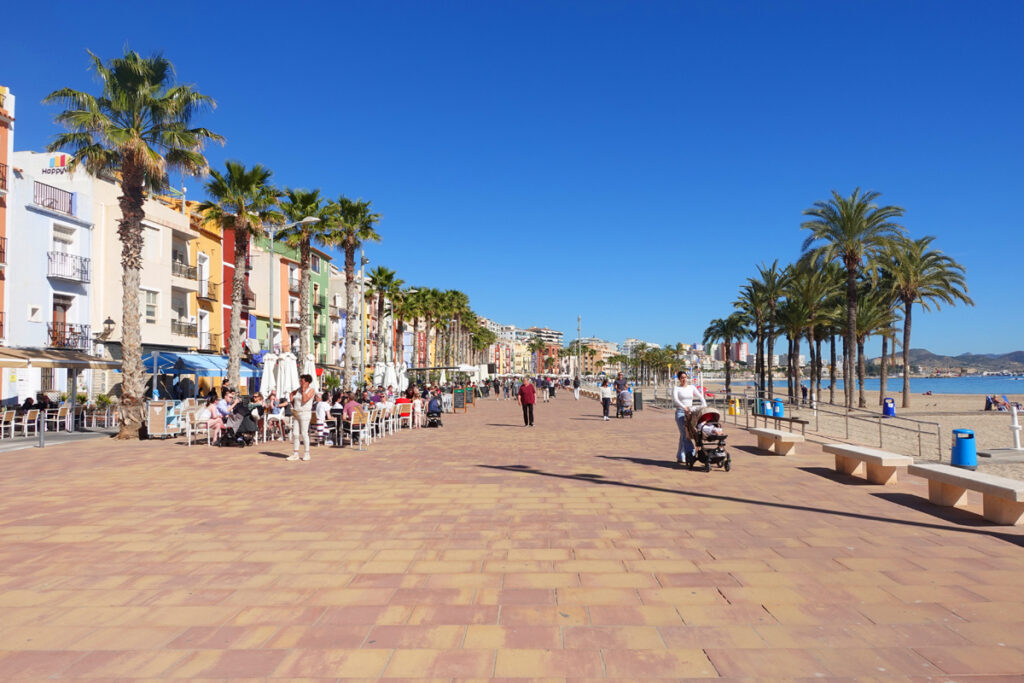
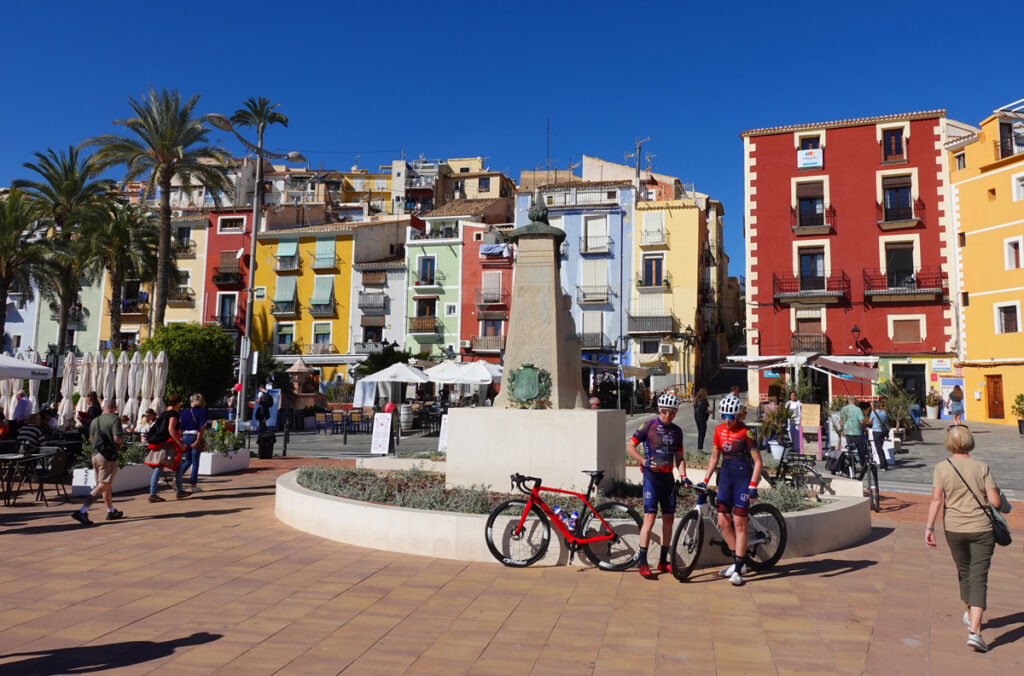
Villajoyosa is coastal town that’s considered the most colourful place in Spain. Because of this, it was declared one of Spain’s” Sites of Cultural Interest” due to its special identity among seaside towns.
What to see in Villajoyosa: Villajoyosa has a long seaside promenade lined by colourful buildings, an interesting old town that includes defensive walls, colourful buildings, plazas and churches. It’s one of the prettiest coastal towns we’ve seen in Spain.
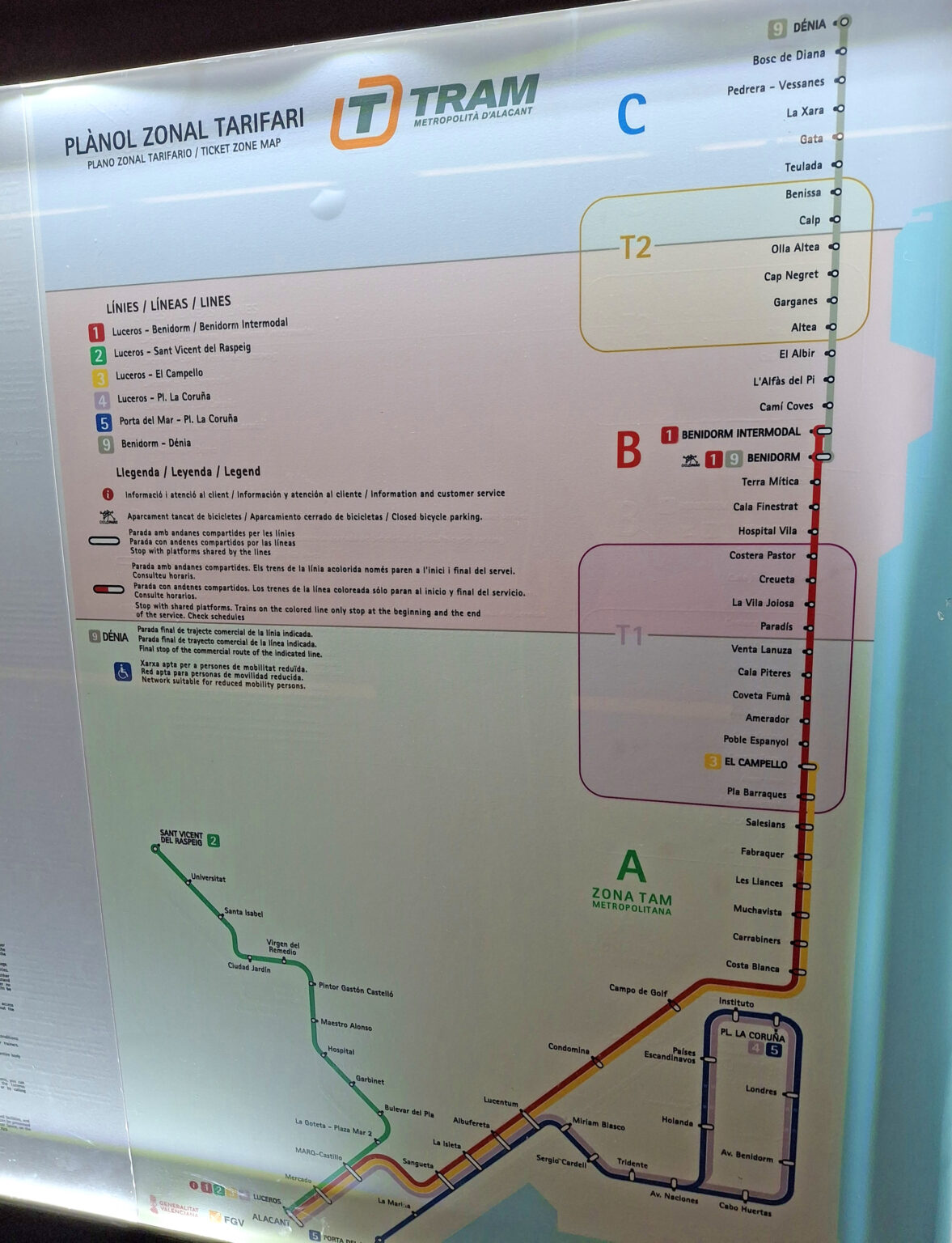
How to get to Villajoyosa: You can take the L1 tram from Benidorm (either the “Benidorm” tram stop or the “Benidorm Intermodal” tram stop) and be in Villajoyosa in under 20 minutes (getting out at either the “La Vila Joiosa” or “Creueta” tram stops). The L1 runs every 30 minutes between 6am and 10 pm. So getting from Benidorm to Villajoyosa is super easy (see the tram map below).
Tram map. You can click to enlarge.
Altea
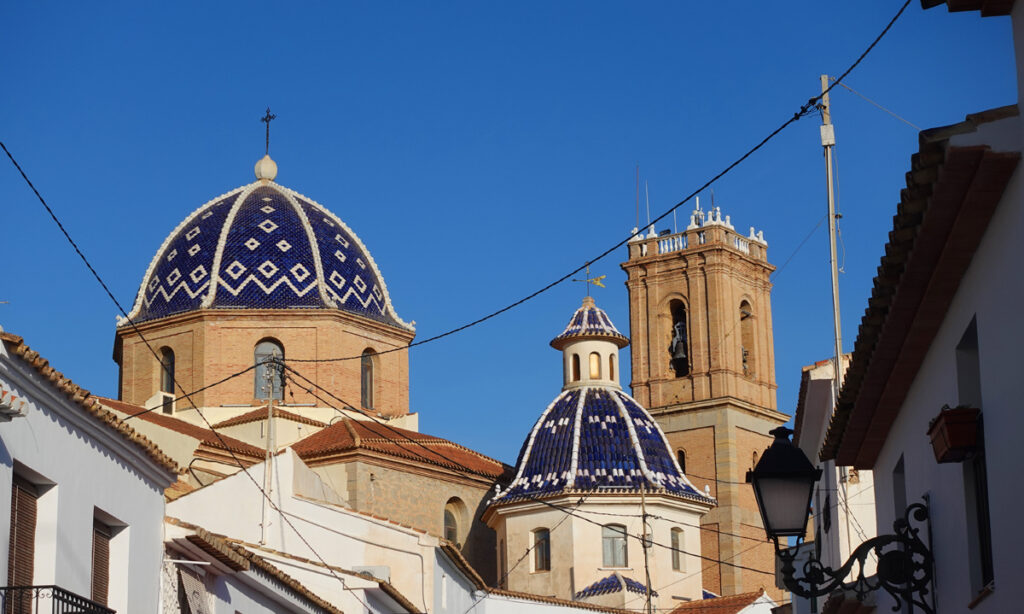
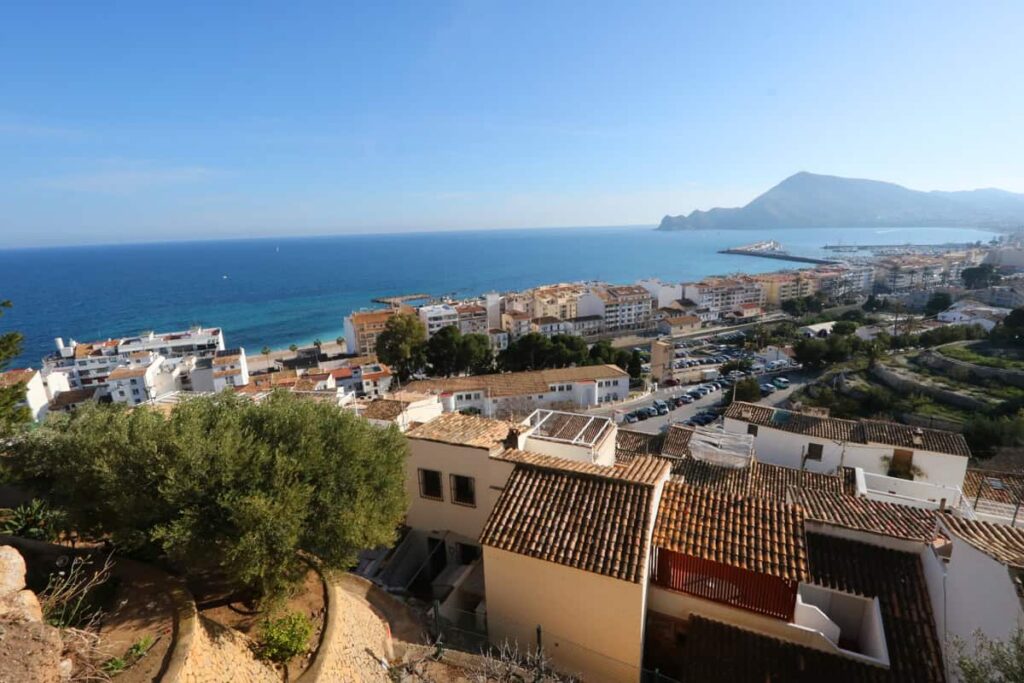
Altea is a very popular day trip from Benidorm, a white village sitting on a high point looking down over the coast. It’s a pretty place with a blue domed church, white washed buildings, and several miradors looking out over the sea and mountains. Because of its popularity it also has lots of bars and restaurants for a town of its size. Altea also has a beach – you can walk down steps from the elevated old town which will take you across the railway tracks and across a main road to the beach. There you’ll find a seaside promenade lined with restaurants, cafes, shops, and recreational areas.
How to get to Altea: The L9 tram takes about 15 minutes between Benidorm (either the “Benidorm” tram stop or the “Benidorm Intermodal” tram stop) and Altea. Note that the L9 runs once an hour (not every 30 minutes) so make sure to plan your departure.
Guadalest
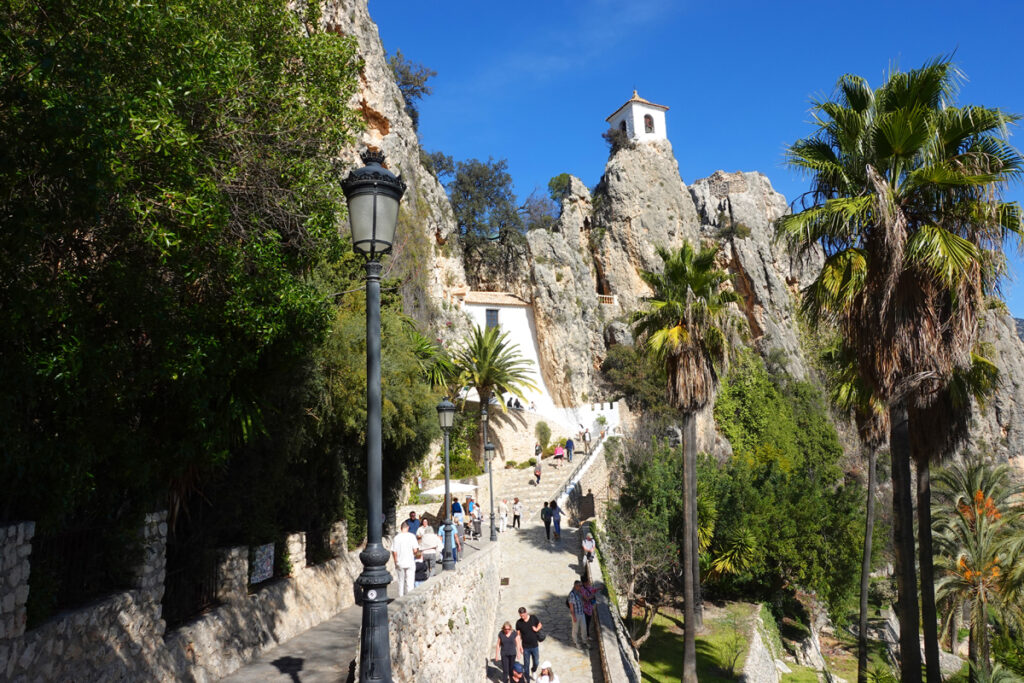
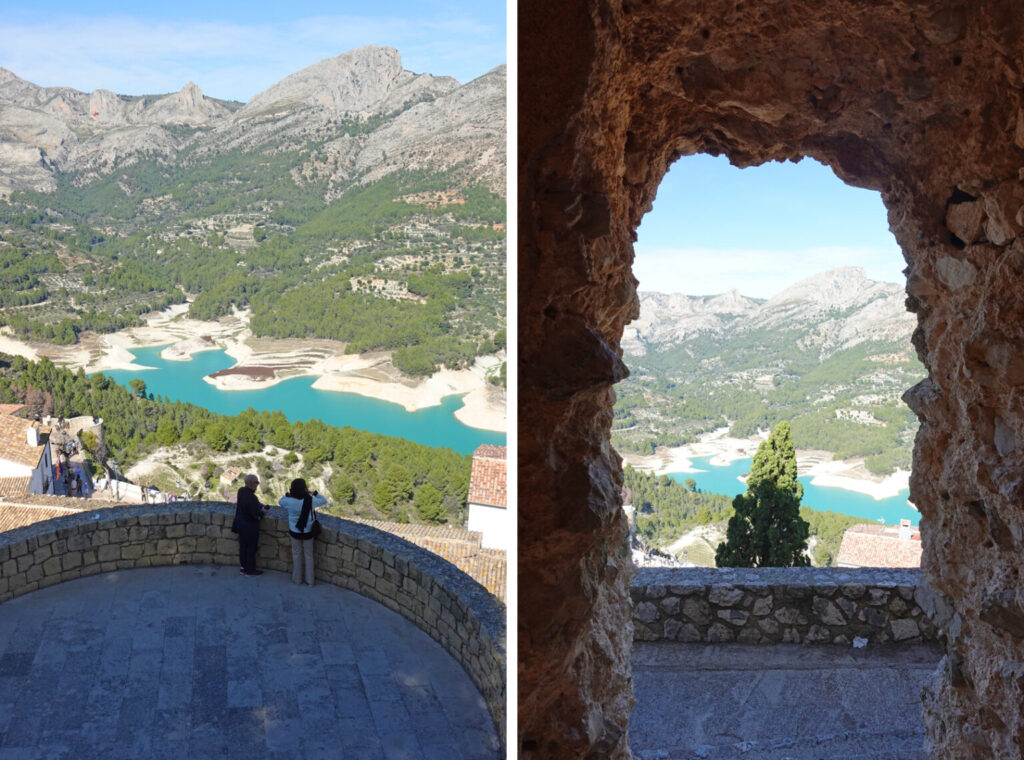
It’s one of the prettiest towns you’ll see in Spain, topped by an 11th century Moorish castle that gives you 360 views of the valley, mountains, and a bright blue water reservoir.
It’s just really quaint, a tiny town of cobblestones, small shops and cafés, and a historic center accessed through an arch in the rock. There are actually two old fortresses built on sharp crags of rock. El Castillo de la Alcozaiba is smaller and closed off, the Castillo de Guadalest can be accessed: buy your ticket at the city museum and go through the historic building and up to the castle. There are towers, miradors and a cemetery. The views are fabulous.
As I say, Guadalest is a popular place and I totally understand why that is. One of my highlights in the region. More on Guadalest.
How to get to Guadalest: We took a tour which also include Altea and the Fonts de l’Algar. It’s the easiest way to do it. Otherwise, you can also take a bus there from Benidorm. The #16 bus has 1 trip there and back daily, leaving at 10:10 am at Cala Finestrat. The trip to Guadalest takes about an hour. Coming back, the bus leaves at 1:30 PM…so that means you don’t have much time in Guadalest (2 ½ hours…enough but not ideal if you just want to relax and enjoy the charm of the town). Cost 7.50 Euros return.
Polop
Polop is a pretty inland town with impressive castle ruins sitting atop the town. From there you have fantastic views of the mountains and sea. A very pretty and authentic town that gets few tourists. Note: If you have your own wheels, take a detour on road CV-70. You’ll be looking down on Polop, seeing this hillside town superimposed on mountains in the background. Spectacular scenery.
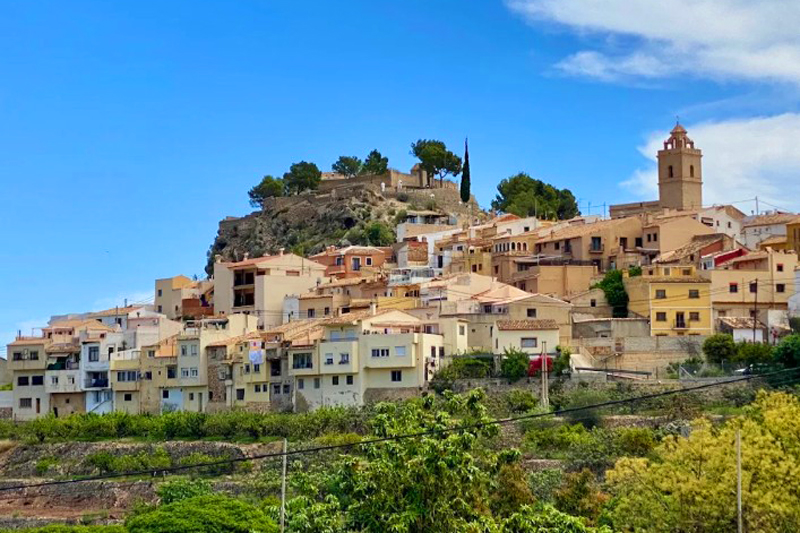
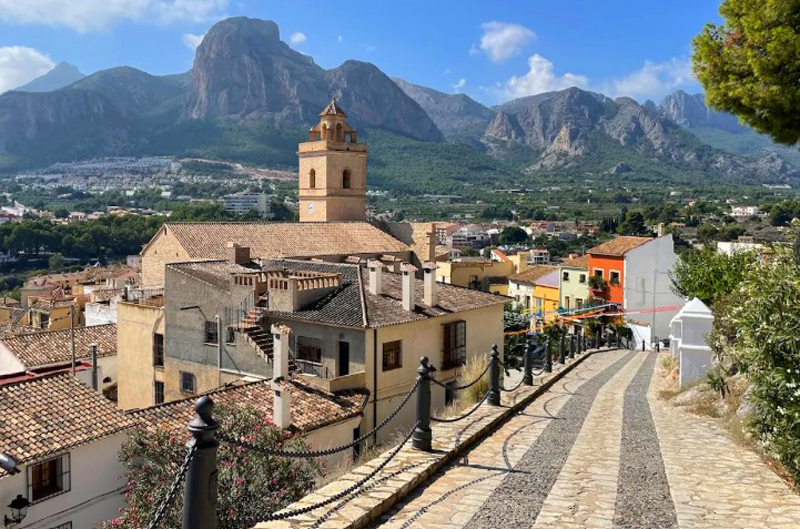
How to get to Polop: There are several buses that get you to Polop from Benidorm. The best is #52 which passes every 35 minutes and which takes about 25 minutes.
Calpe
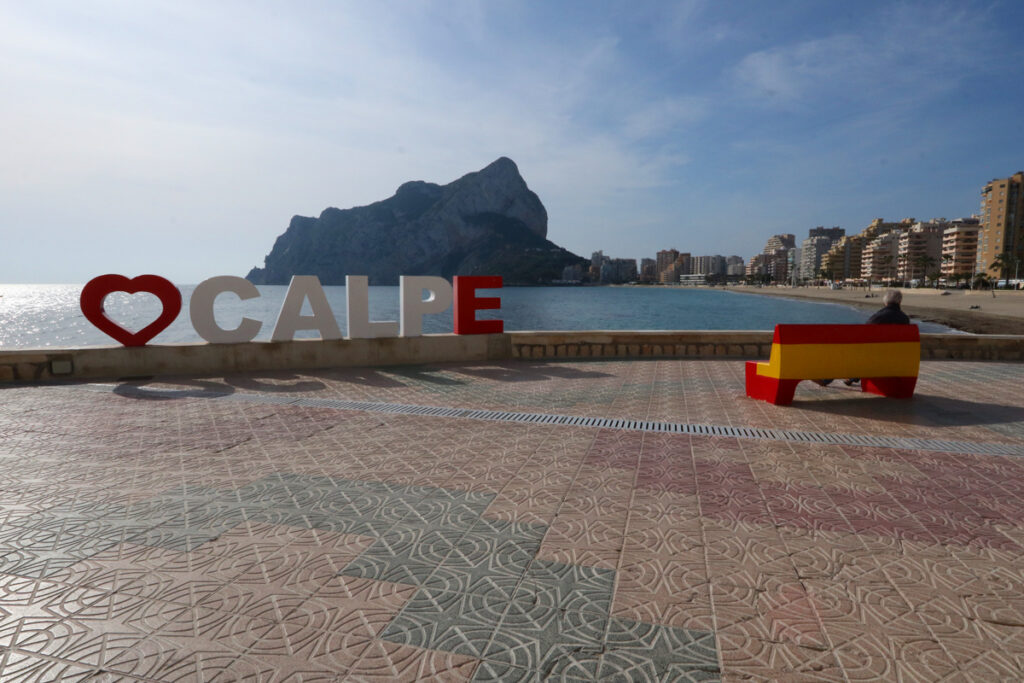
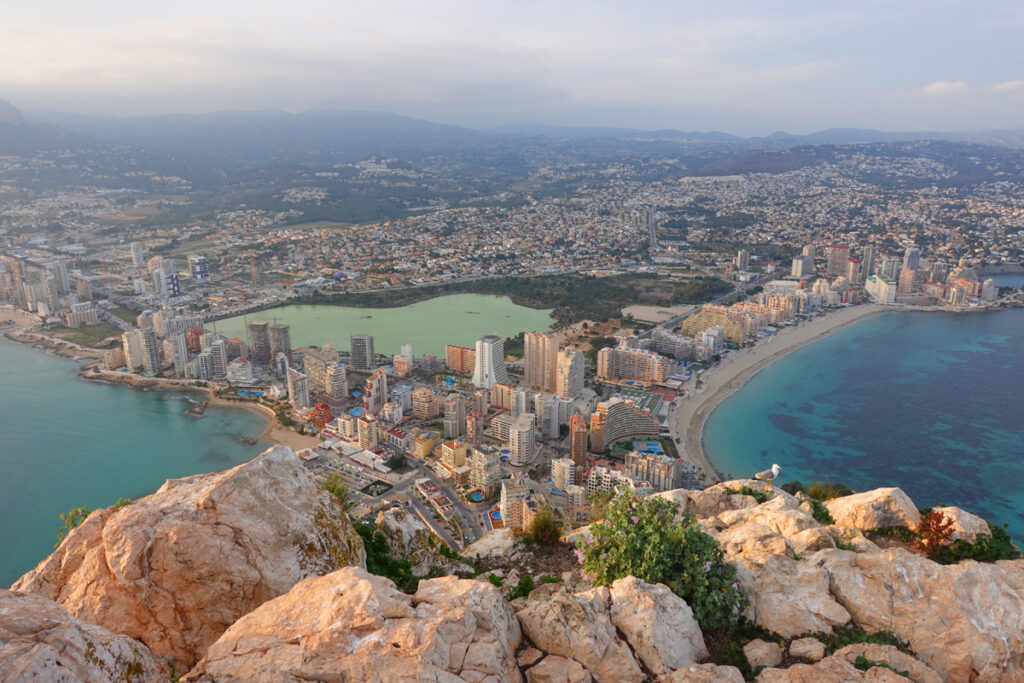
A little further up the coast, Calpe is home of the spectacular Peñón de Ifach, a huge limestone rock that dominates the Costa Blanca coastline. It is an incredible hike as I cover in this post.
But there’s more than that: Calpe has a long beach promenade lined with restaurants, an old town (with old walls, plazas and street art), and a saltwater lagoon that attracts lots of birds – the most famous being the pink flamingos.
How to get to Calpe: Calpe is on the L9 tram line and it takes about 35 minutes to Calpe (plus a 15 minute bus from the Calpe tram station to downtown). A very scenic tram ride along and through the mountains. Again, note that the L9 runs once an hour (not every 30 minutes) so make sure to plan your departure.
This post covers Calpe in detail
Alicante
The city of Alicante is the largest city in the Province of Alicante. Its highlight is the Castillo de Santa Bárbara, a castle built in the 9th century by the Moors. It overlooks the city with views of the entire coastline, so coming here is reason enough to visit Alicante. The city also has the pretty Santa Cruz neighbourhood, an impressive promenade as well as great beaches.
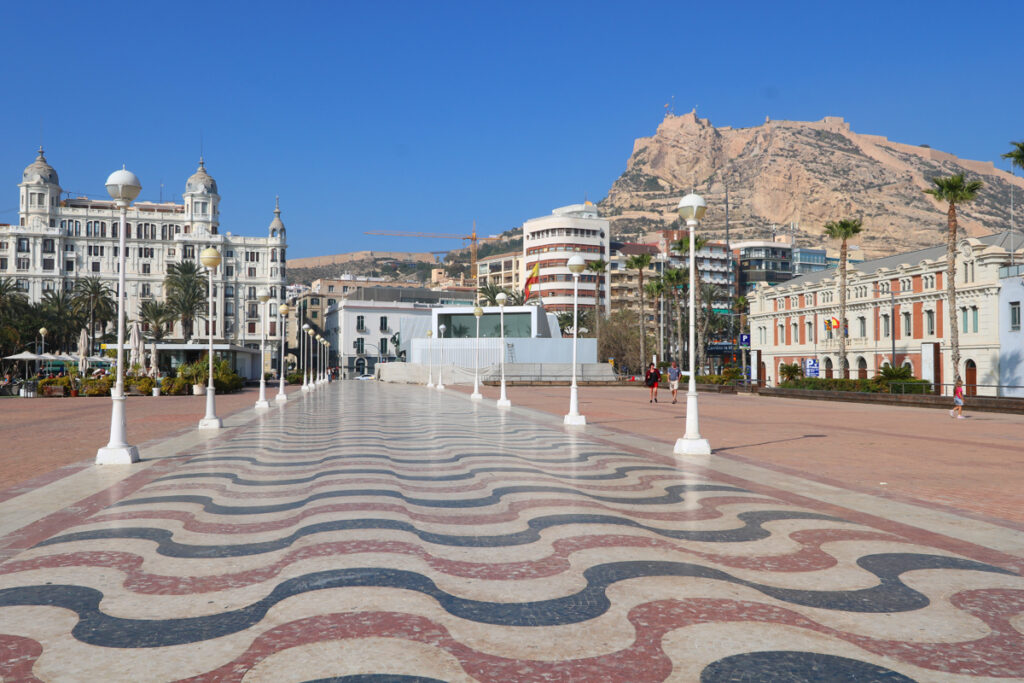
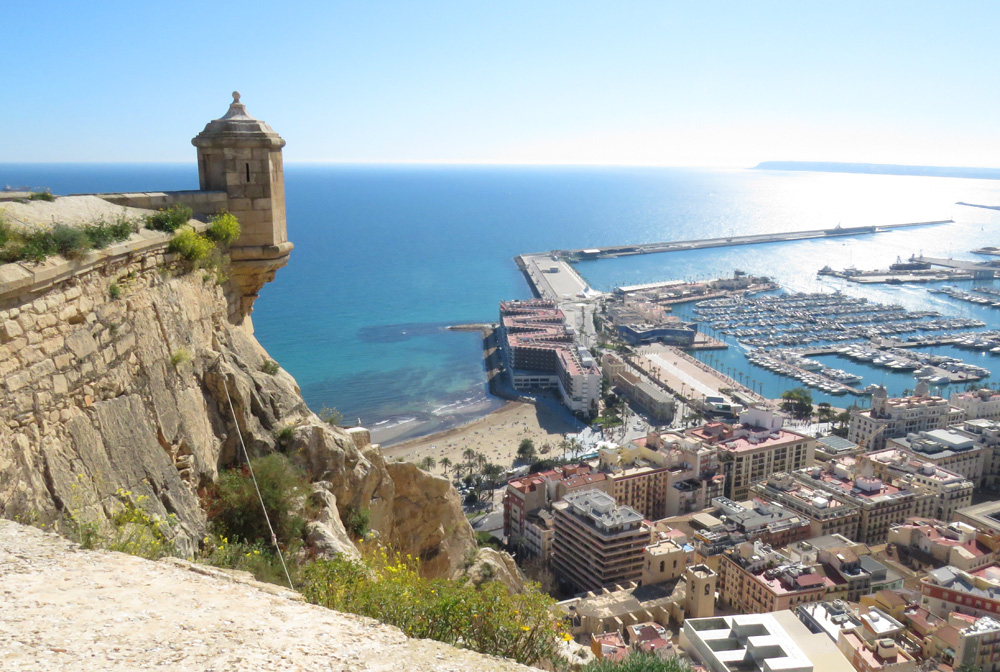
How to get to Alicante: The L1 tram takes you to the center of Alicante in 1 hr and 10 minutes (and passes every 30 minutes).
Do you have a favorite destination in the region?
Related: 10 Great Day Trips from Malaga
More: The 5 Best Daytrips from Madrid



Leave a Reply