Why Tarifa is absolutely worth visiting.
There are different reasons to visit Tarifa but really it all comes down to one thing: Nature. Few places in Spain have the wild nature that Tarifa does. Winds dominate so you’ll get lots of sports enthusiasts coming here for surfing and kitesurfing (it is the heart of surfing and kitesurfing in Spain). But there’s more than that: Tarifa has beautiful white beaches, the sea (and ocean) break in different coloured hues while the background mountains – both on the Spanish coast and across the strait in Morocco – rise with little development in sight. It is wild, raw and beautiful.
In this post I tell you all about the specialness of Tarifa. I also detail what there is to see and do. You’ll see why Tarifa is absolutely worth visiting.
What is unique and special about Tarifa
Tarifa is the southernmost point in Spain as well as in Continental Europe. The only European places south of Tarifa are islands: Malta, Cyprus and the Greek islands of Crete and Gavdos.
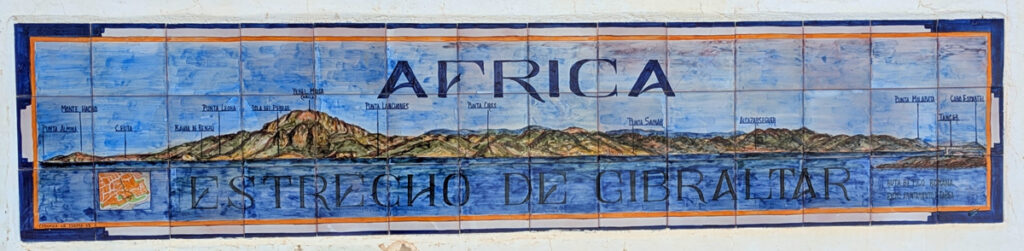
Tarifa is the closest point in Europe to Africa. Tarifa is on the Strait of Gibraltar and from here it is 14 km to the Moroccan coast
Tarifa is where the Atlantic and Mediterranean meet. You can walk to Isla Palomas along a cement pathway, water on both sides. On one side it the Mediterranean, on the other the Atlantic.
Tarifa is the best jumping off point to Morocco. Many people take the 1-hour ferry ride to Tangier for a day trip. Or it can be your jumping off point for Morocco (I spent 5 weeks in Morocco a few years back).
Tarifa is windy. Because of its position on the Strait of Gibraltar, winds are funnelled through the narrow gap making it very windy. Great for surfing but it’s been known to make some people crazy.
Tarifa is the place to see whales. The Strait of Gibraltar gets a lot of whales with April to October being the most popular time. Most common whales: long-finned pilot whales, minke whales, sperm whales and orcas (killer whales who hunt tuna heading for the Atlantic)
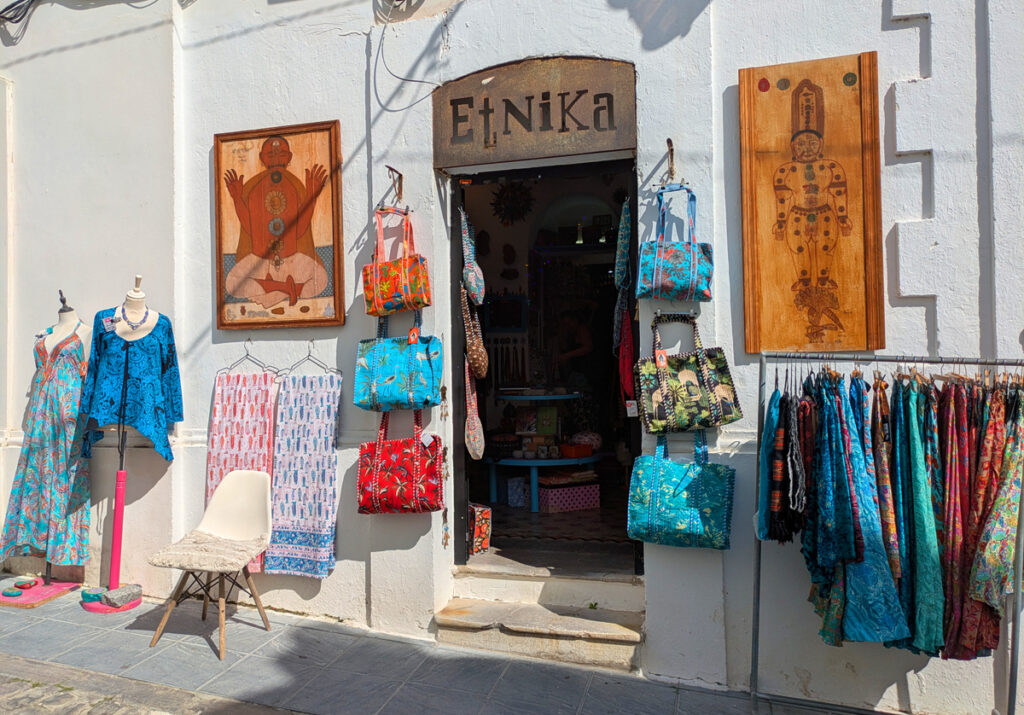
Tarifa has a bohemian vibe. Surfers, yogis and artists all seem to be drawn to Tarifa. It’s a peaceful and remote place and seems to attract an eclectic group of people from all over the world.
What to See and Do in Tarifa
1. Visit the Old Town
It’s not very big and you can see it all within a few hours.
Enter through the Puerta de Jerez. The gate was built in the 13th century under the Marinid dynasty (an Islamic dynasty that ruled present day Morocco).
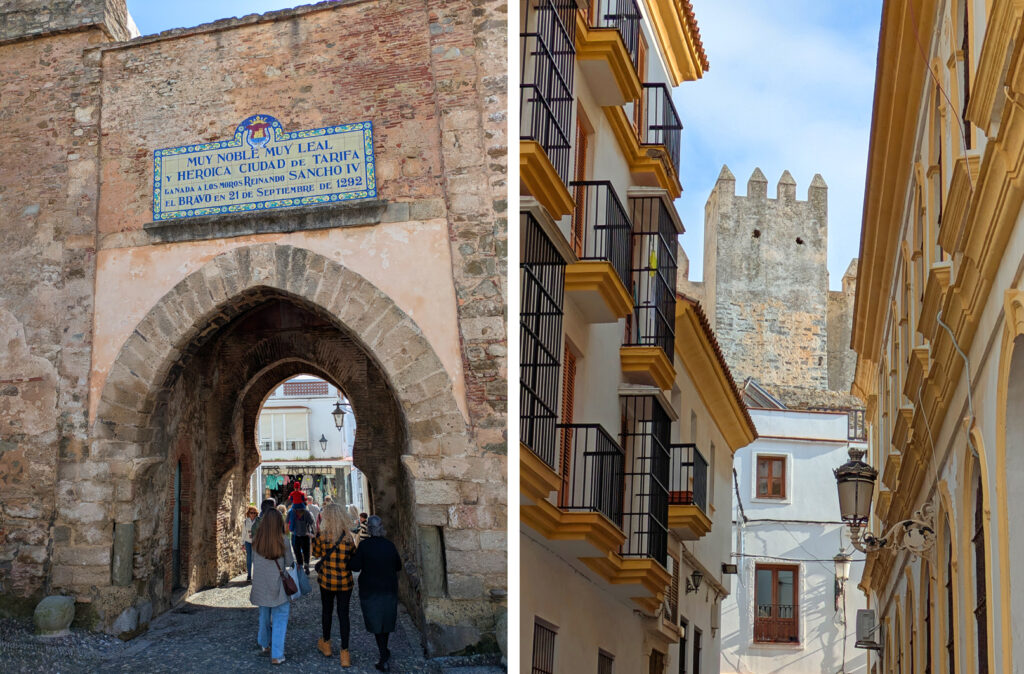
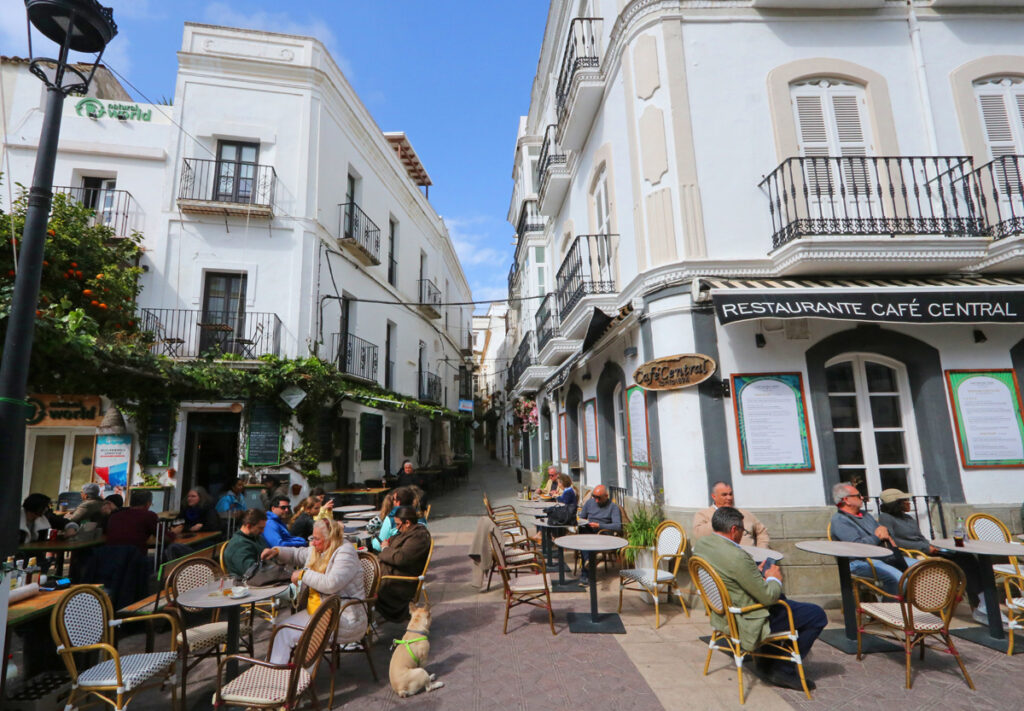
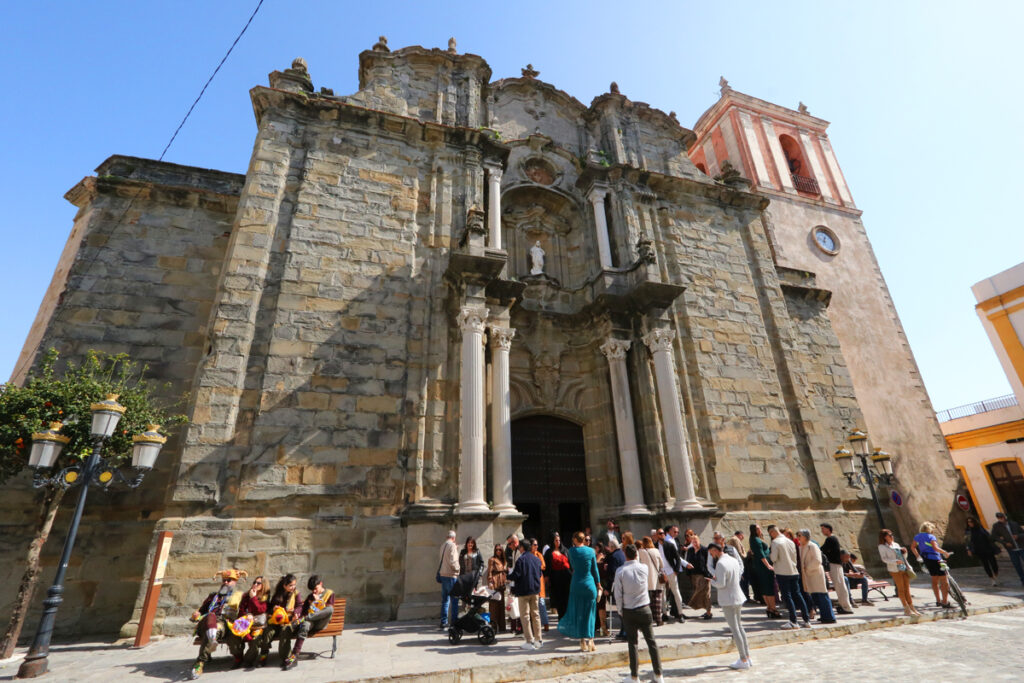
Walk the main street through the town, Calle Sancho IV el Bravo. Lots of shops and bars/cafés, leading to the main church (Iglesia de San Mateo).
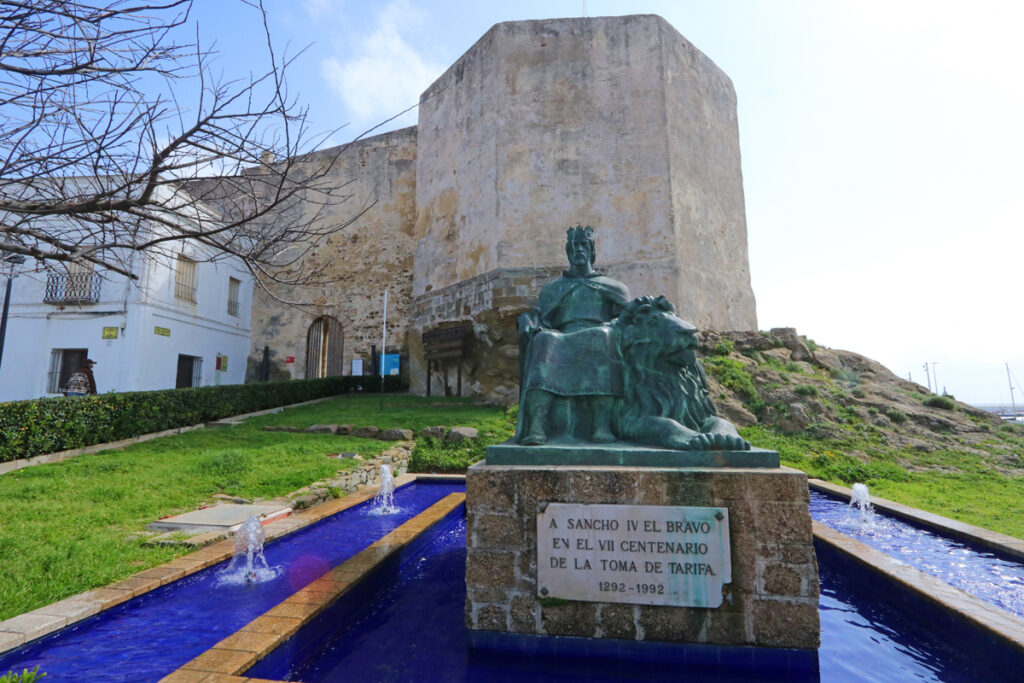
Make sure to see the Castle of Tarifa (Castillo de Guzmán el Bueno). This huge fortress dominates the old town and offers great views over the strait. Built by the Moors in 960, it was later taken by the King of Castile (Sancho IV) in 1292. Defending the fortress in 1296 (against the Moors and the king’s wayward brother Infante Juan) was Alonso Pérez de Guzmán. Guzmán was named “el bueno” for holding firm when Infante Juan threatened to kill Guzmán’s son. According to legend, he threw his sword from the castle, telling the attackers that they could use it to kill his son. Years later in 1306, Guzmán again showed his courage when he helped the crown of Castile take Gilbraltar from the Moors.
Cost to enter the castle: 4 Euros each. But there’s lots to see and great views. Very much worth it.
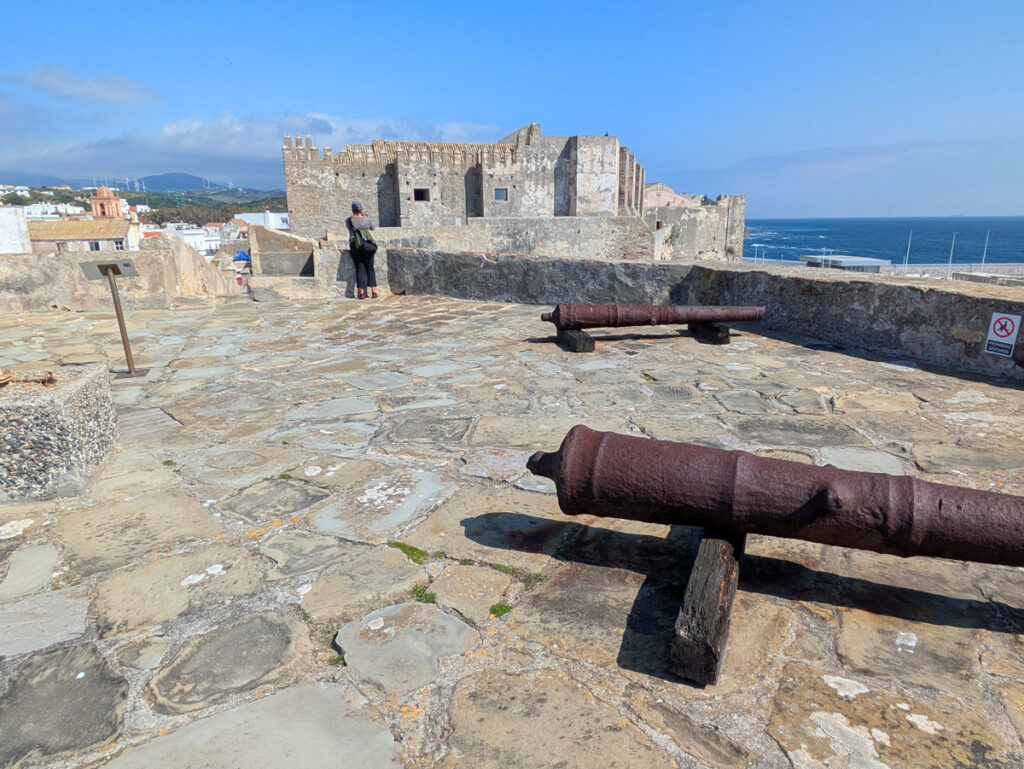
Plazuela del Viento. For great views across to Africa. Very impressive seeing all the large cargo ships passing through the strait.
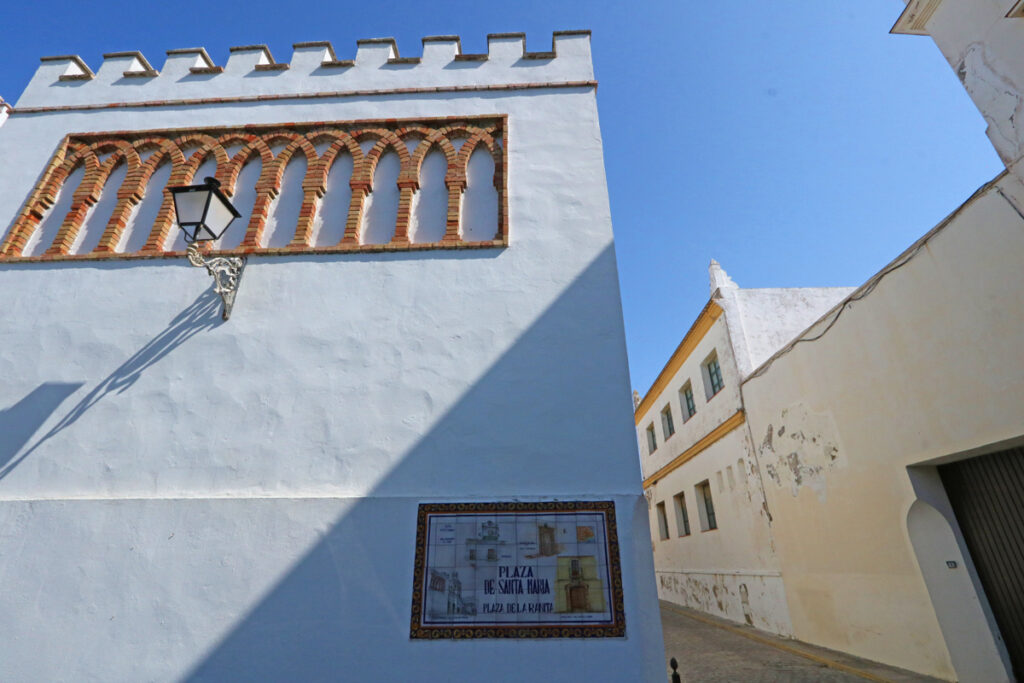
Plaza de Santa Maria. A pretty plaza with a Mudejar-style public library and a frog fountain in a tree-filled park.
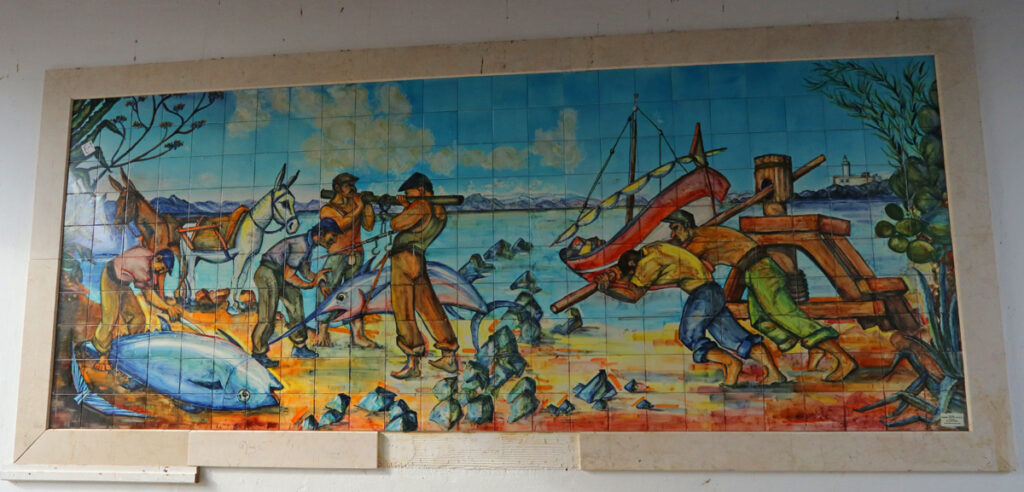
Mercado publico. To see the town’s market and colourful mural on the passageway next to it.
2. Walk to the Centro de Interpretación de la Isla de Tarifa (ie Isla Palomas)
Walking out to the small island (Tarifa Island) to the “Frontera Mar Mediterráneo – Océano Atlántico” (ie. border between the Mediterranean and Atlantic). Impressive views of both bodies of water and a place to photograph the actual place where the Atlantic and Mediterranean meet.
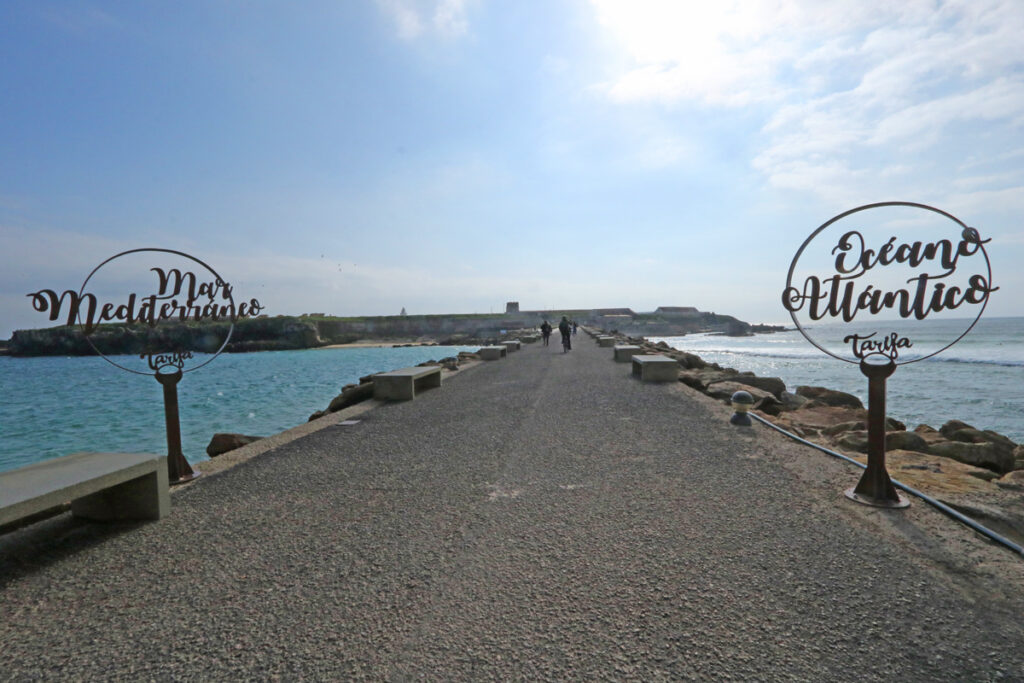
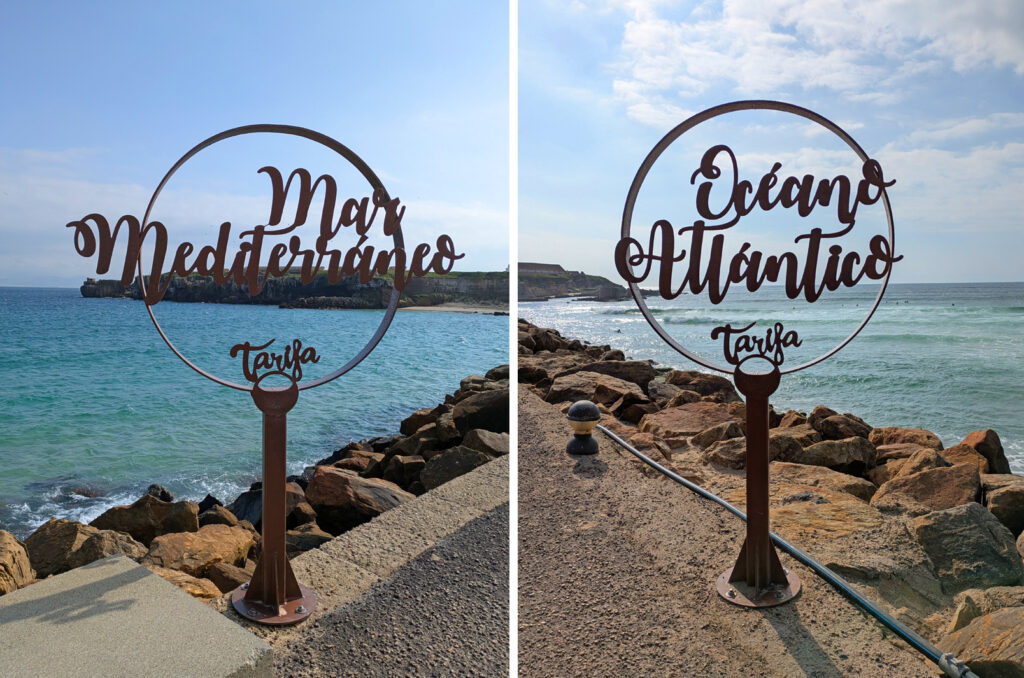
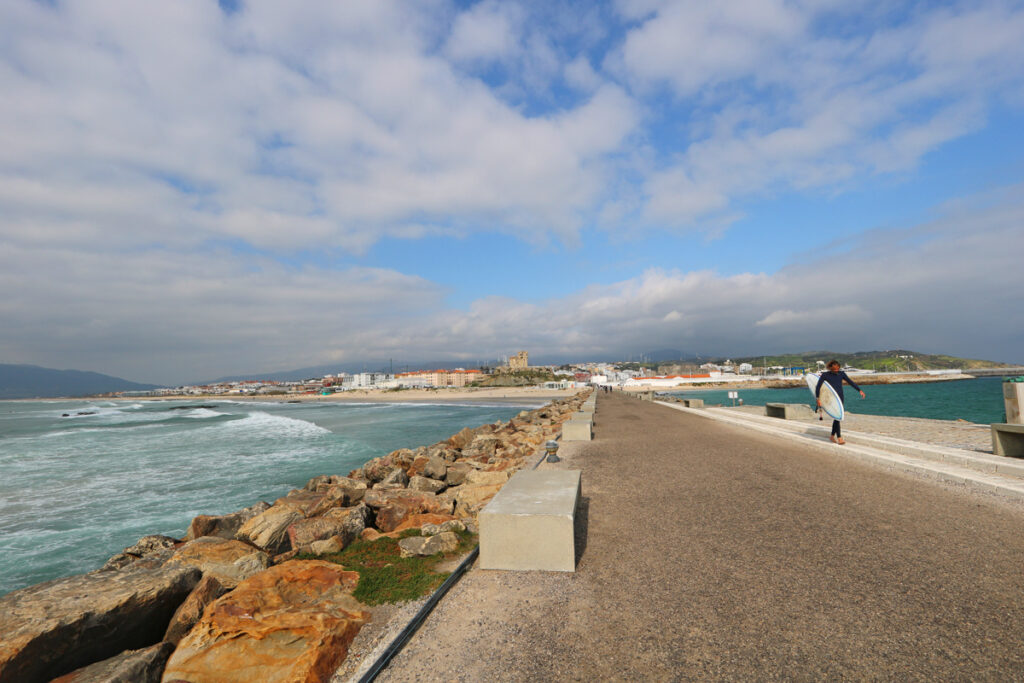
You won’t see anything when you arrive at the end of the cement path: there’s a chain gate and you have no choice but to turn around. According to what I’ve read, the fortress there is closed for renovation and the last time it was open was back in 2022.
3. Atlantic beaches
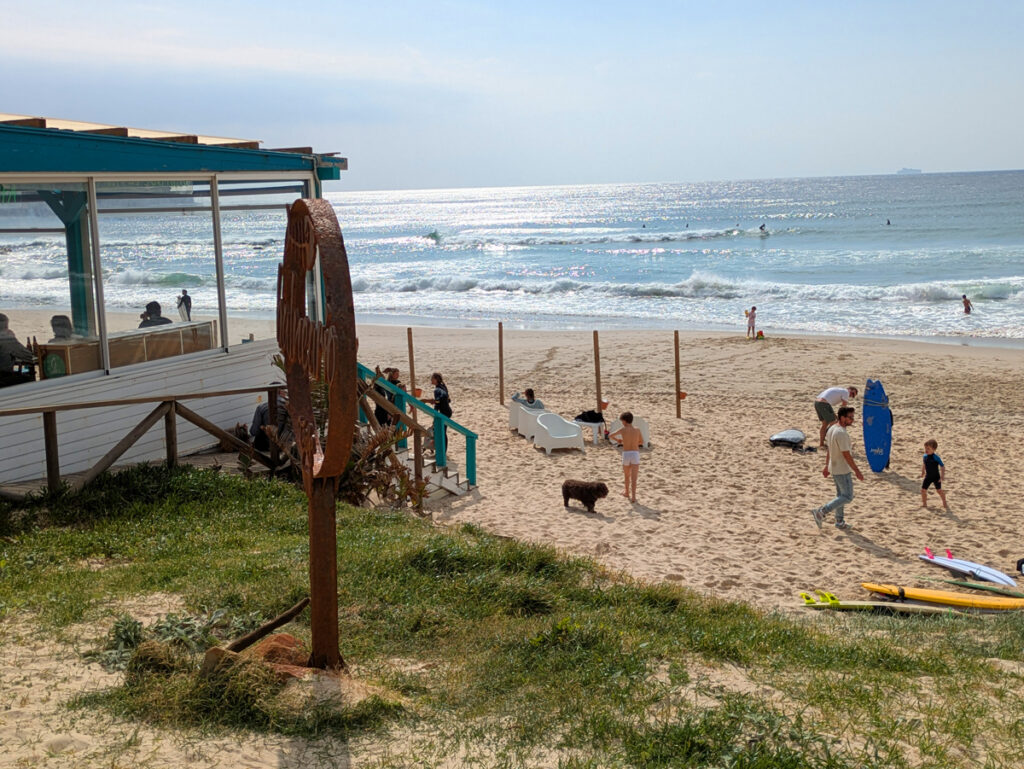
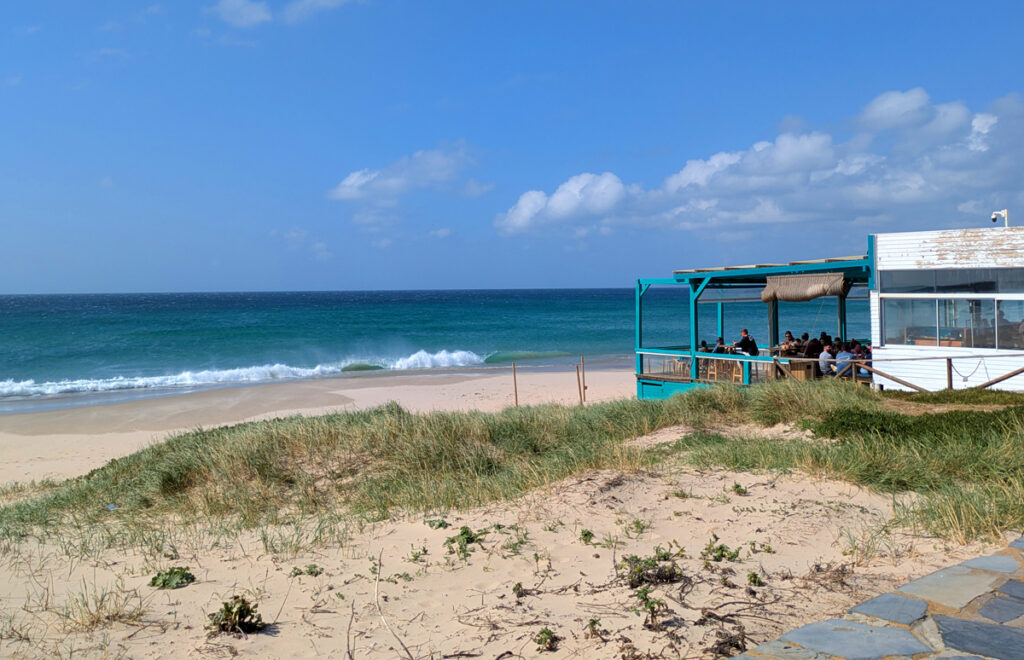
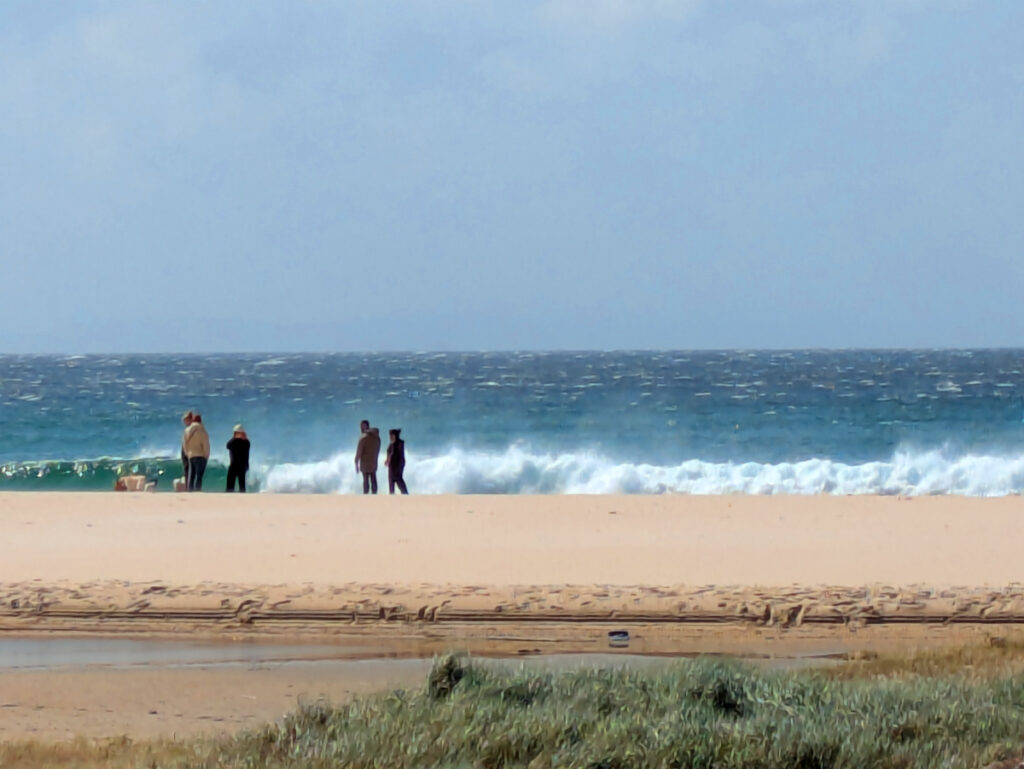
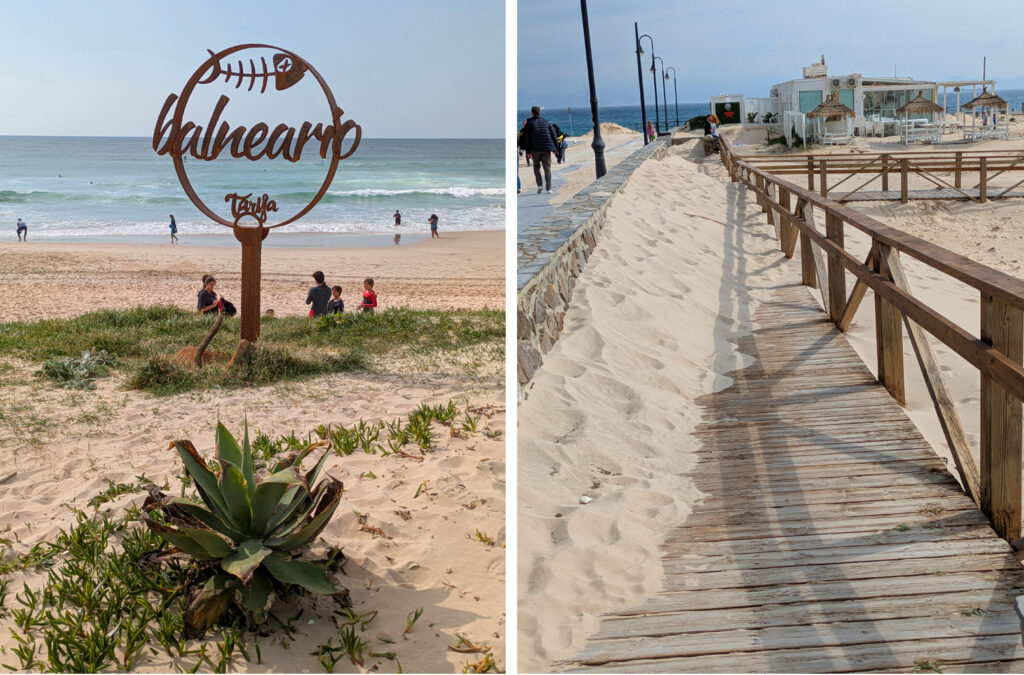
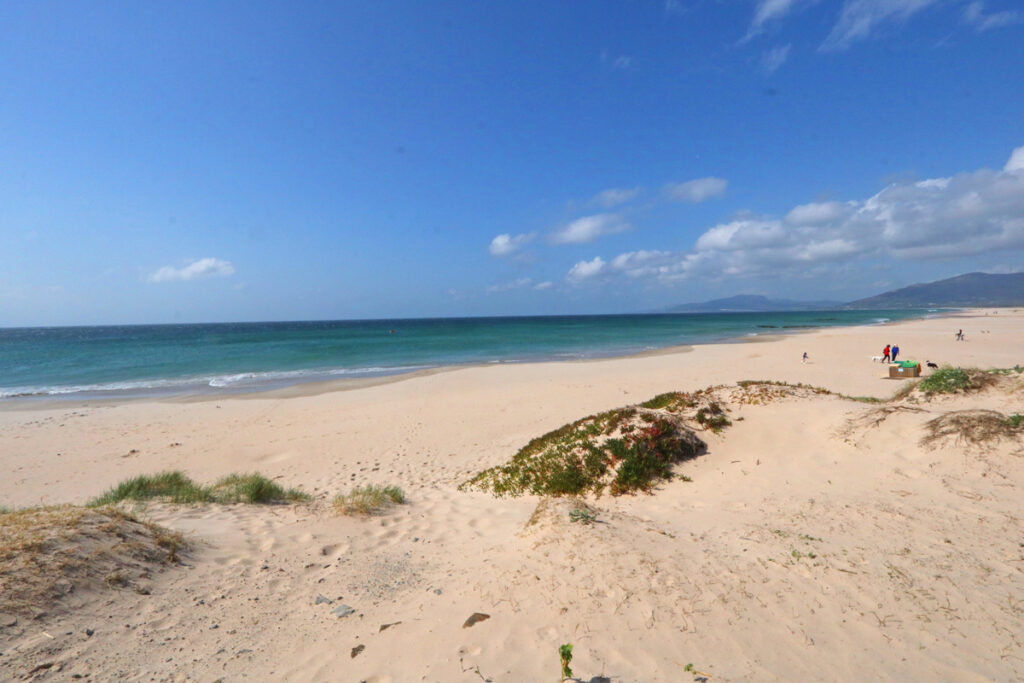
Back on the mainland, walk the Atlantic beaches. The first is Playa de Los Lances where you’ll see the Waikiki Chiringuito. One of the best Tarifa hangouts, a good place to have a drink and enjoy views of the surfers. Continue along the beach path, the beaches get wider as you go along and you’ll see large sand dunes. Some gorgeous nature.
4. Colourful steps and Street art
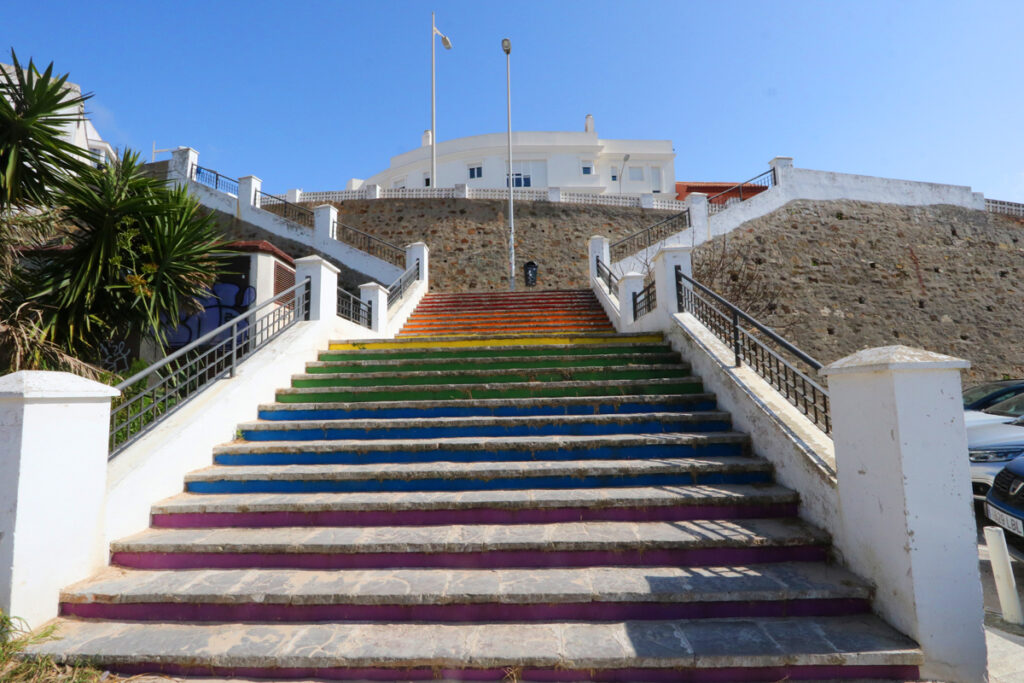
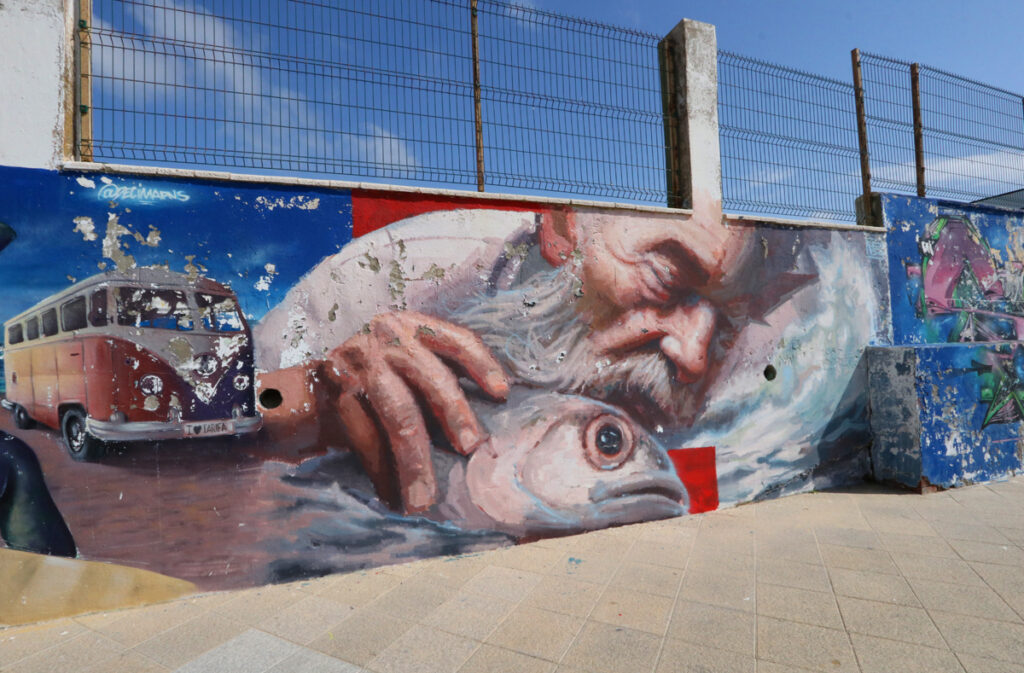
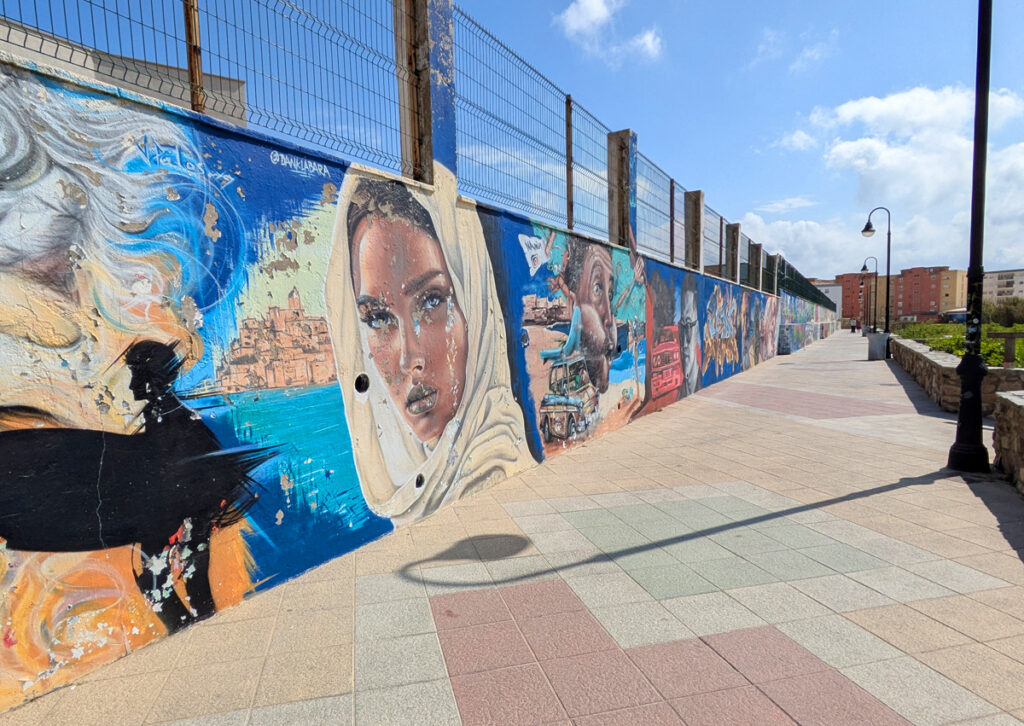
At the end of Avenida Andalucia heading to the beach are some colourful steps. Coming down, you’ll see lots of street art which continues around the corner along the beach path.
As I said up top, Tarifa isn’t big and you can see it all in a few hours. But to really appreciate the place you should stay at least a night (or two) and just enjoy the vibe, the nature and some very good restaurants (I’ll give you a few of our favorites at the bottom of this post)
Some activities in and around Tarifa
Bolonia. About 25 minutes north along the Atlantic coast is the town of Bolonia with its Roman ruins (called Baelo Claudia). You really need a car, which we didn’t have. You can also take a tour (such as this one) during busier parts of the year. We were there in February and no tours were available. Many of our readers have told us that Bolonia is an essential visit. Another blogger’s post on Bolonia here.
Morocco. As mentioned above, Tarifa is the jumping off point for Morocco. The ferry terminal is right next to the castle. Balearia is the ferry company and you can organize your own trip on their website. It takes about 1 hour for the journey and costs about 40 Euros for a one-way ticket. You can also arrange for a guided day tour.
Whale Tour. Tarifa is the place to take a whale tour. If you like to see Orcas (killer whales) September and October are optimal. But anytime from April to October is good to see all types of whales. A recommended tour here.
Adventure Sports
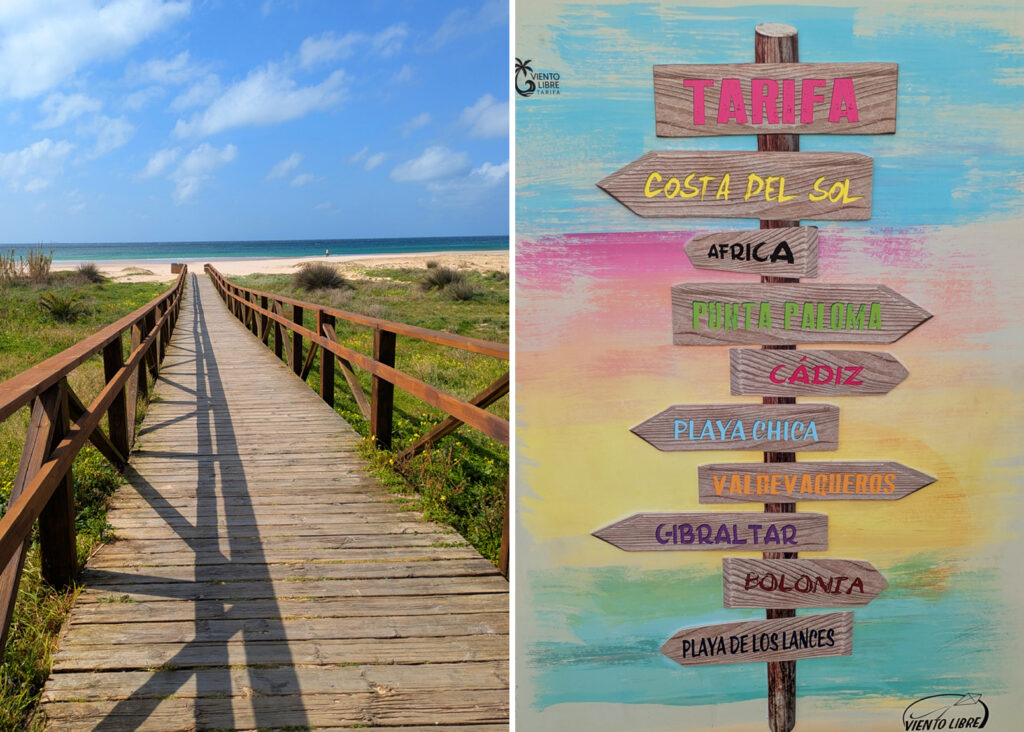
Tarifa is also the place to do watersports in Spain and many come here to learn to kitesurf, windsurf or dive.
A few tours: kitesurfing for beginners, Group windsurfing lessons, scuba diving lessons.
Practical Information
Getting to Tarifa: Comes has about 7 departures daily from Cadiz to Malaga, with stops in Tarifa. The bus stop is about 10 minutes from Tarifa’s old town.
Accommodation: we stayed at Apartamentos JR Alborada while in Tarifa. Fantastic, one of the best places we stayed in during our month of travel through Andalusia. Our room had a kitchen with an oven. On the next block is a large supermarket (Supeco) where you can pick up anything you need. Washer/dryer downstairs. 5 minutes from the old town and you have some excellent restaurants around the block. Very nice owners.
Where to Eat: We had some of our best eating experiences in Tarifa. We would go for breakfast/brunch at Sivana Café. On the next block is a great Indian restaurant called Restaurant Namaste. If you want Thai food, there’s a little hole-in-the-wall Thai restaurant called Deng Thai Food.
We really, really liked Tarifa and it is a place that is absolutely worth visiting.
Related: Visiting Arcos de la Frontera
Related: Why we chose El Puerto de Santa Maria as a base instead of Cádiz



Leave a Reply