Why you HAVE to visit Ubeda and Baeza.
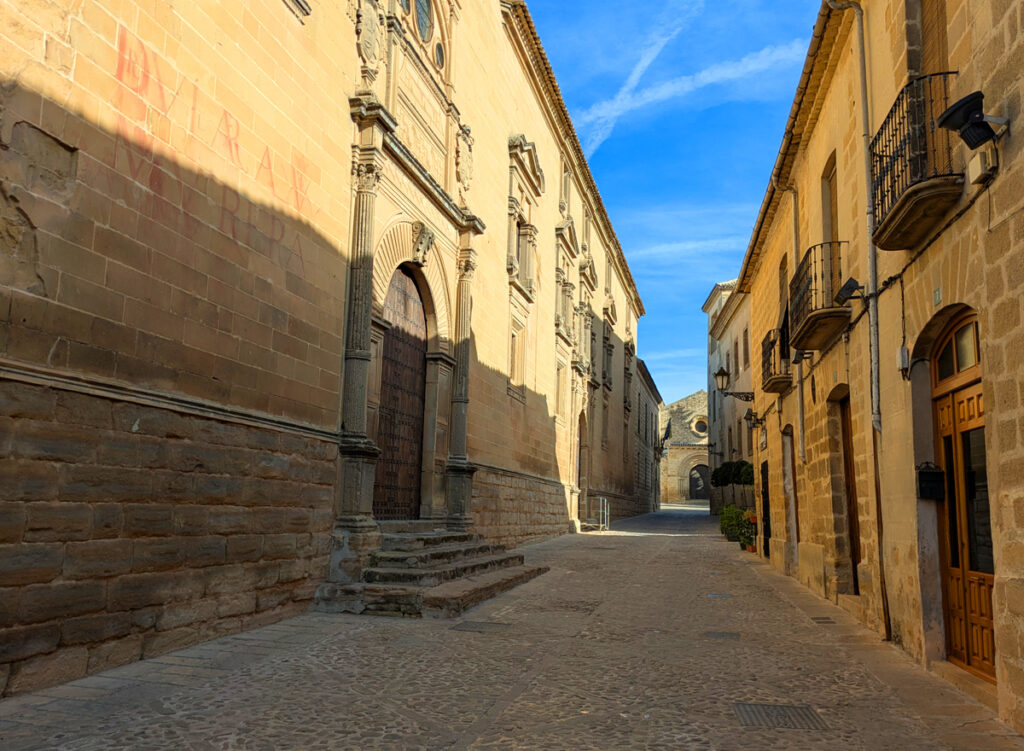
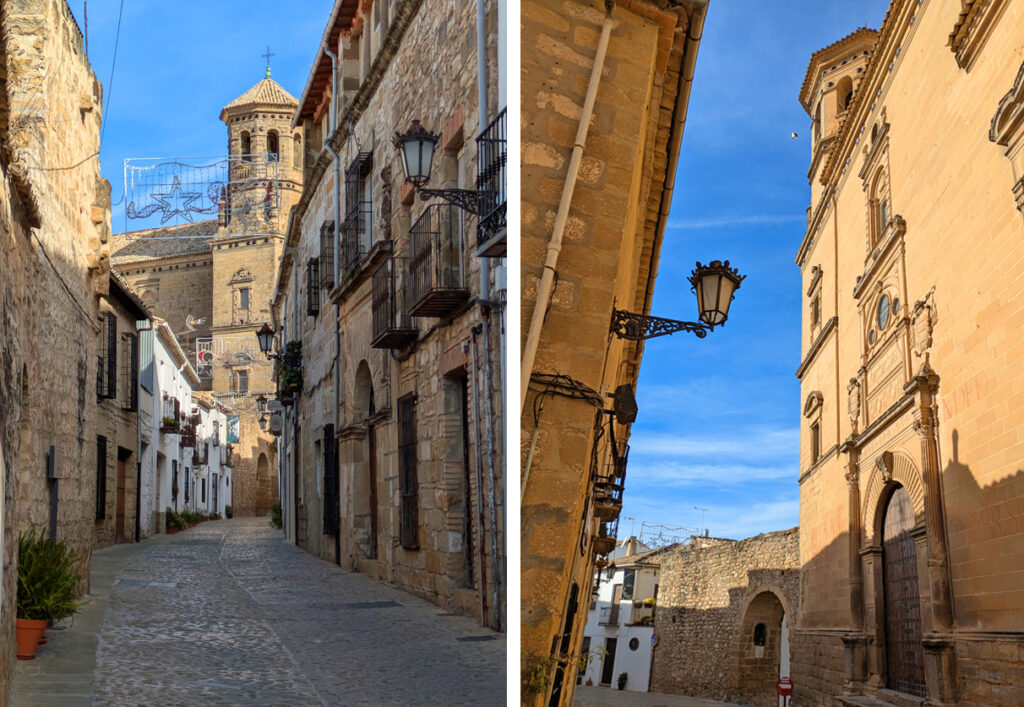
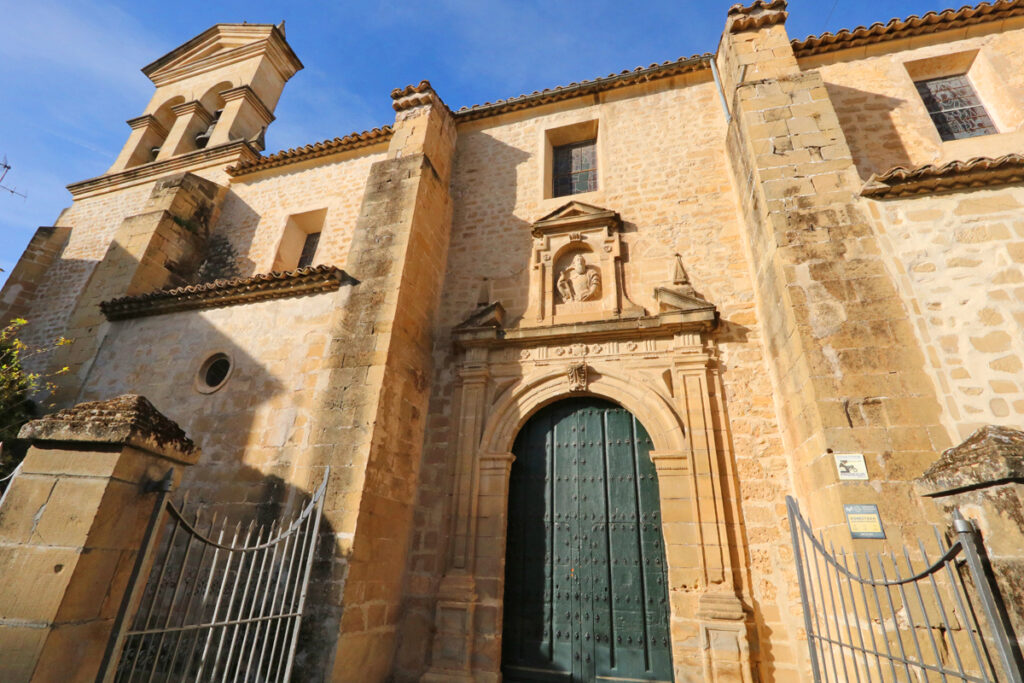
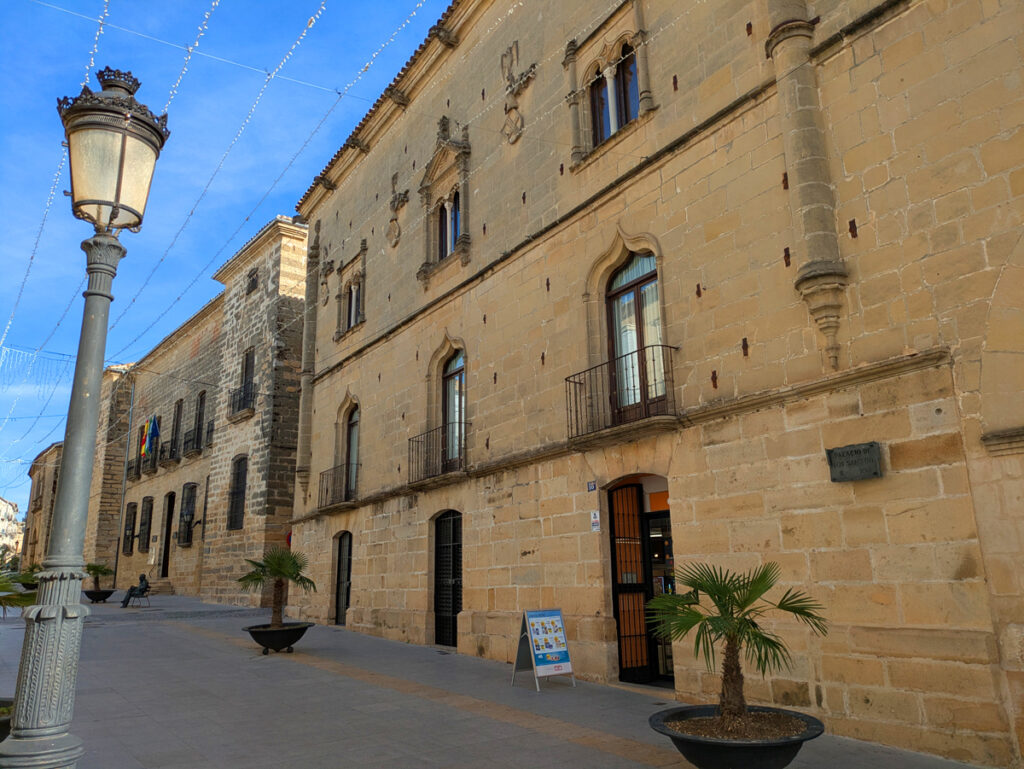
Ubeda and Baeza are UNESCO World Heritage sites, unique in Spain for their Italian Renaissance-inspired architecture. You might think yourself in Italy. Both towns are beautiful as you’ll see in the many photos below.
How long do you need to visit both? The two towns are 9 km apart. If you have a car, you can see both cities in a full day, albeit a bit rushed. If you are relying on public transport (as we did), then you should spend a night. Either way, I actually recommend a night just to enjoy the towns when most of the tourists have left. More on getting around at the bottom.
Which town to use as a base? Ubeda is the bigger of the two towns and the more vibrant. I recommend using that as a base. It also has some very nice hotels in some old palaces (we stayed at the Hotel Alvar Fañez which was excellent and a deal at 55 Euros per night in mid-November). More on that further below.

A Bit of History
Like almost all of the Iberian Peninsula, this region was under Moorish rule from 711 AD onwards.
In 1233 the Christian armies took over these towns. Both Ubeda and Baeza became border towns. Both are located on a high ridge with great views overlooking a valley and mountains beyond. You can imagine that in the 1200’s this geographic feature marked a natural frontier between Christians and the Muslims to the south.
The political importance of Ubeda and Baeza made the towns rich. In the 16th century they reached their Golden Age and the richest families started building their own palaces and churches. During this period, Renaissance architecture was in and the Spanish architect who built up Ubeda and Baeza (Andrés de Vandelvira) is considered one of the greatest Renaissance architects in Spain. These are the beautiful historical buildings you see today and what make these two towns so unique*.
*While there, I kept thinking “this reminds me of another town we’ve been”. It came to me: that city was Lecce in Puglia. As I say, you’ll think yourself in Italy when visiting Ubeda and Baeza.
WHAT TO SEE IN UBEDA
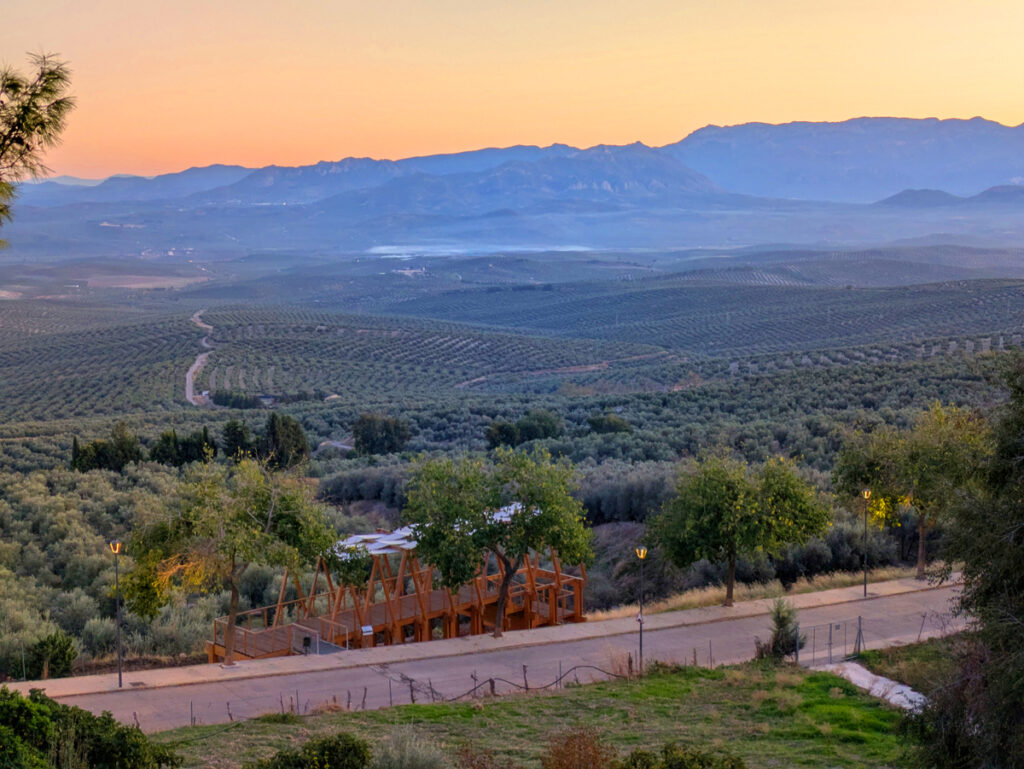
Ubeda is the larger of the two towns and, I think, the most impressive. It is blessed by two gorgeous squares…but on top of these, there is lots to see. It’s a town to wander around, enjoying the architecture around town as well as views over the Guadalquivir river valley (there are some miradors that you should visit, especially around sunset time).
Below I cover the main highlights of Ubeda. The stars (*) indicate a must-see attraction.
Plaza Vázquez de Molina*
A large, gorgeous square that has the most impressive attractions in Ubeda.
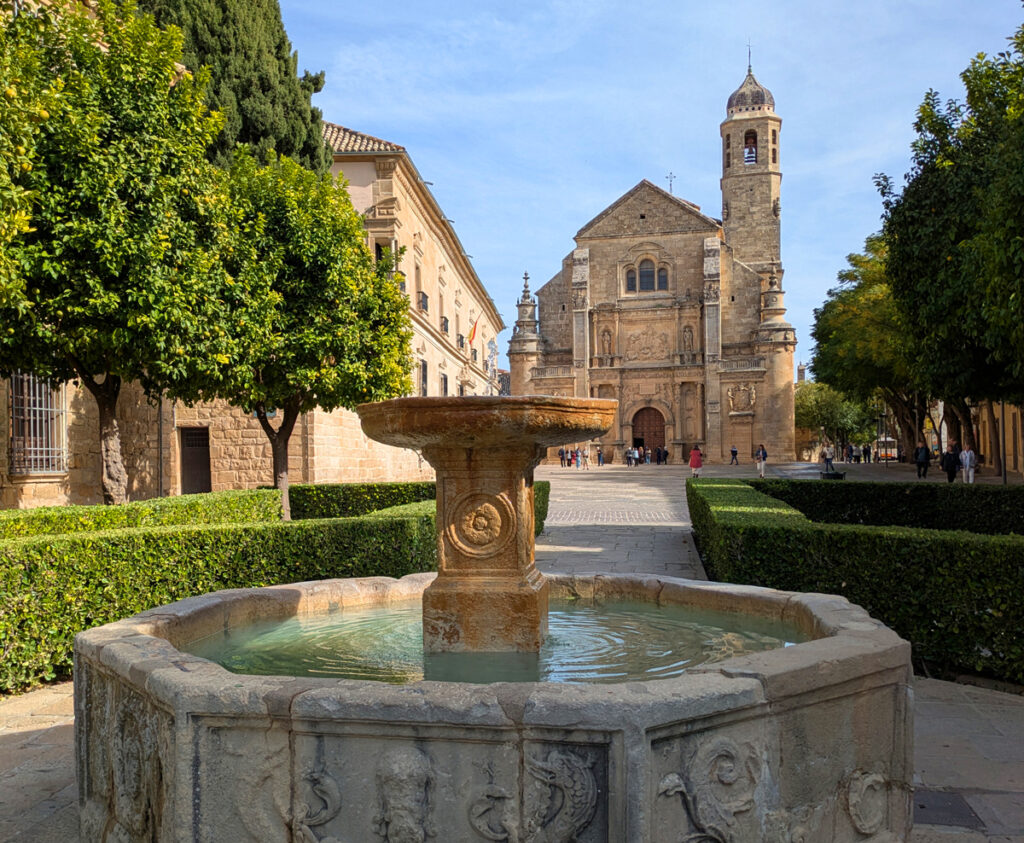
Sacra Capilla de El Salvador*
Built for a rich politician/commander/lord, this “chapel” was meant as a pantheon (a place where his body would be kept after his death). Built between 1540 – 1559 by Andrés de Vandelvira (the architect behind the building of most of Ubeda and Baeza), it is considered the most ambitious undertaking of all private religious architecture during the Spanish Renaissance. The interior was designed by Diego de Siloé, who also designed the Cathedral of Granada, the church of San Jeronimo (also in Granada) and the golden stairwell of the Cathedral of Burgos.
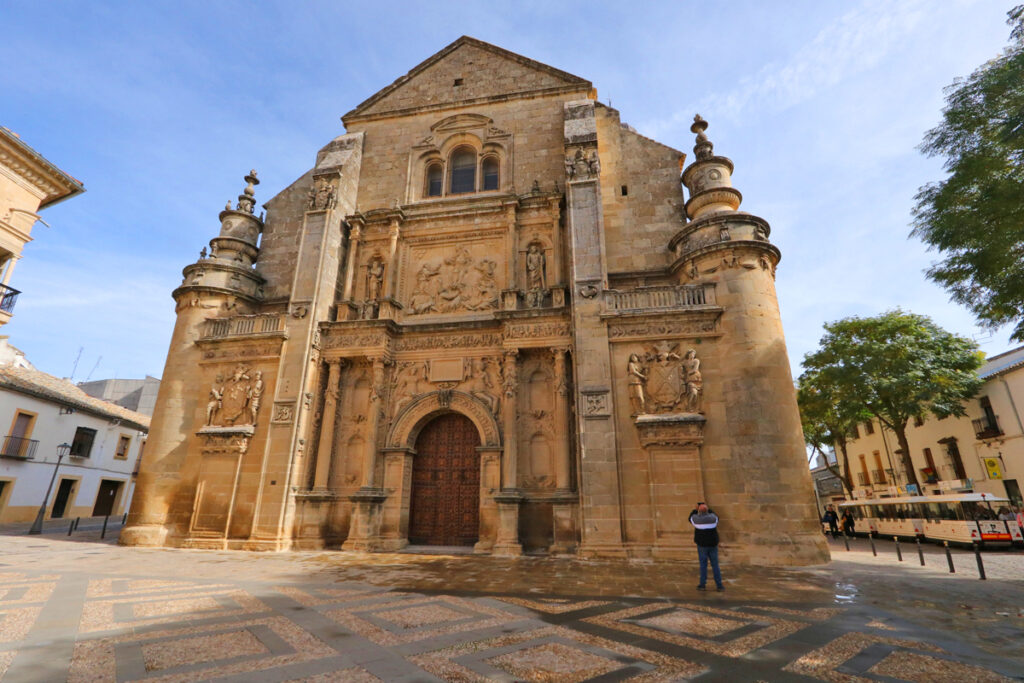
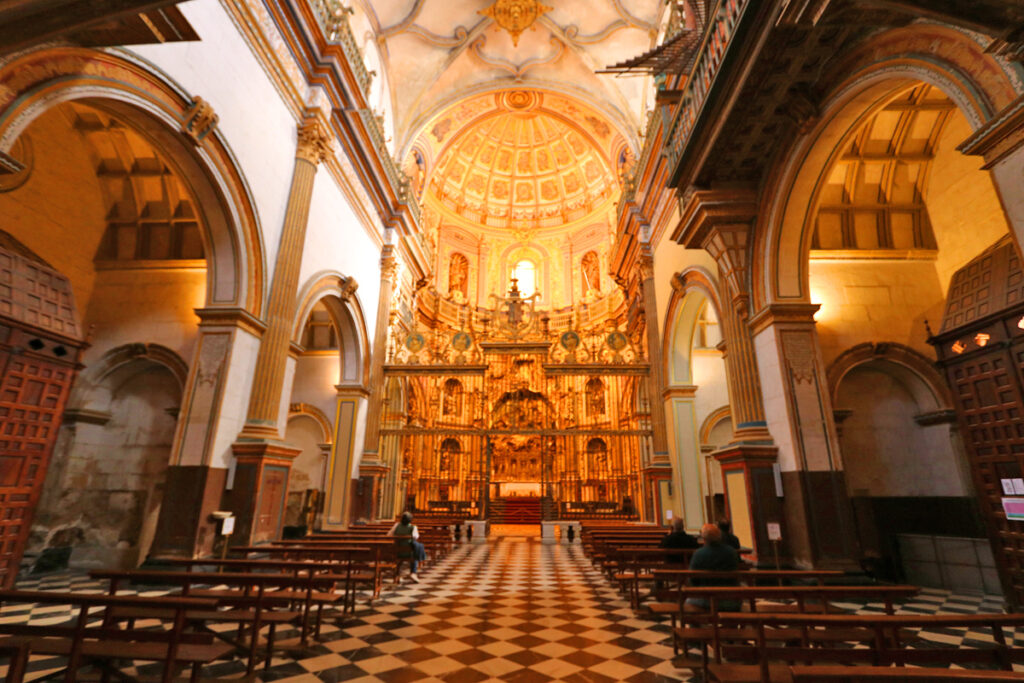
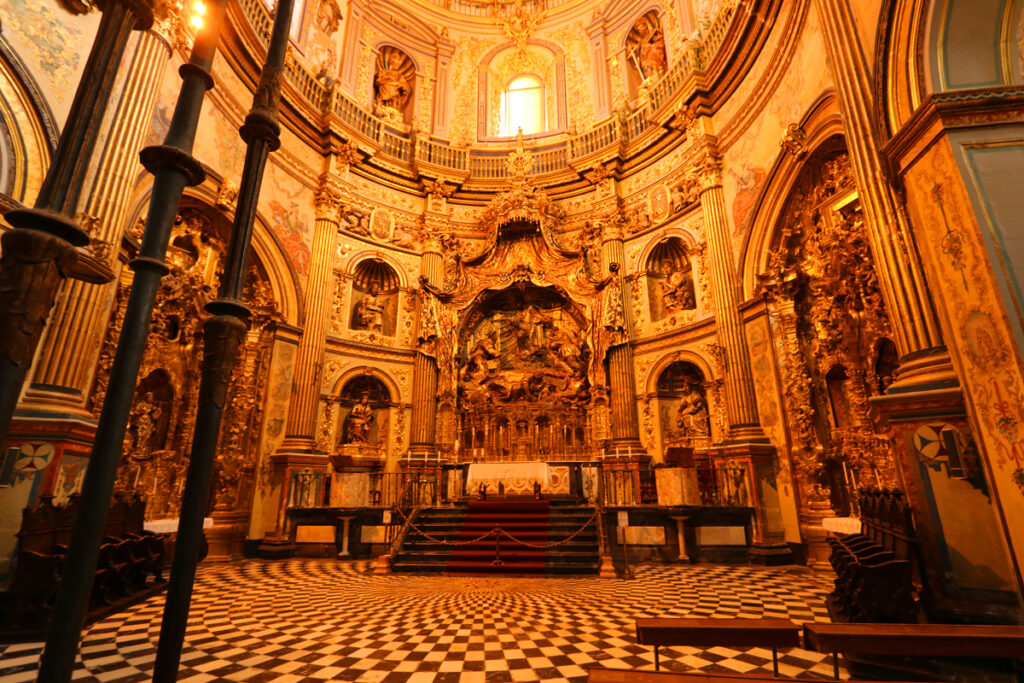
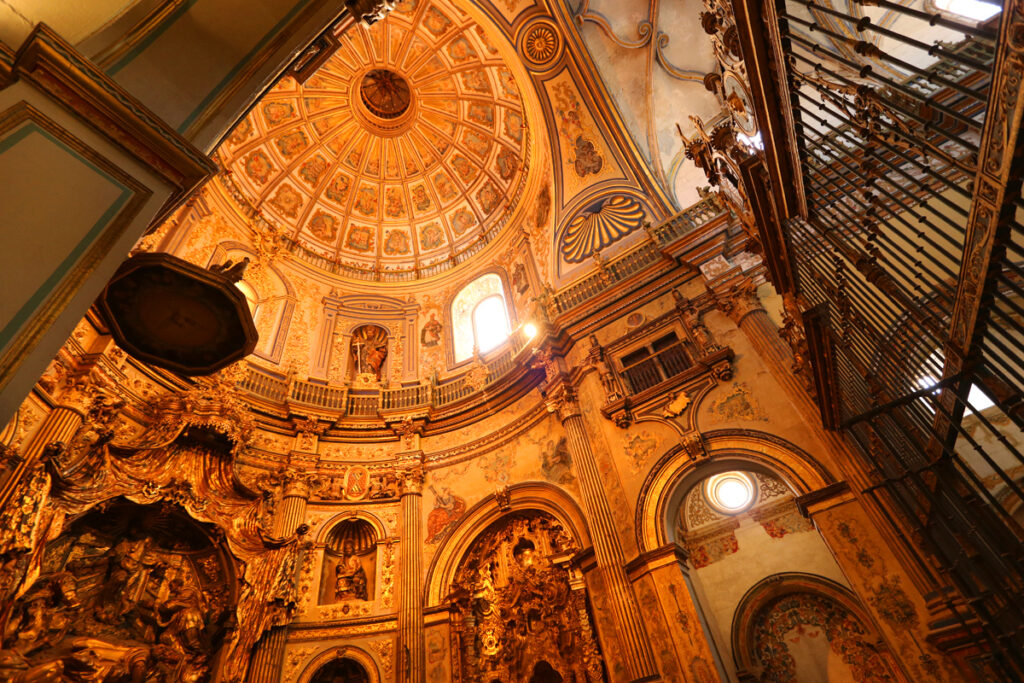
It is a gorgeous temple that should be visited, in fact if you can only see one religious building in Ubeda it should be this one. Entry costs 7 Euros.
Palace of Deán Ortega (Parador)
Right next to the Sacra Capilla de El Salvador is Ubeda’s Parador, housed in the former Palace of Deán Ortega. It’s worth a look, we always make it a point to visit Spain’s paradors. It’s not the most grandiose of Spain’s paradors but the location can’t be beat.
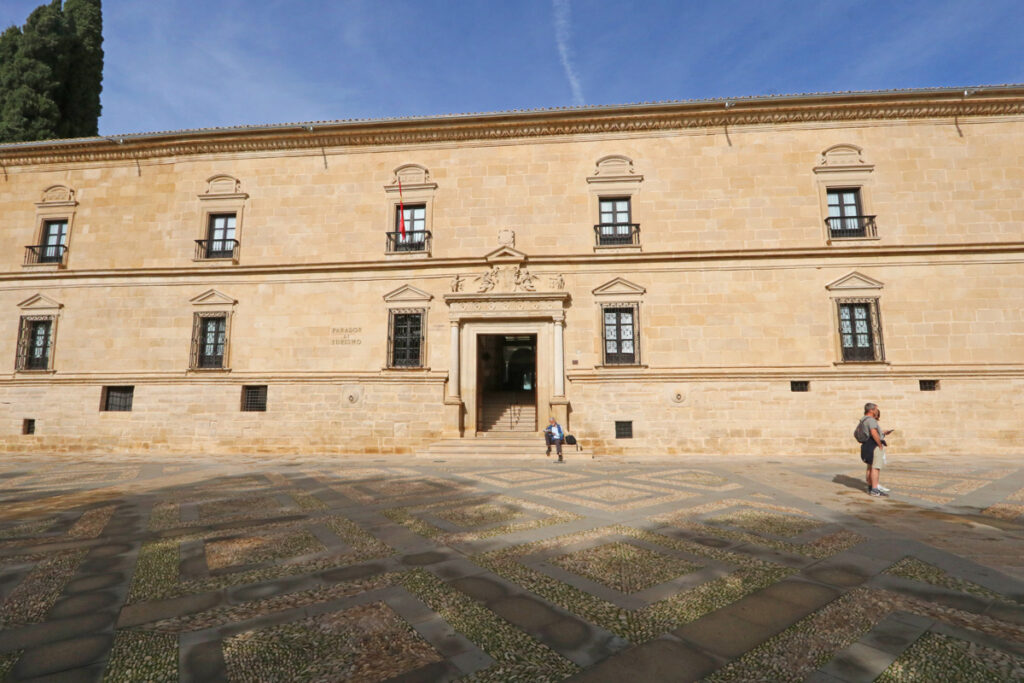
Town Hall
The next building over is the grandiose Ayuntamiento (town hall building). It is another ex-palace (Juan Vázquez de Molina Palace) and was also built by Andrés de Vandelvira in the 1500’s.
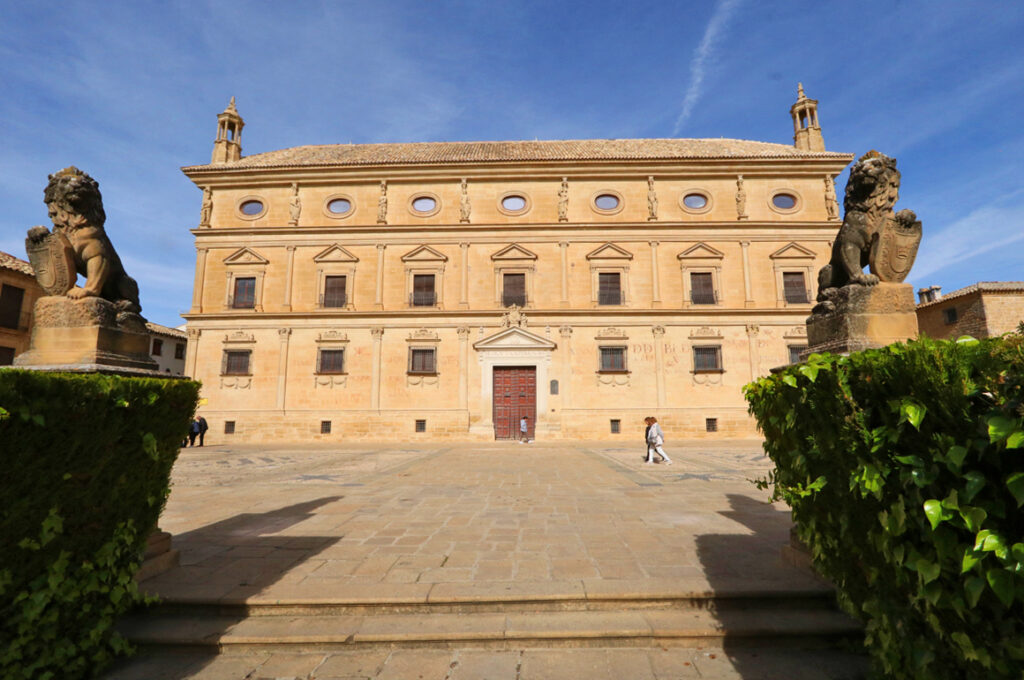
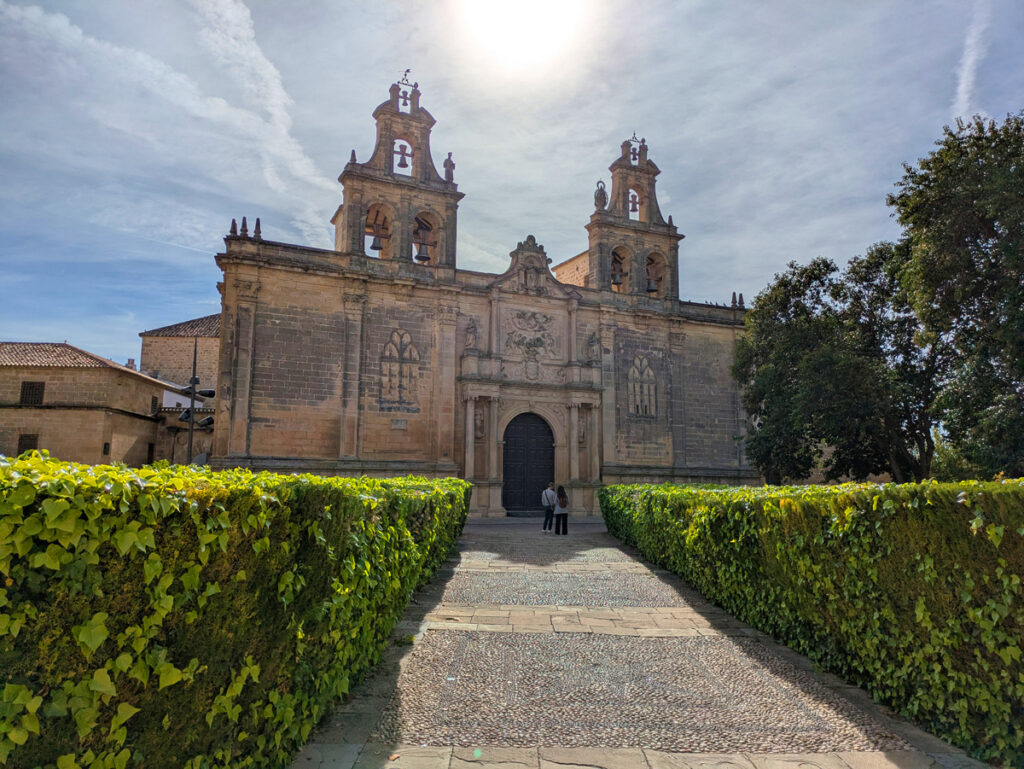
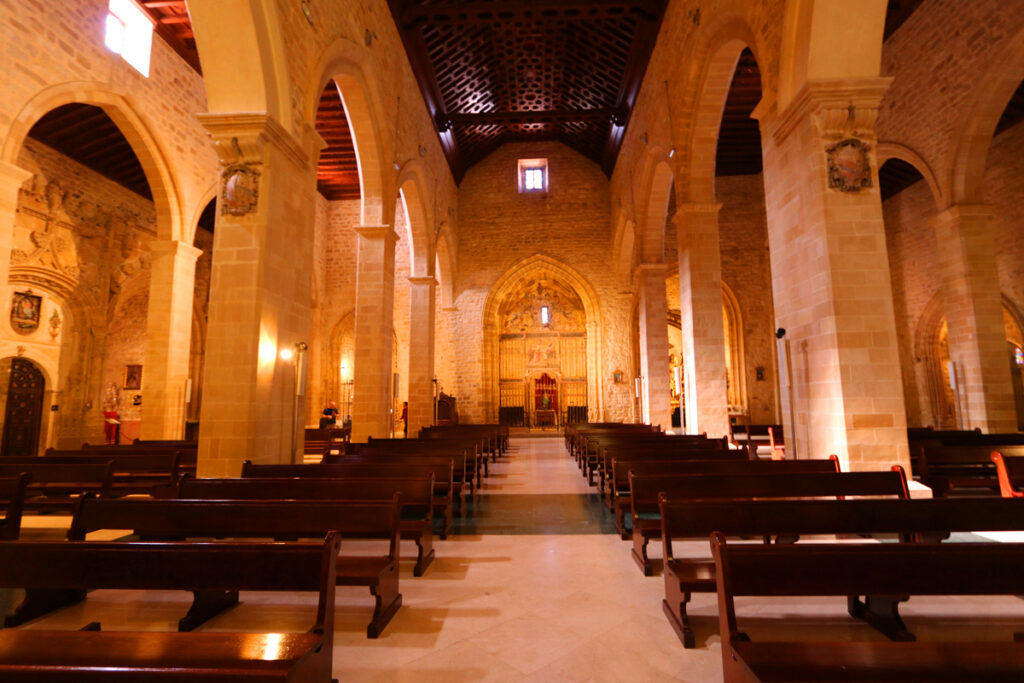
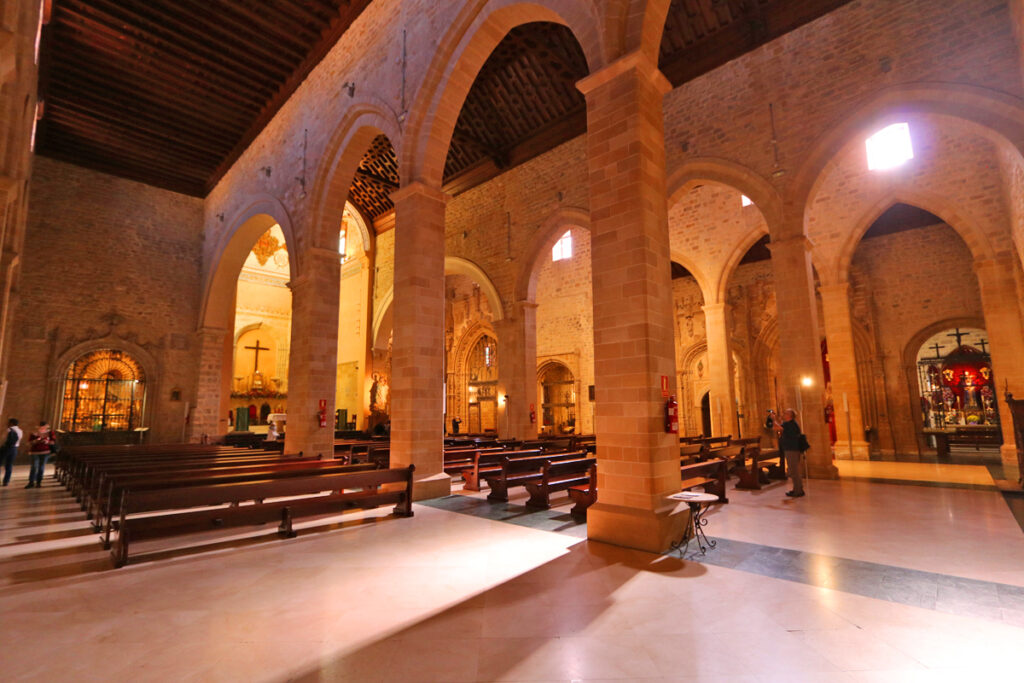
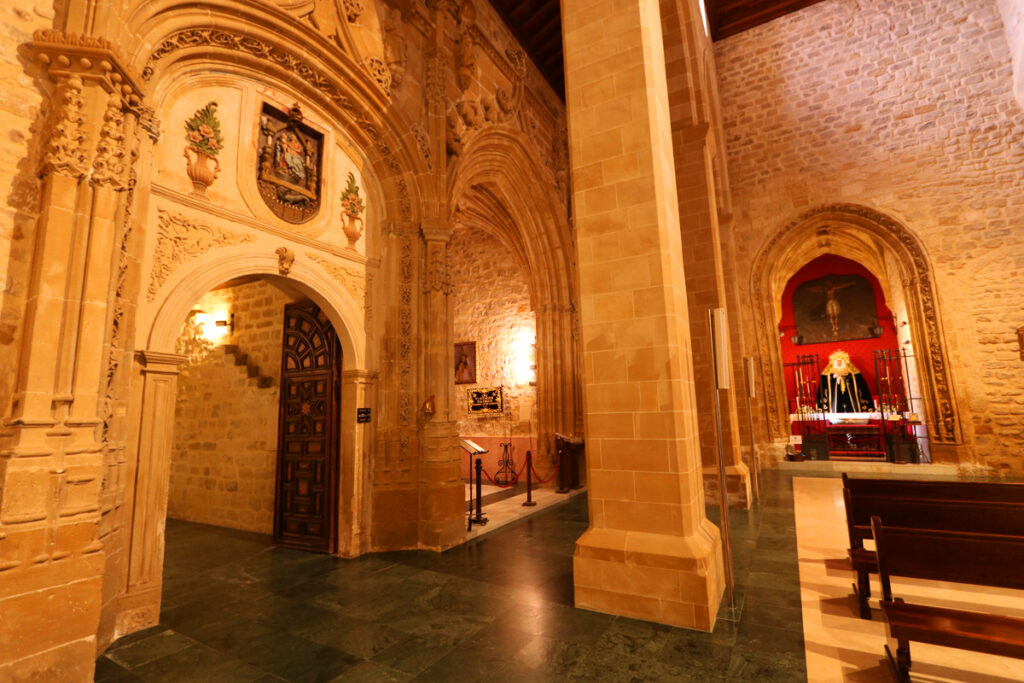
Basílica of Santa María de los Reales Alcázares*
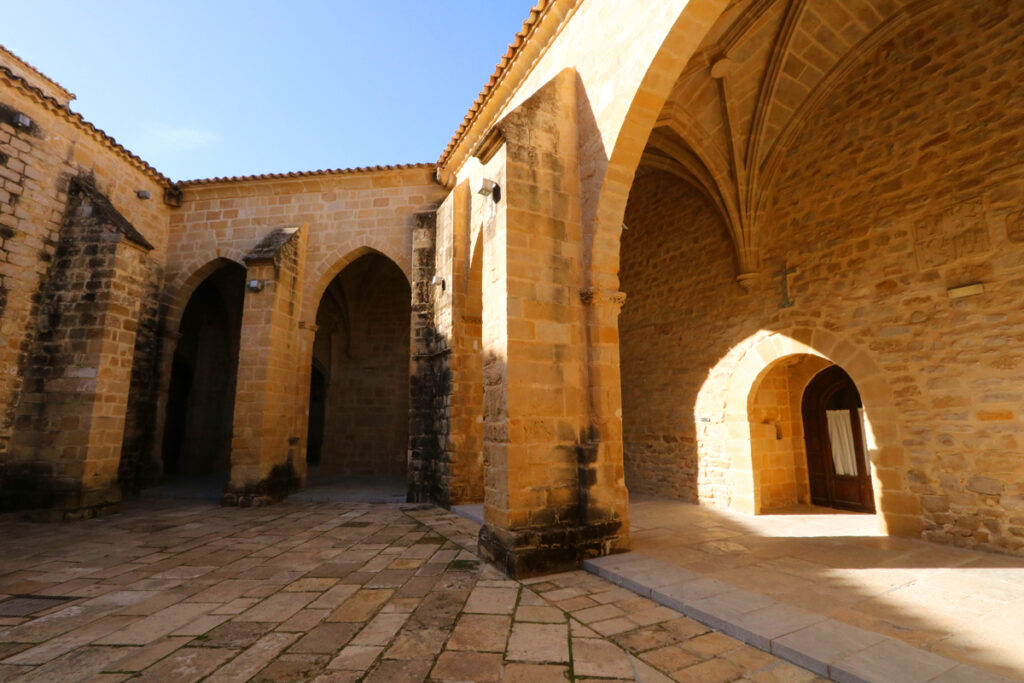
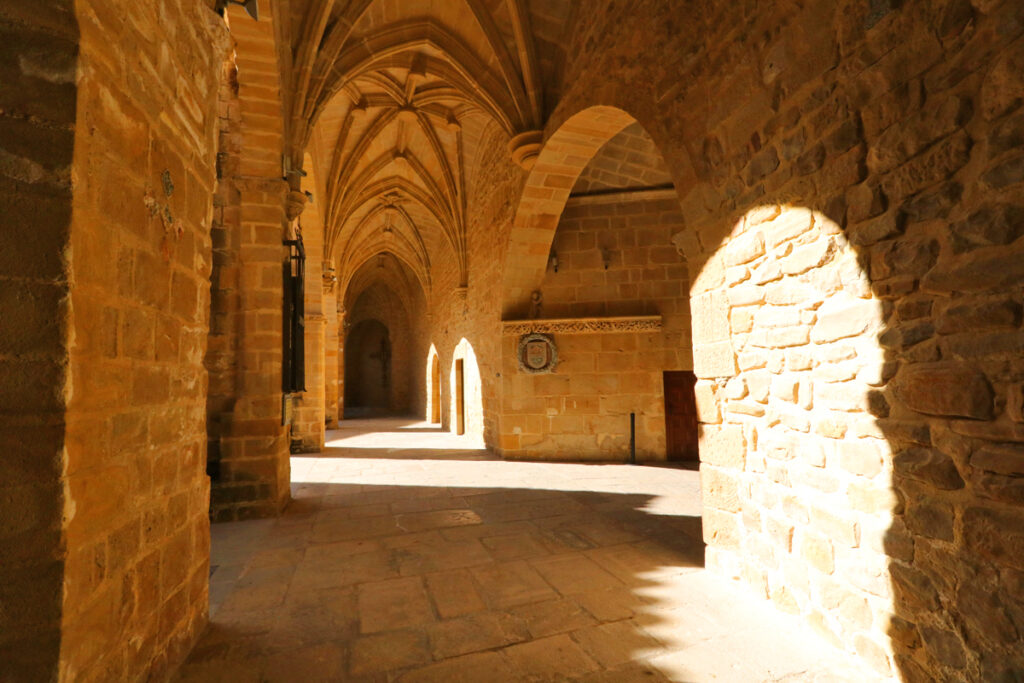
It is the main church of the city of Úbeda and the third largest in the Diocese of Jaén. It was built after the conquest of the Islamic rulers (1233) and has undergone various renovations over the centuries, resulting in a variety of architectural influences.
Palace of the Marqués de Mancera
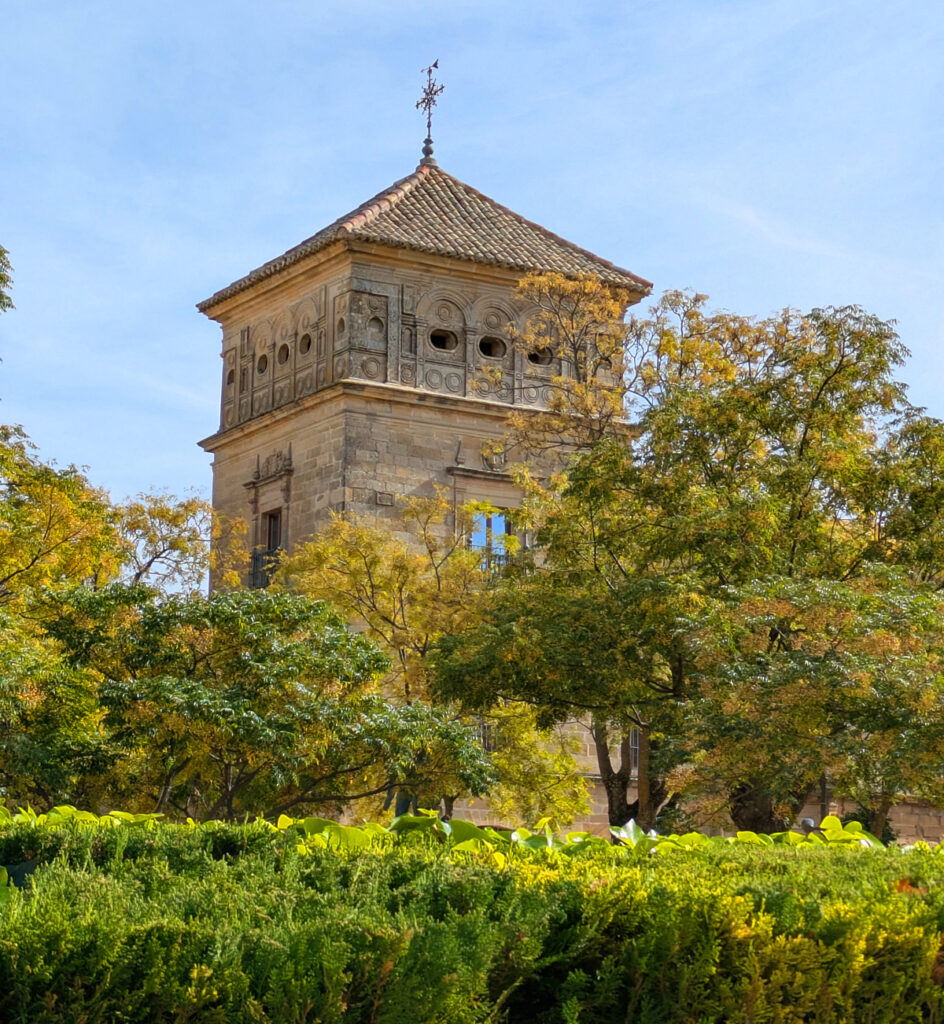
A turreted palace built by Andrés de Vandelvira which long served as a convent. Today it seems to hold the town’s police department (I believe. Police cars line the street in front of the building).
Plaza Primero de Mayo*
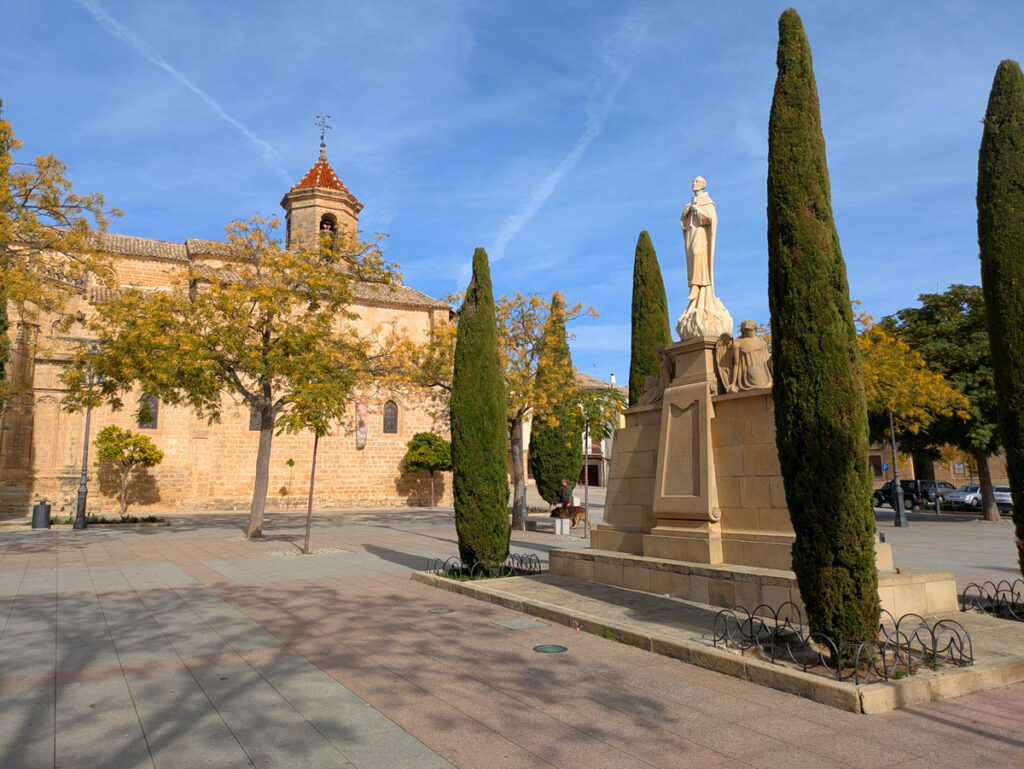
The 2nd most impressive square in Ubeda is Plaza Primero de Mayo. It used to be known as the Paseo del Mercado (Market Promenade) and was where the souk was located in Islamic times. It would continue serving as a market during Christian times.
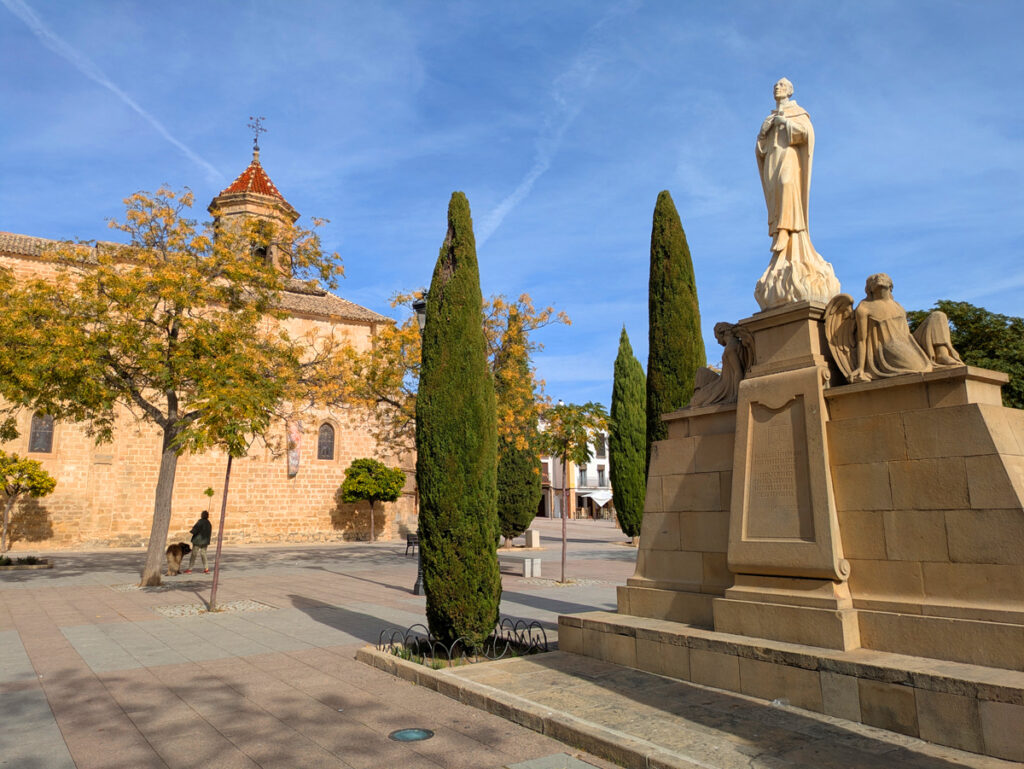
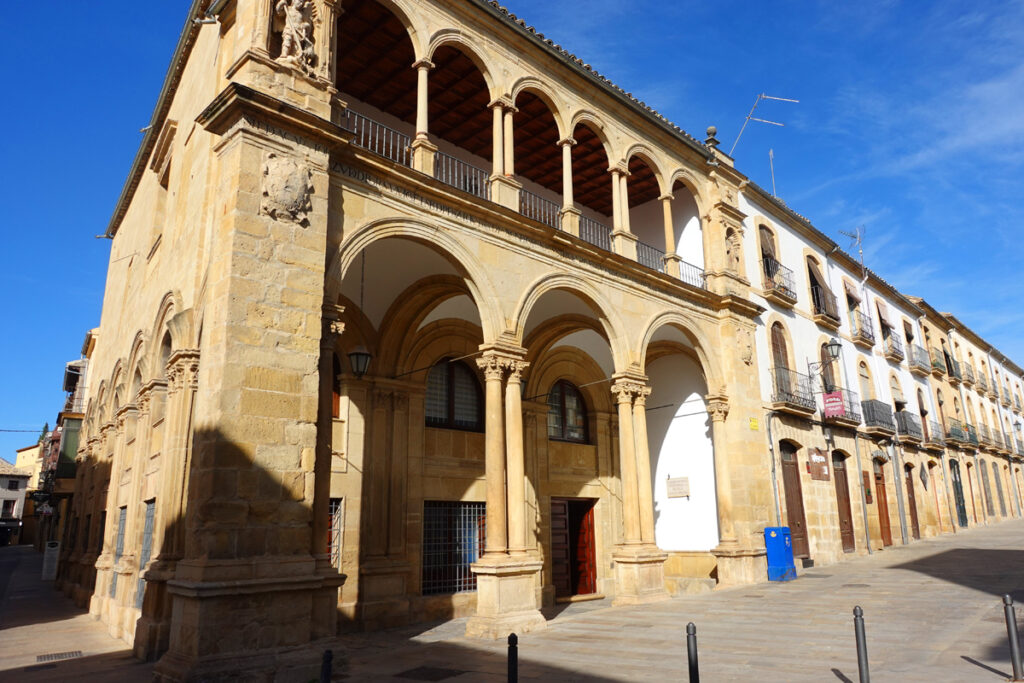
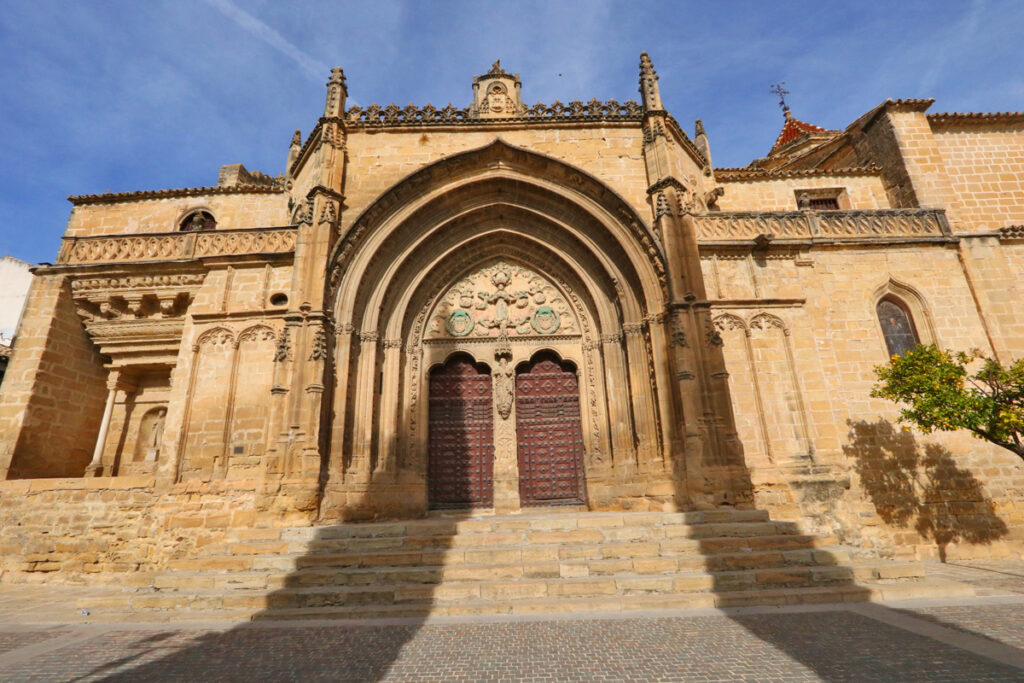
On a corner is the picturesque old town hall. There’s an old convent, the Convent of San Andrés which was founded in 1531. But the most imposing building on the square is the huge church of San Pablo.
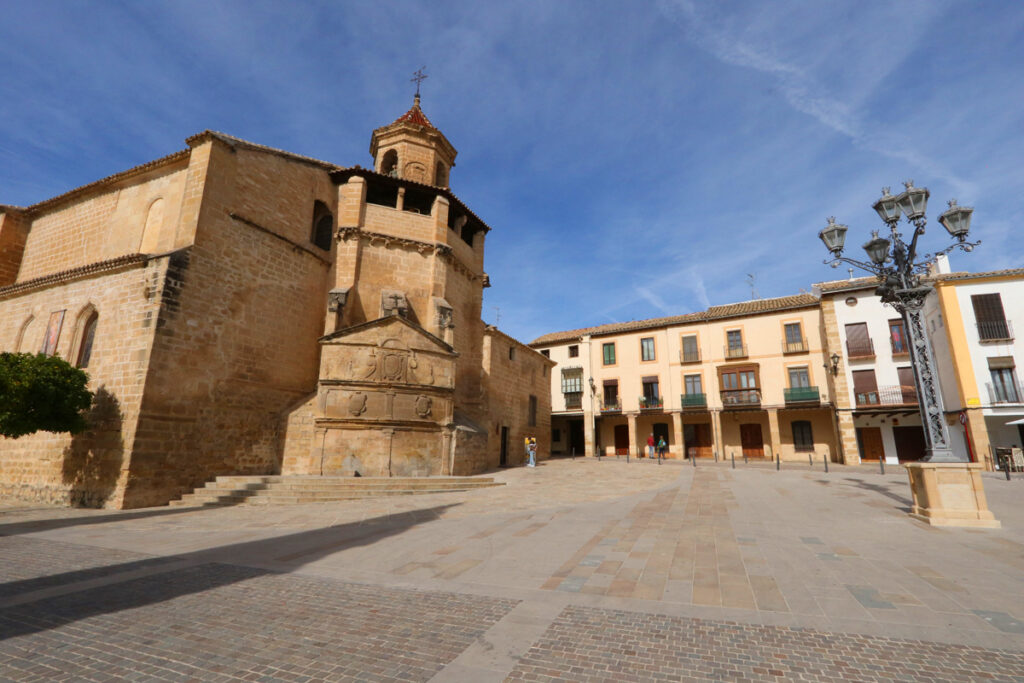
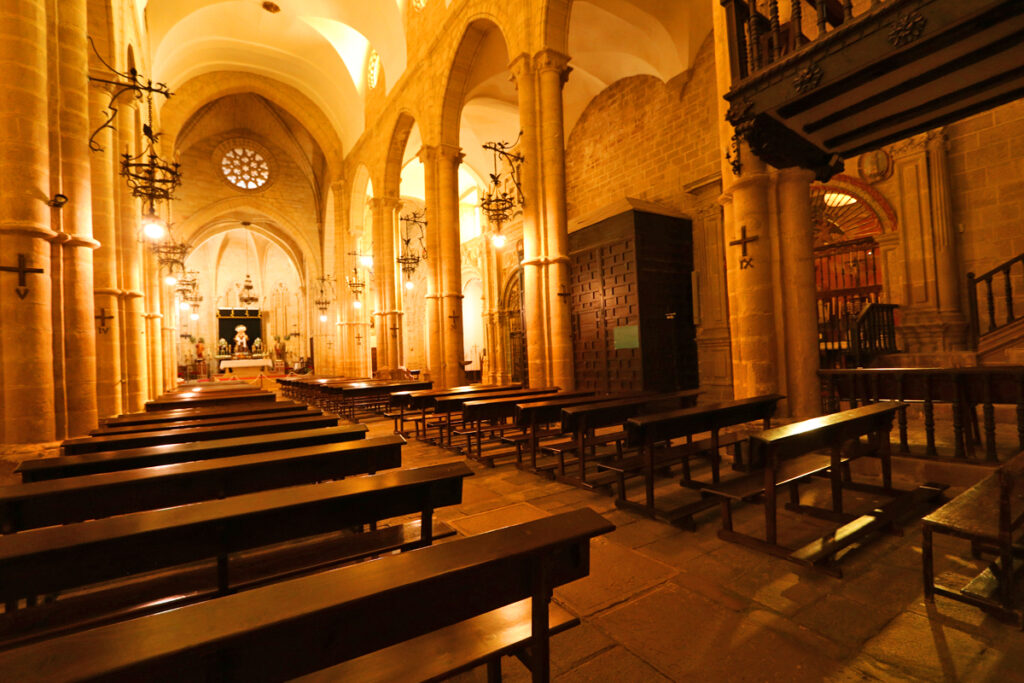
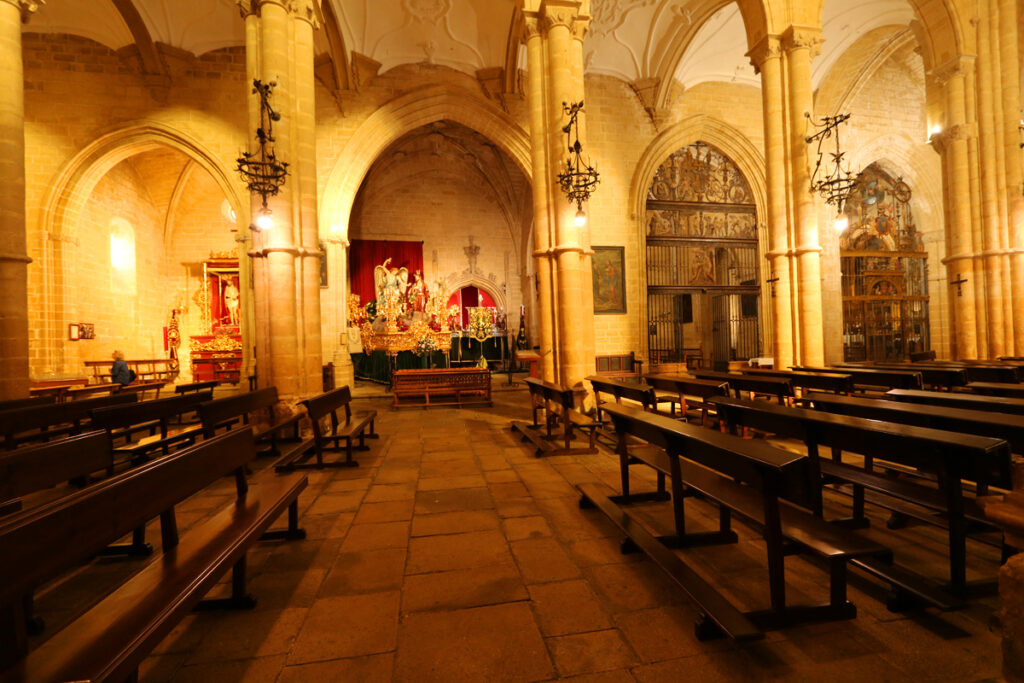
The Church of San Pablo*
It dominates the square and is the oldest church in Ubeda, dating back to the Visigoths.
More highlights
Ubeda is a town where you have to walk around. There are churches, palaces and towers everywhere, some still in use as government buildings and hotels, others allowed to fall into disrepair.
A few highlights:
Plaza del Ayuntamiento – the square behind Plaza Vázquez de Molina. Here you’ll see the other side, the main entry, to the Ayuntamiento building.

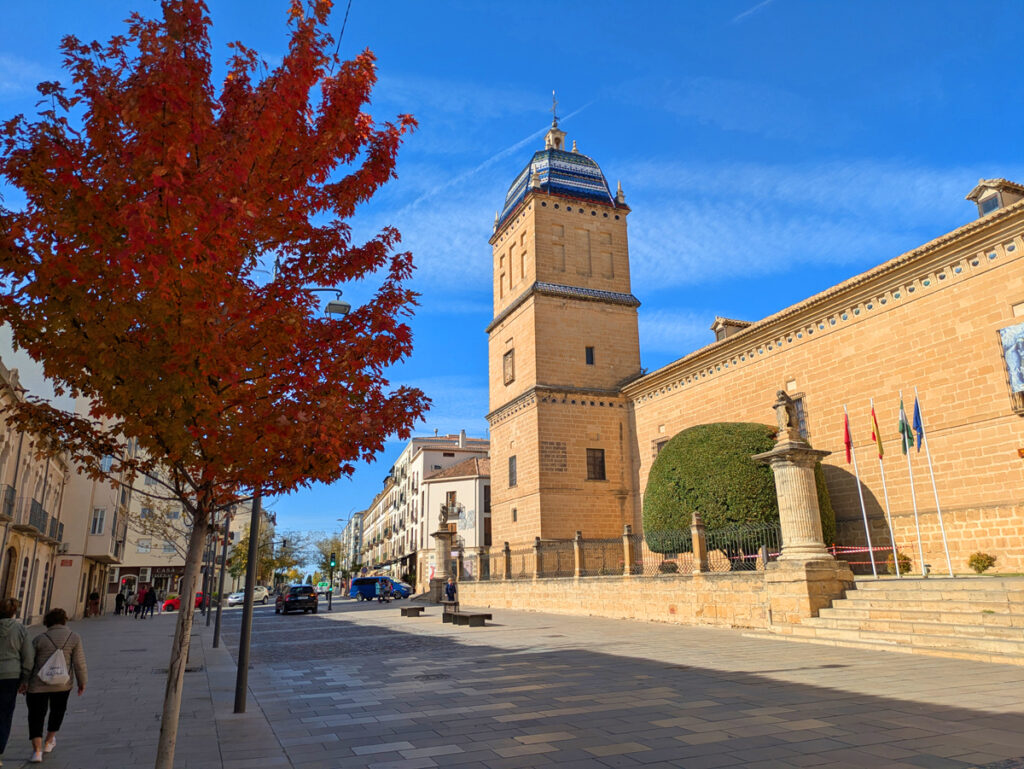
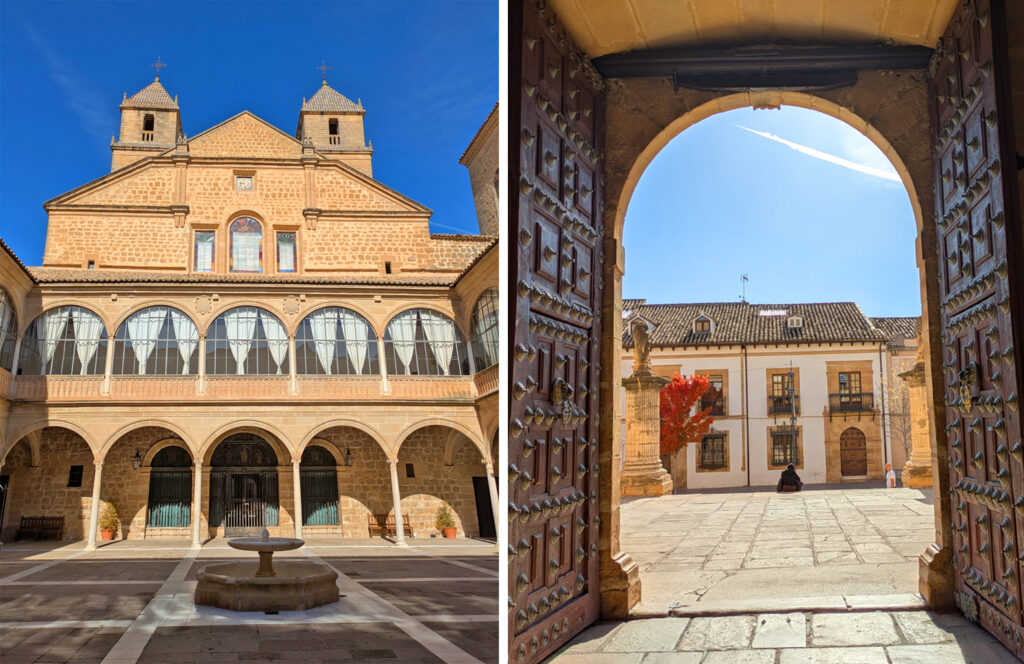
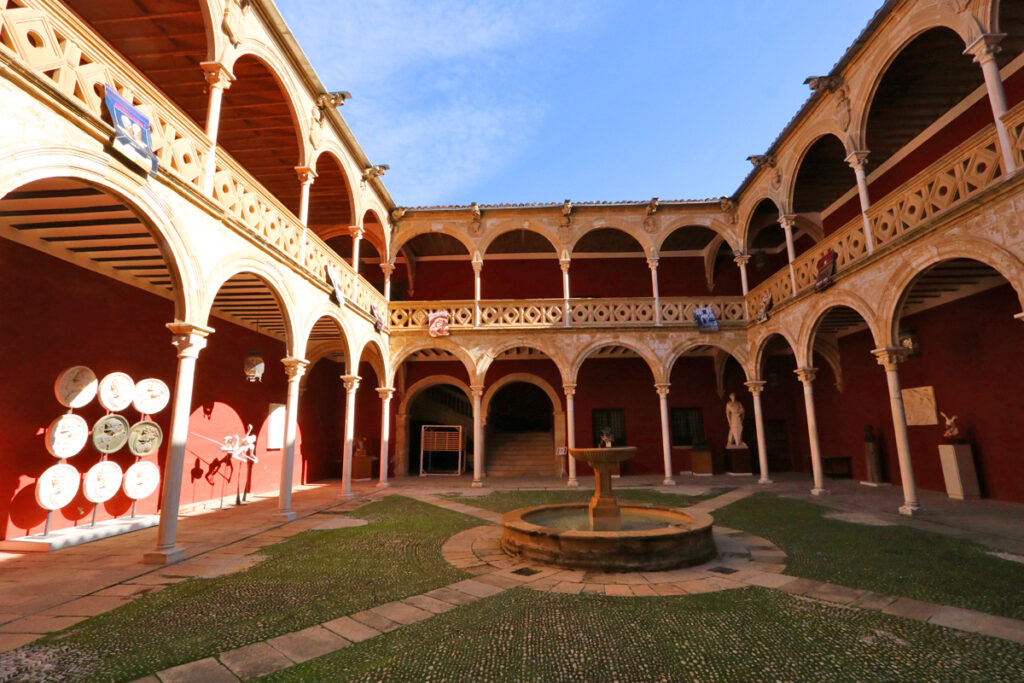
Centro Cultural Hospital de Santiago – on the main street heading to the bus station is this beautiful building which was a hospital for the poor. Built in the 1500’s by (you guessed it) Andrés de Vandelvira. Free to walk in.
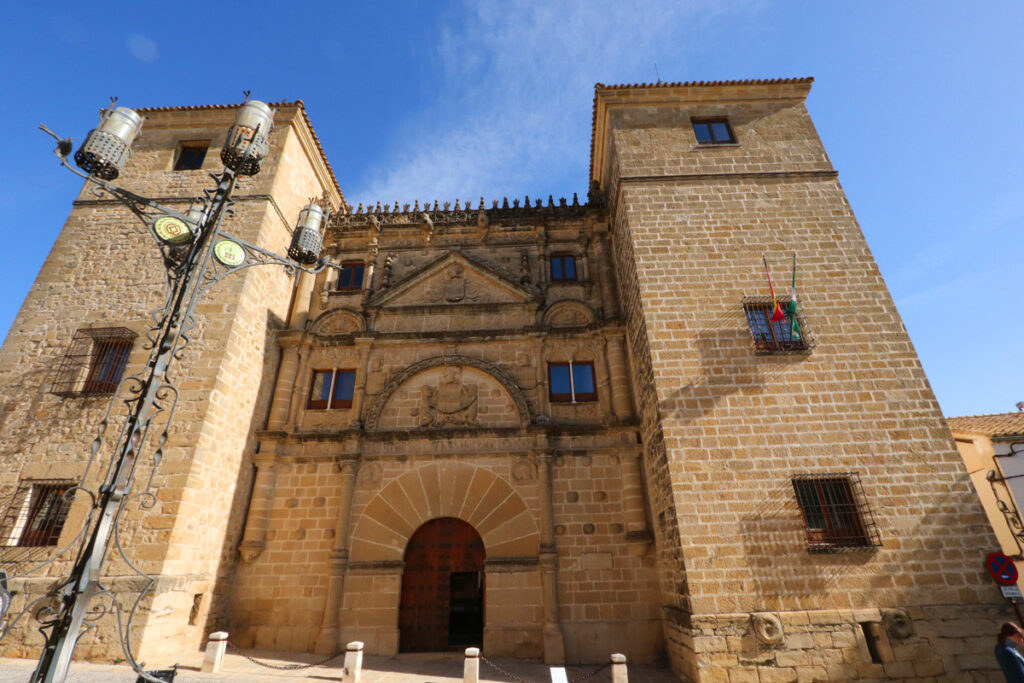
Casa de las Torres – a 16th century palace that is currently an art school. Free to walk in.
Puerta de Granada/water trough – a small gate leading out of the southern wall of the town, leading to the road to Granada (hence the name “Puerta de Granada”). There’s a water trough on the other side (which I assumed was for horses doing the journey).

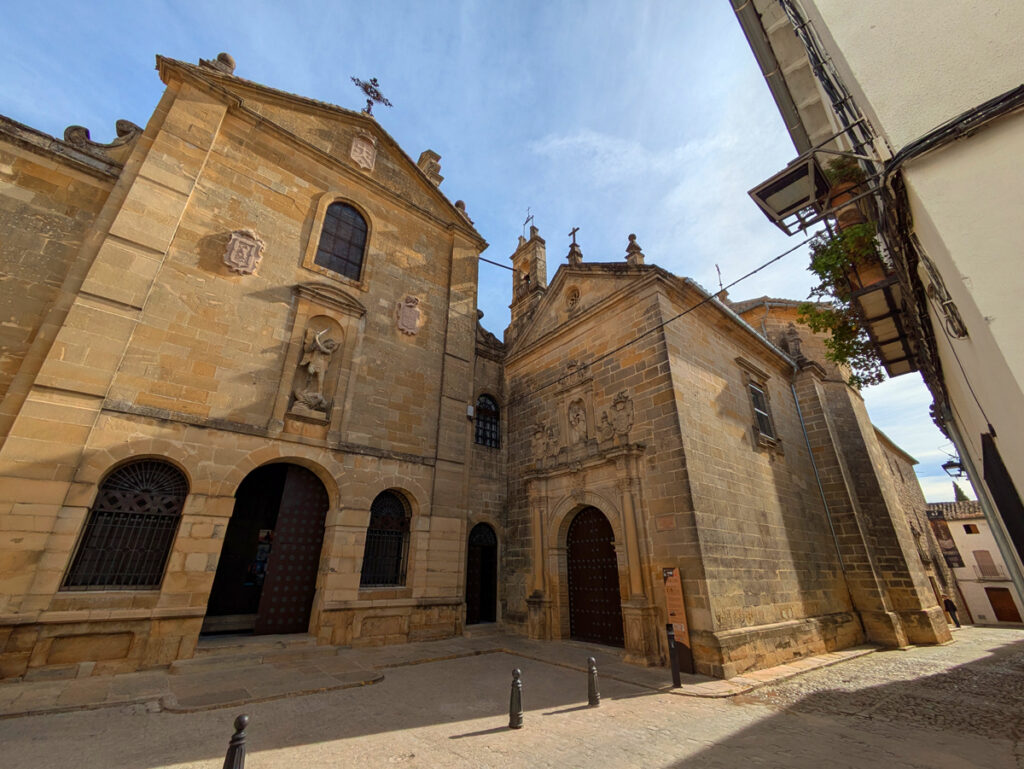
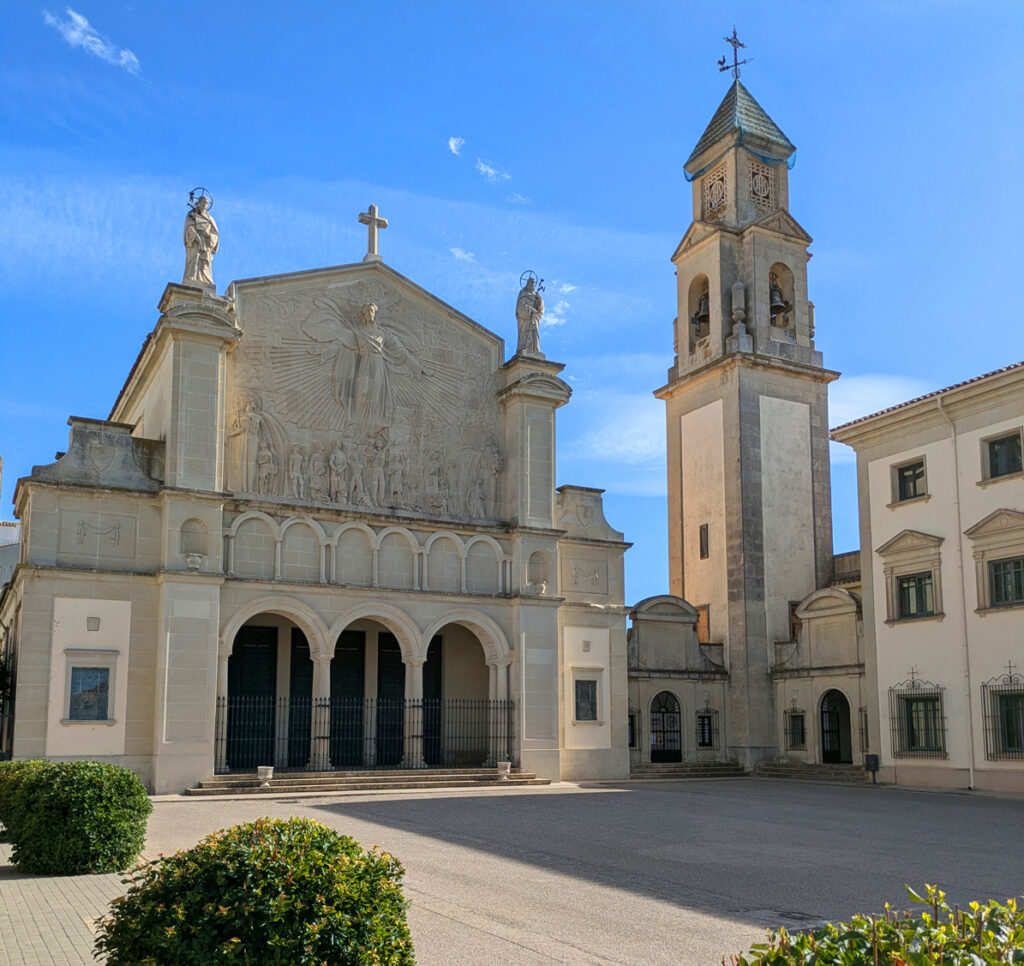
There are many other beautiful historical buildings, among them the Synagogue del Agua, the Palacio Velas de las Cobos, the Palacio de los Orozco, Iglesia de San Miguel…
Viewpoints
Walking through the Puerta de Granada, you’ll get to Calle Miradores de San Lorenzo. Go up the street to Alférez Rojas Navarrete Park. Along the way you’ll get nice views of the valley below and mountains beyond.
A few photos of Ubeda at night…
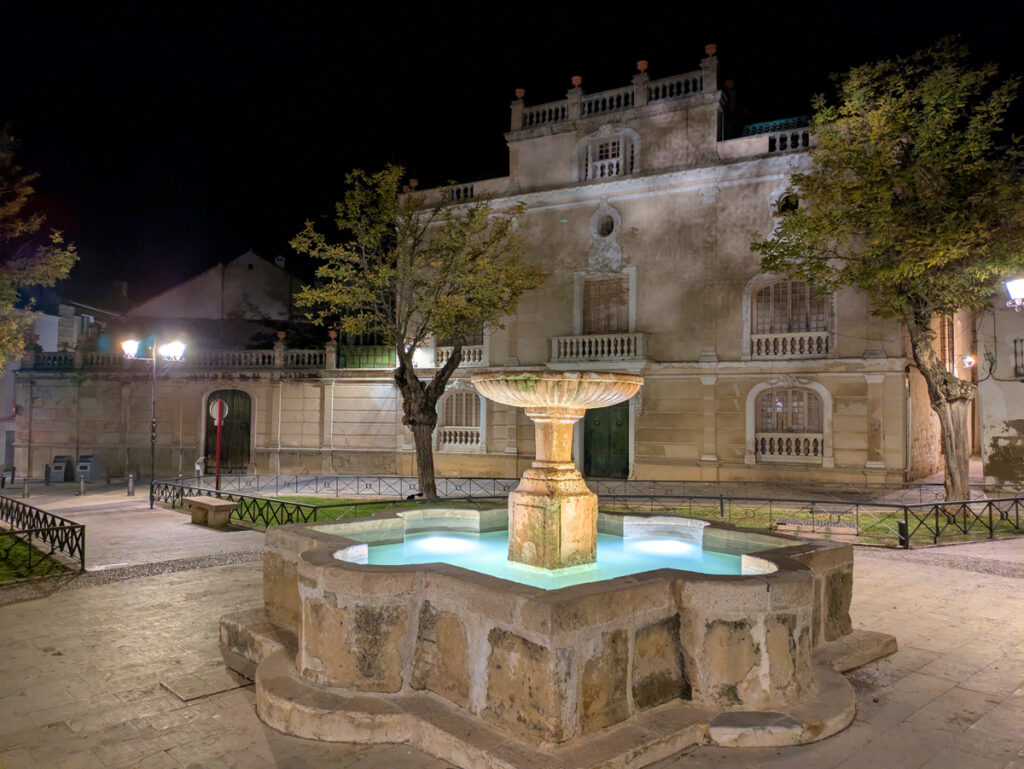
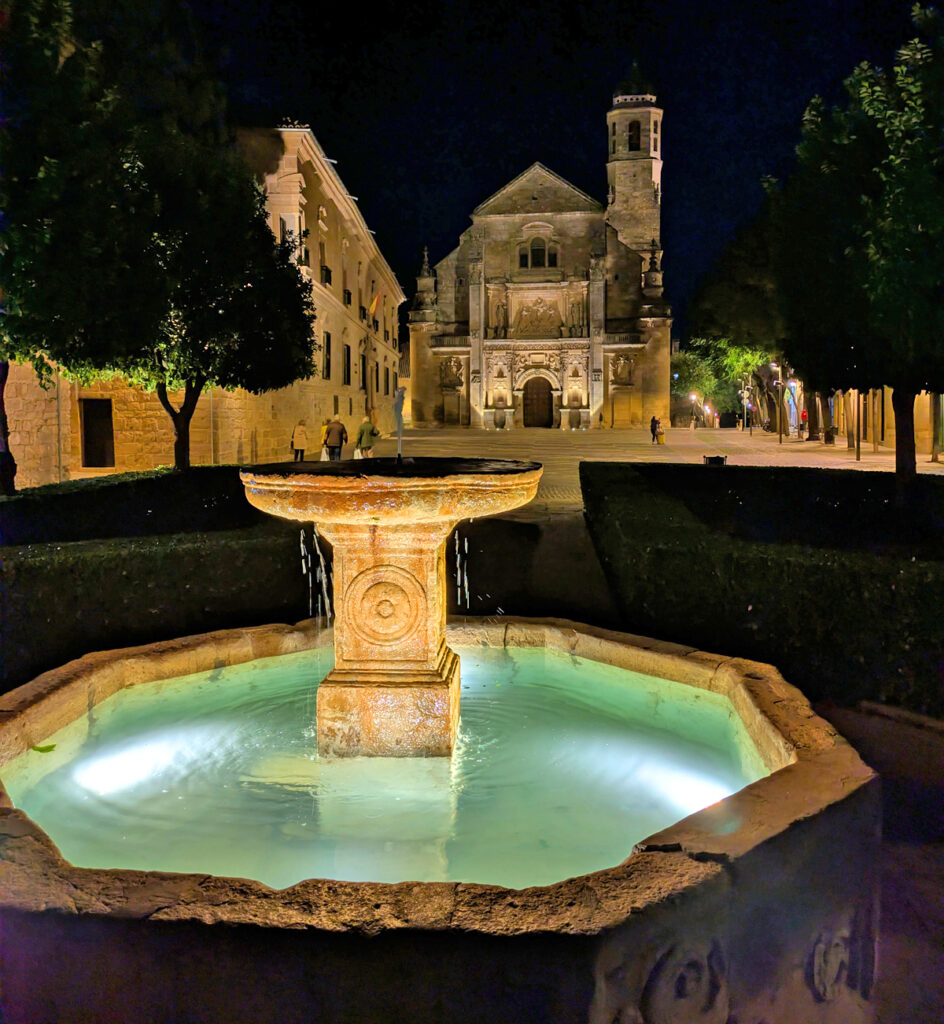
WHAT TO SEE IN BAEZA
Baeza is smaller than Ubeda and is very quiet. It doesn’t help if you arrive early afternoon as we did: everything was closed and it felt like a ghost town. In fact the two main highlights, the Cathedral of Baeza and the Jabalquinto Palace, both have very limited hours (Cathedral 10 am – 1:30 and 4 – 6 pm…the Palace 11 am to 1 pm). So if planning a visit then do it better then we did.
Still Baeza is beautiful and, like Ubeda, much of its beauty lies in the buildings, fountains and arches around the town….all of which you can visit any time.
Plaza de Santa María*
The Plaza de Santa Maria holds a famous fountain: the Fuente de Santa Maria. Built in 1564, it is considered a great example of 16th century fountain designs.

On the square is the former Seminary of San Felipe Neri, a huge building dating back to the 1600s. Today it is part of the Baeza campus of the Universidad Internacional de Andalucía.
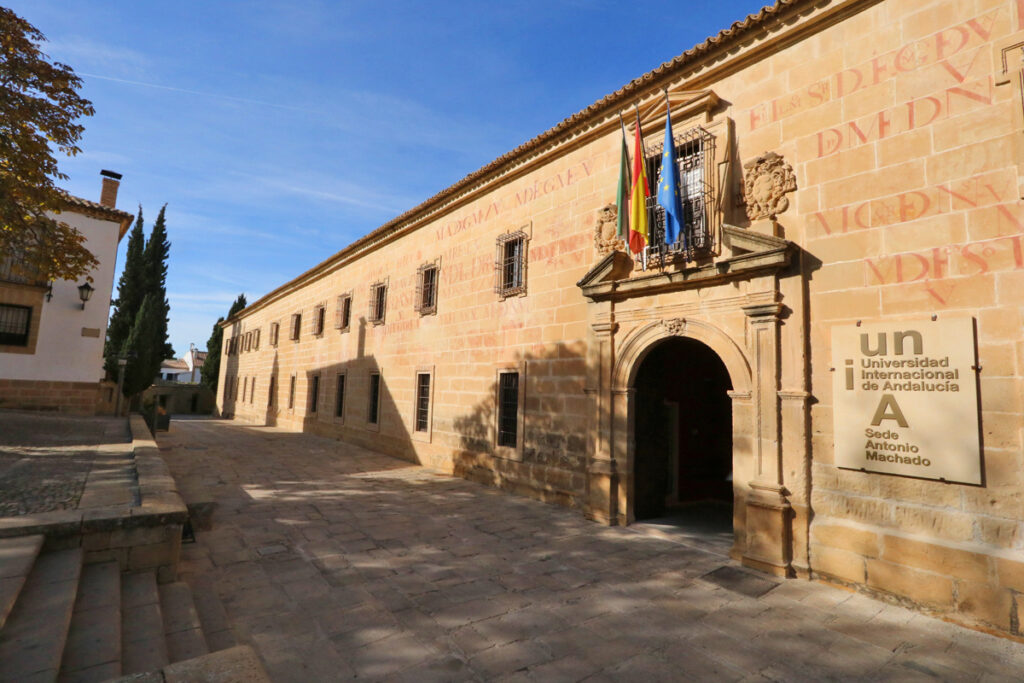
But the highlight of the square is the cathedral.
Catedral de la Natividad de Nuestra Señora de Baeza*
Google told me that the hours were 10 am – 1:30 and 4 – 6 pm. The cathedral website says 10 am – 2:30 and 4 – 7:30 pm. Either way we missed going in which is unfortunate because it looks like a gorgeous cathedral and you can go up the tower for views (something I always love to do).
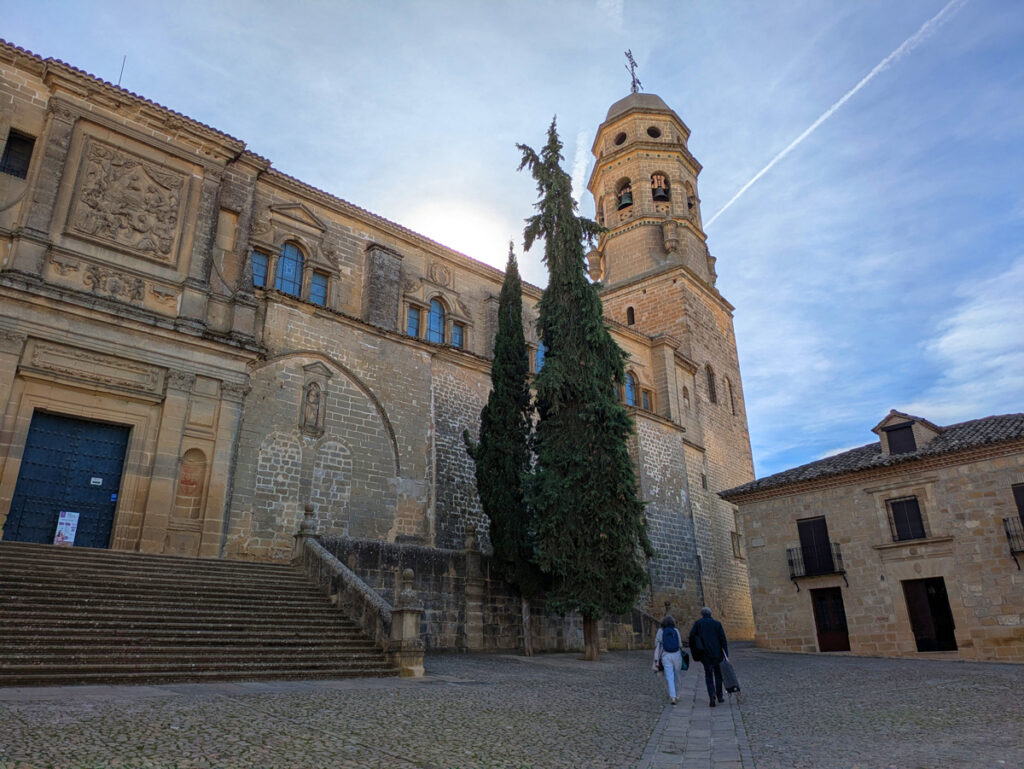
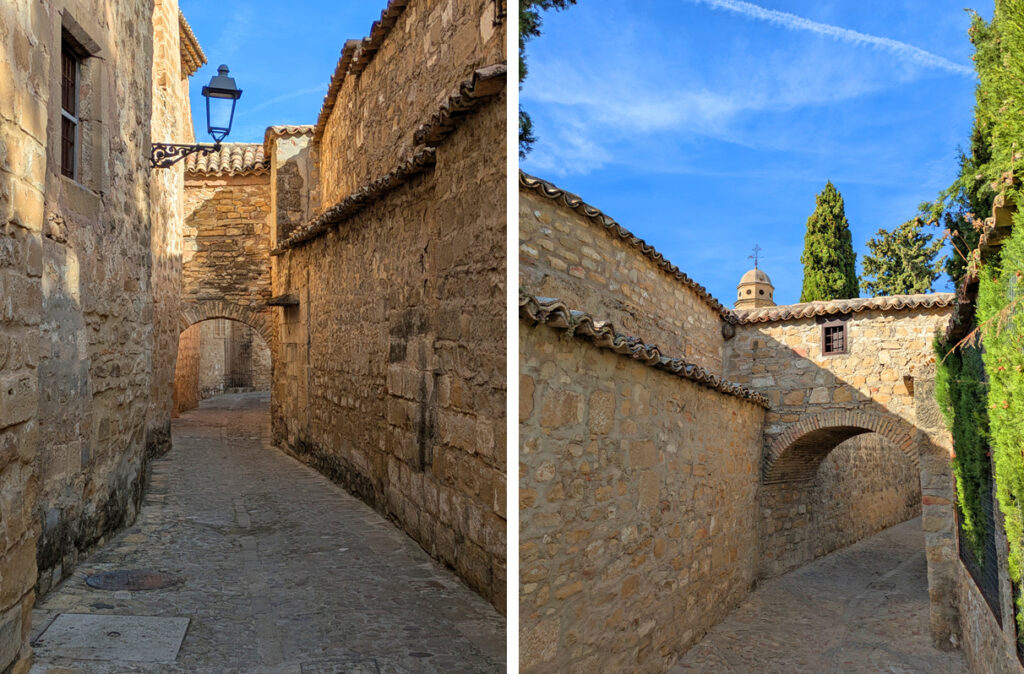
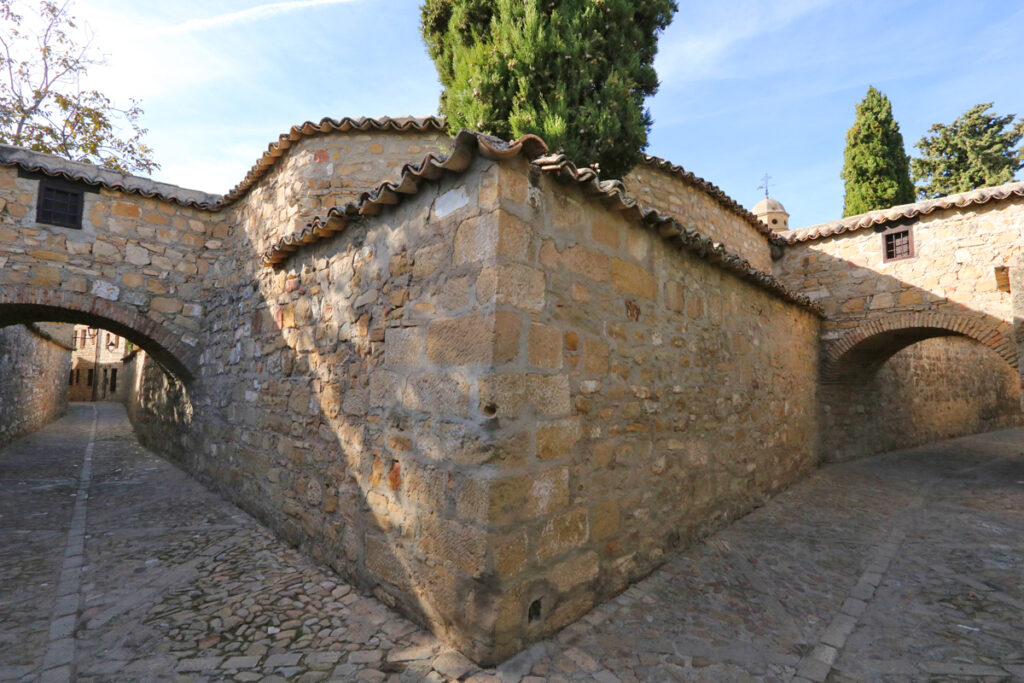
Behind the cathedral are a series of little stone alleys that date back to Moorish times. Wandering through them – nobody else around – felt like stepping back in history.
Plaza de Santa Cruz*
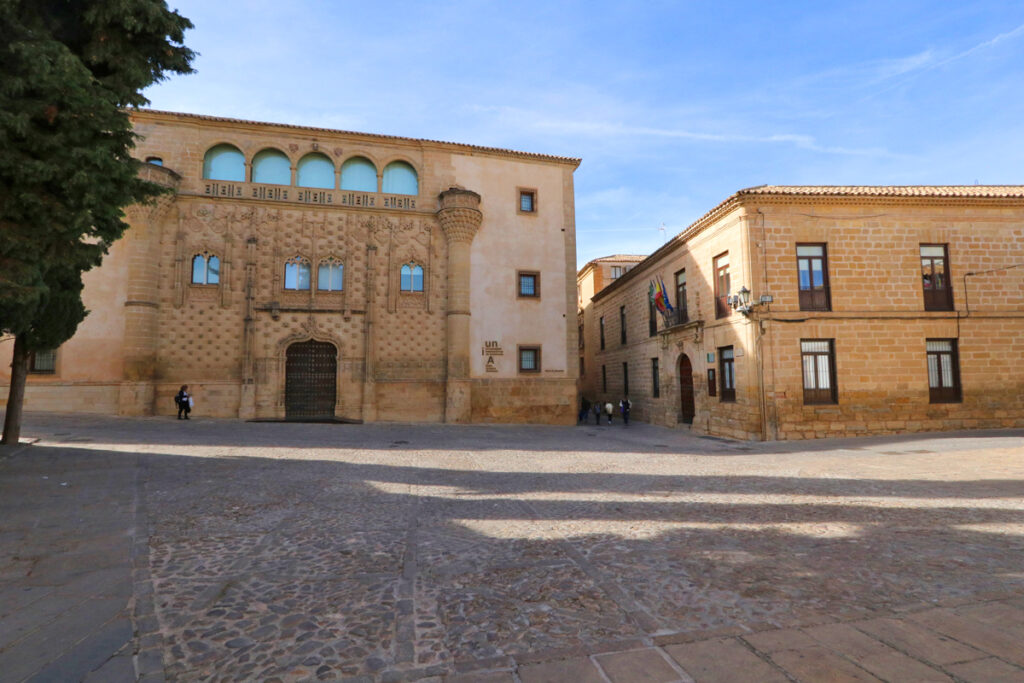
Just minutes away from the Cathedral, going downhill, is the Plaza de Santa Cruz. Highlights there are the Jabalquinto Palace and the church of Santa Cruz.
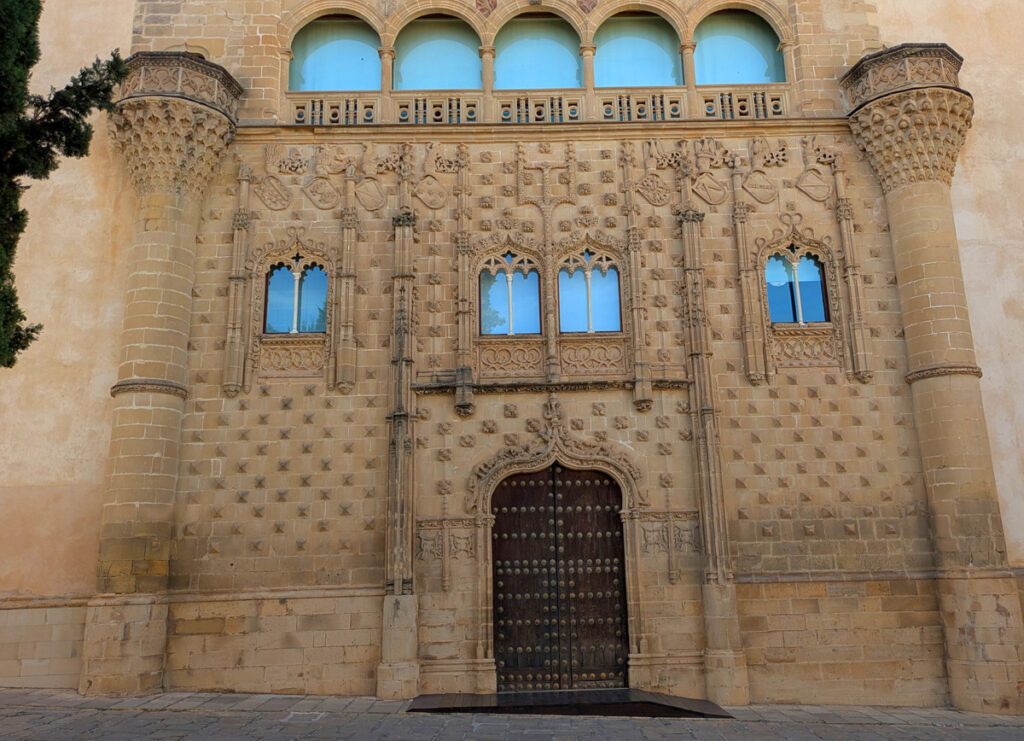
Jabalquinto Palace*
A gorgeous building built as a Palace in the 15th century. A prime example of Isabelline Gothic style. It is part of the Universidad Internacional de Andalucía but you can visit the interior every day from 11 am to 1 pm.
Iglesia de Santa Cruz
A church dating back to the 1200’s, built after the conquest of Baeza by the Christians.
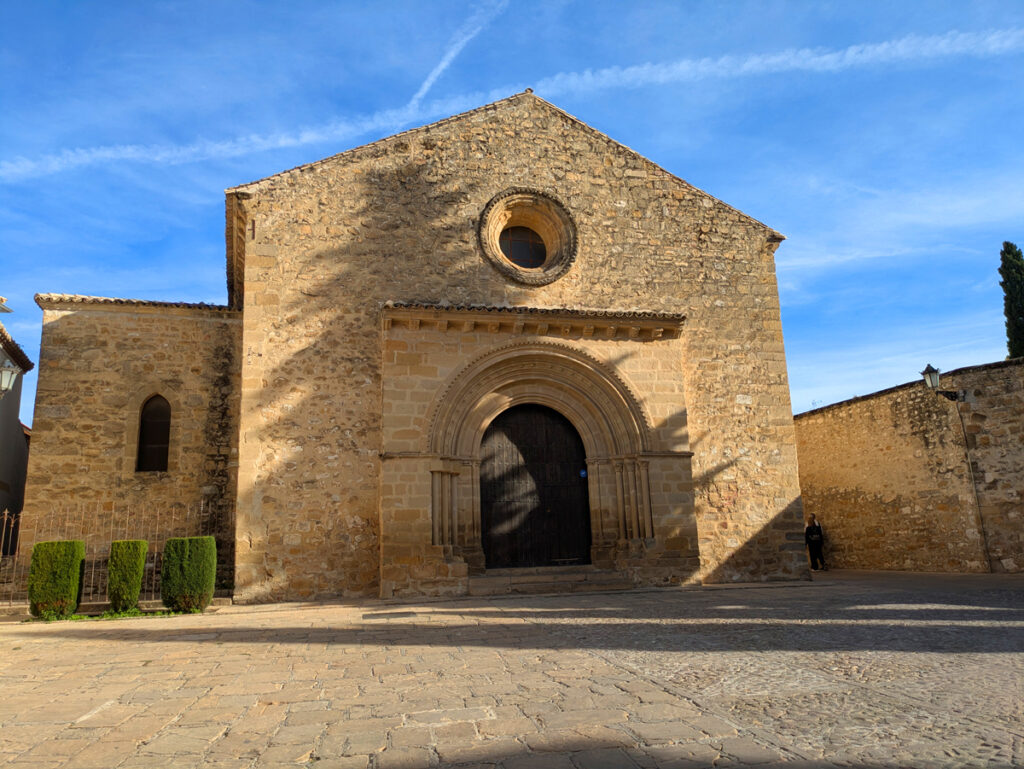
Plaza del Pópulo*
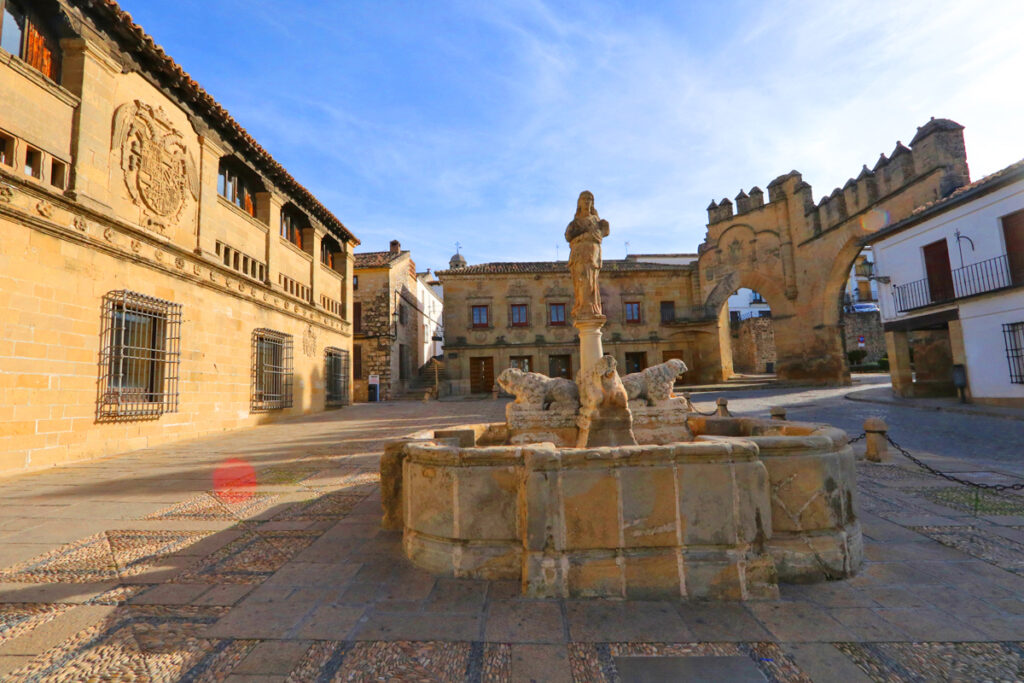
An attractive square lined by historic buildings, another famous fountain, and a city gate.
Lions Fountain (Fuente de los Leones)*
A historic fountain dating back to the 16th century – the four lions and the figure on top were actually moved here in the 16th century from nearby Roman ruins.
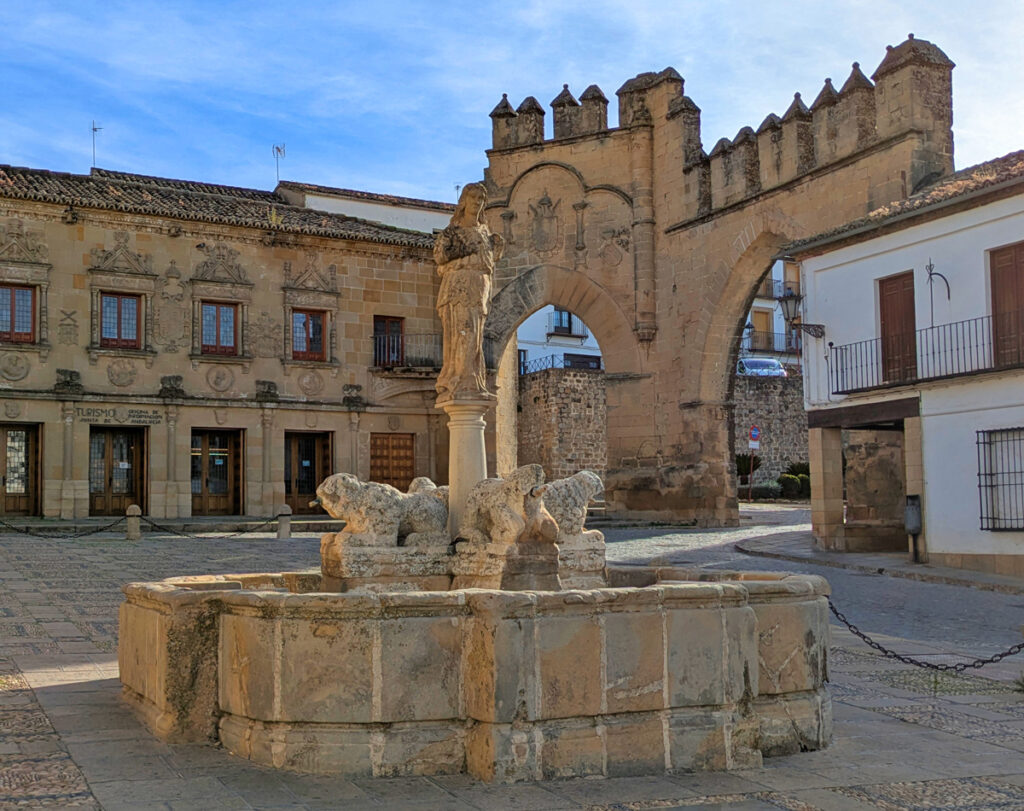
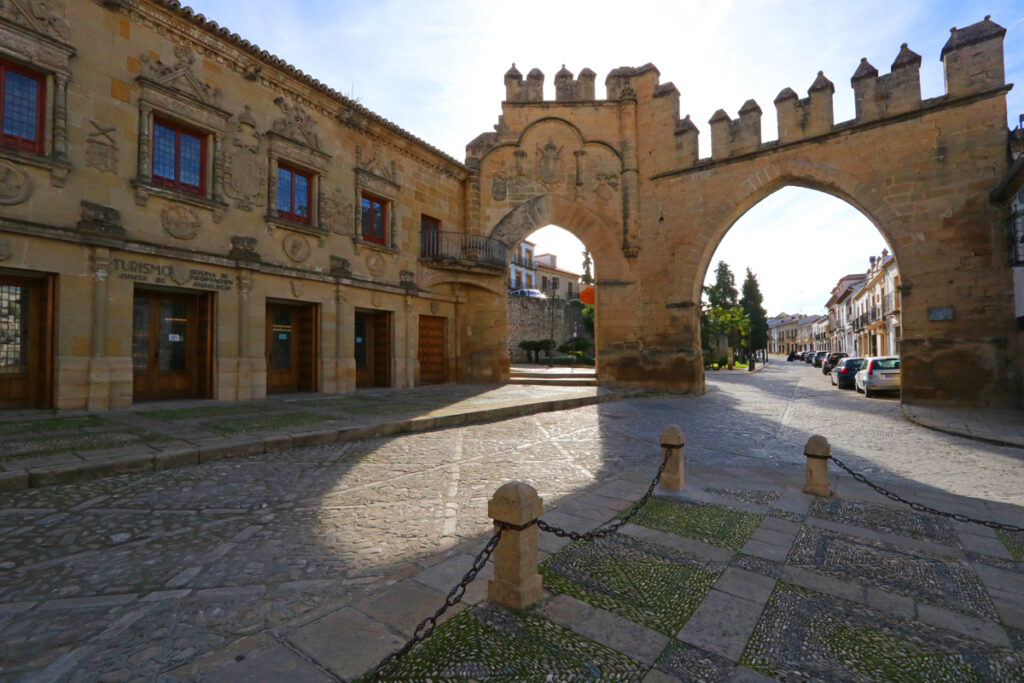
Villalar Arch *
An old gate to the city, it was the main exit point towards the city of Jaén (it’s also called the Jaén gate).
More highlights:
Near the Plaza del Pópulo is the huge Paseo de la Constitución, a large square ringed by porticoed buildings. Unfortunately, in November 2025, there were huge reconstruction projects going on so we couldn’t really appreciate the square.
Continuing on, past Plaza de Espana, Calle San Pablo has many historic buildings: Palacio de los Salcedo, Palacio Sanchez Valenzuela, Palacio de los Acuña, Parroquia de San Pablo…
Just like Ubeda, Baeza has lots to see and most of it is very impressive.
Practical Information on Ubeda (and Baeza)
As I say, Ubeda is a bit bigger than Baeza and more vibrant. If staying a night or two, then I would recommend Ubeda as a base.
Accommodation: we stayed at the Hotel Alvar Fañez, a former palace. The hotel gets mixed reviews based on the room (people like the rooms facing the front rather than the back). Ask for room 201 where we stayed. It was excellent. Also great value, we booked last minute and it cost 55 Euros vs the 65 Euros normally listed.
Breakfast/coffee/lunch: I can’t recommend a place more than Coffee garden. Fantastic place, with healthy breakfasts and excellent coffee. All the staff were women. One of the best cafés we’ve come across in Spain.
Restaurant: We ate at Virentia restaurant. Friendly service, great house wine, mixed reviews on the food (maybe I just chose the wrong dish?). But it is one of the highest rated restaurants in Ubeda and the prices were good.
Getting there and around: If you don’t have a car, then taking the bus is the way to go. The closest main city is Jaén, 45 minutes from Baeza, 1 hour from Ubeda (same bus). Getting between the two towns, you’ll be taking the same bus and it’ll take 15 minutes between the two cities. Buses usually pass every 1 hour to 90 minutes. Have a look at the Alsa schedule.
The long and short of it: Ubeda and Baeza are places you should definitely visit. Magical. We wish we had stayed a 2nd night.
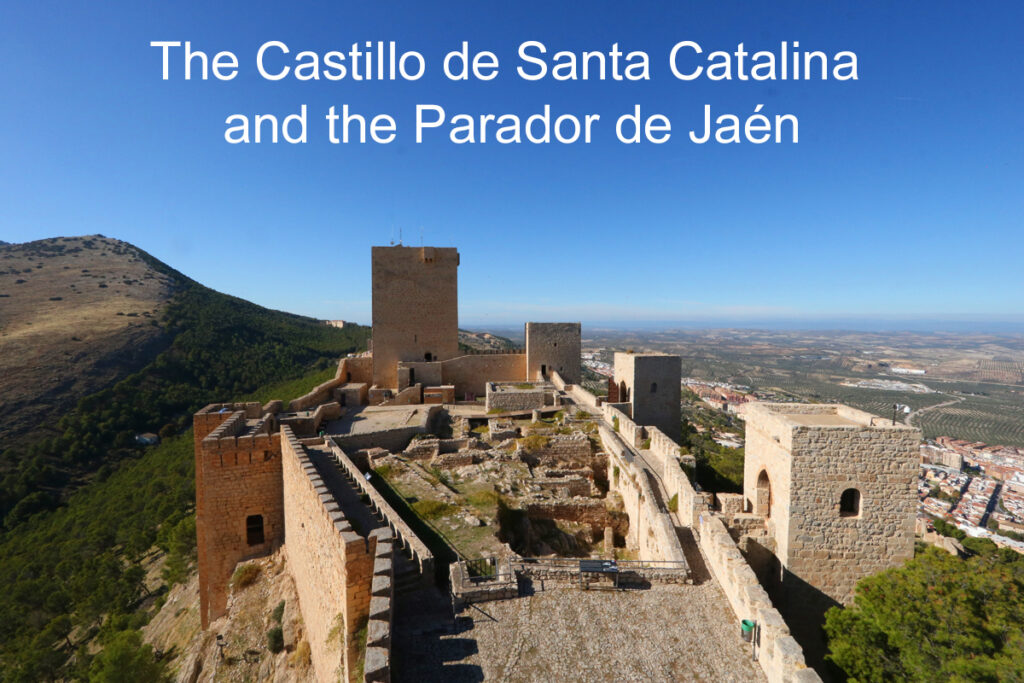
Related: Castillo de Santa Catalina and the Parador de Jaén
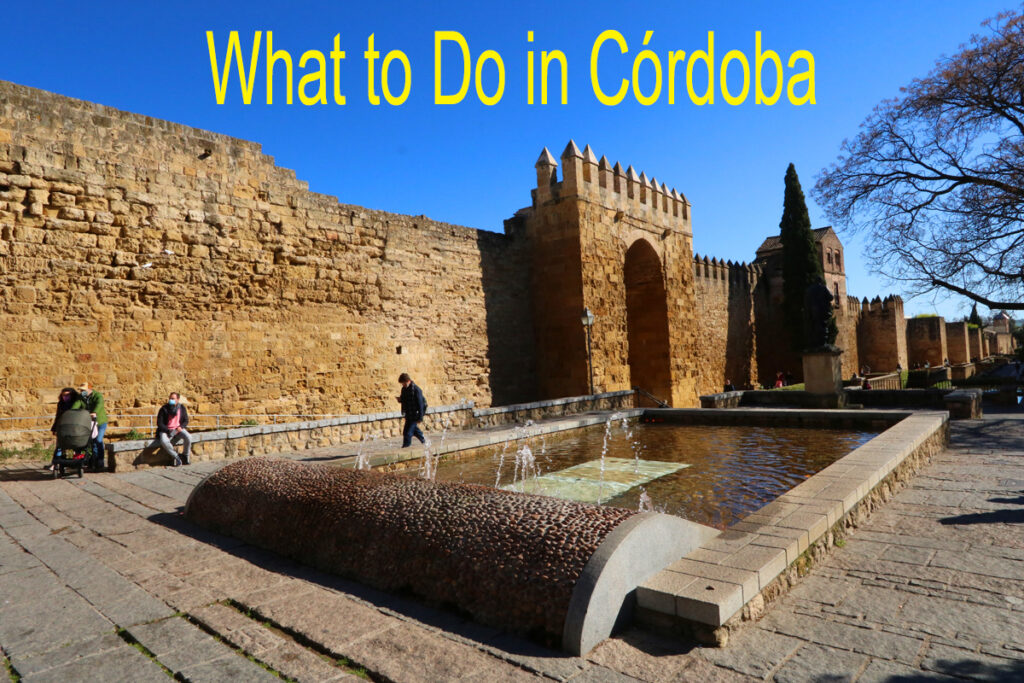
Related: What to Do in Córdoba



Leave a Reply