Living in Barcelona: Ten Years On.
Jean-Benoît lived in Barcelona for ten years before returning to France. Now, ten years later, he is coming back. Why? What draws someone back to Barcelona?
Jean-Benoît tells us about it in this interview.

Name : Jean-Benoît Kauffmann
Age : 76
Home country: France
Years lived in Spain: 10 (2007-2017) — returning in early 2027
Website: Vivreabarcelone.com
Hello Jean-Benoit! Let’s start at the beginning: how do two people drop their life in France to go live in Barcelona for a year? How did you do it?
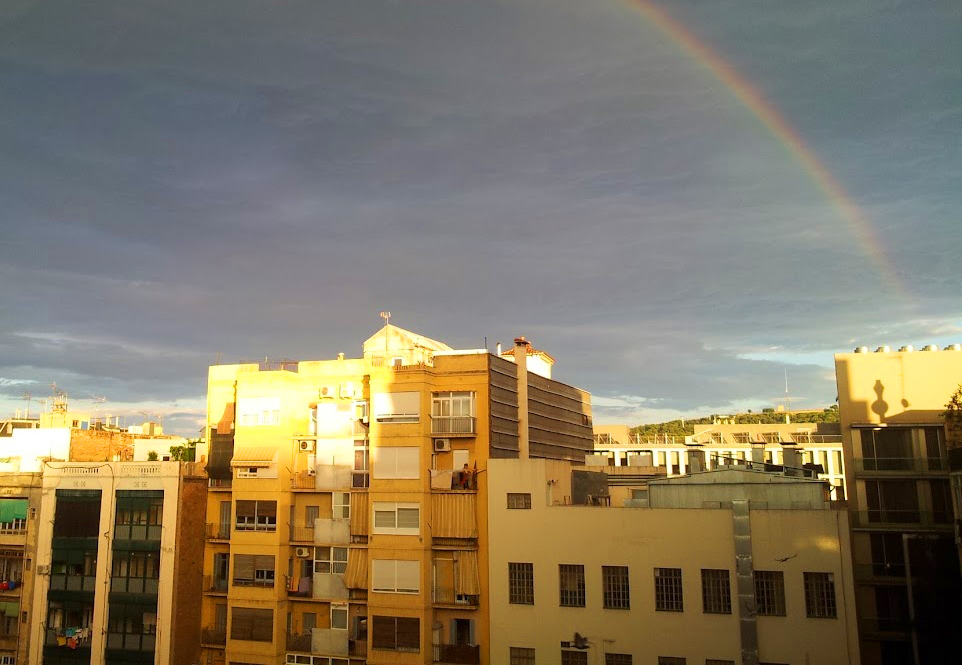
It was accidental. My partner Coco has a cousin in Barcelona who’d left to work in New York for a year. Her apartment was coming free, on Gran Via de les Corts Catalanes, three hundred meters from Plaça d’Espanya heading toward the airport. We had somewhere to live for a year. It was as dumb as that.
The rest we had to build once we got there, and that’s where the real answer to your question is. Coco found a salaried job: English-to-French translator at BudgetPlaces, an online travel agency specializing in budget accommodation. People often assume it was an American company because its founder, John Erceg, was Californian. It wasn’t: it was a Barcelona company, founded in Barcelona in 2003, headquartered in Barcelona, a hundred and thirty employees from thirty countries. A competitor to Booking, at its own scale. She had a Spanish contract, a Spanish paycheck, and Spanish colleagues.
As for me, I registered as an autónomo — self-employed — and went on doing what I knew how to do: websites. I was fifty-seven.
I spell all this out because it’s exactly what’s missing from most expat stories. This wasn’t early retirement, it wasn’t French remote work in disguise, and it wasn’t a property windfall. It was two Spanish working situations, with the Spanish taxes that come with them. We didn’t settle in Barcelona: we worked there.
And the year became ten. When did you decide to stay?
Never. That’s the honest answer, and I know it’s disappointing.
The cousin came back from New York, we had to leave her apartment, and we had no desire whatsoever to go back to France. So we looked for a place of our own. We found one five hundred meters away, on Carrer de la Diputació, facing Parc Joan Miró. Fourth floor.
I say “facing the park” and I have to correct myself right away, because it’s the most Barcelona detail in this whole story: our apartment was interior. Courtyard side. From our windows we couldn’t see Parc Joan Miró: we saw the Telefónica offices. Ten years facing a park we couldn’t see. In Barcelona nobody finds that surprising; it’s the first trade-off any tenant makes, light against noise, and everyone will tell you that you were right to take the interior.
That’s how one year becomes ten: not by a decision, by a lease.
What did you love, specifically, during those ten years?
On Sundays, we went to Monsieur Pollo’s.
That wasn’t his name, obviously. He was the grocer on the corner of Gran Via and Carrer d’Indíbil, a stone’s throw from our first apartment, and he made pollo a l’ast, spit-roasted chicken. We’d come away with the chicken, sautéed potatoes, and a jus I still remember ten years later — which should tell you something about what I consider an important memory. It was our Sunday treat. Every week.
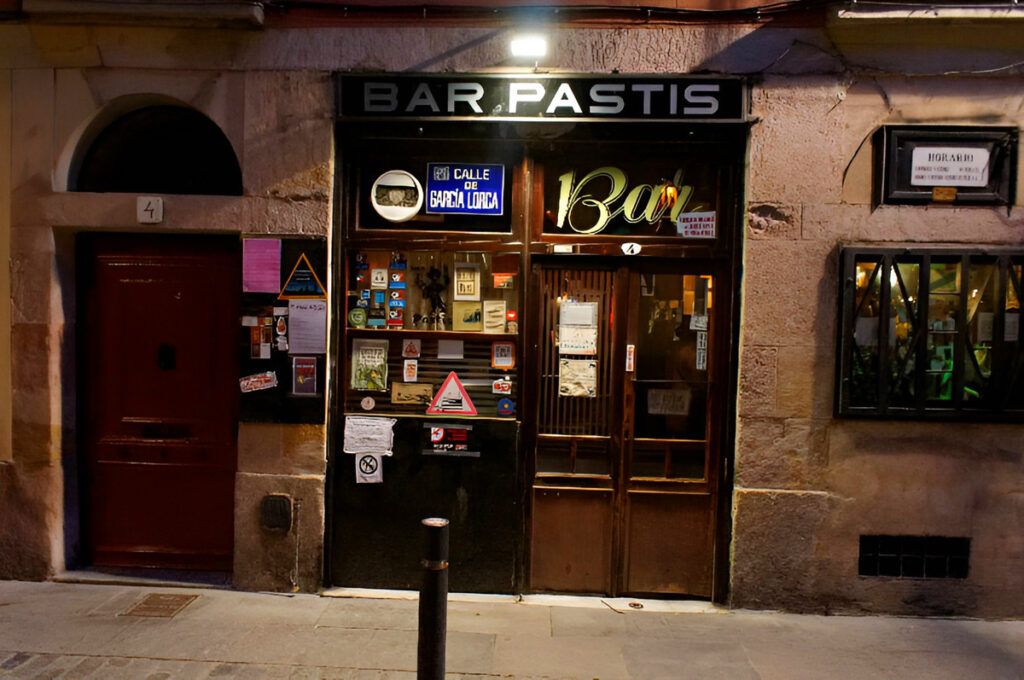
There was also Sandra, our hairdresser, at the Star-Be salon on Carrer de Sant Germà — the sign reads Perruqueria Estètica, Dona i Home, in Catalan, in a neighborhood where Catalan isn’t the only language spoken. We became friends. That’s something you can’t gauge from France: in France, you don’t become friends with your hairdresser. You go there.
And then there were real Catalan friends. Alejandro and his brother Manel, with whom Coco put together a group doing musical recitals. That’s how we got into a city we would otherwise have had no reason to get into. You can’t gauge that from France either: you don’t settle in a city, you’re admitted to it, or you’re not.
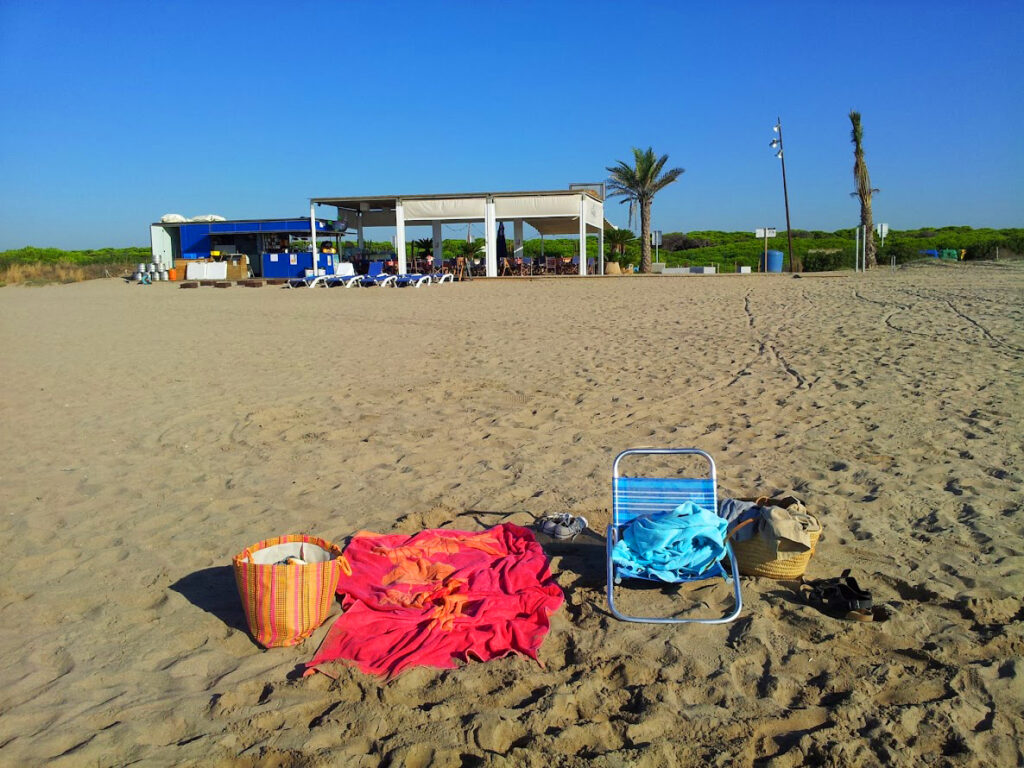
The rest comes down to three things. El Prat beach before seven in the morning, on a working day, the chiringuito still shut and the chairs still stacked: it’s the most beautiful place in the metropolitan area, and it’s empty. The culture you can afford every night of the week without being rich. And the ordinary decency of Spaniards — that absence of stress, that natural goodwill at a counter, on a staircase, in a line — which I only noticed once I no longer had it.
You left in 2017. What happened?
A family obligation in France, and arithmetic.
The obligation I won’t say more about: it’s none of Barcelona’s business, and none of your readers’. The arithmetic, on the other hand, is simple, and plenty of people will recognize it: you can’t pay for an apartment in Barcelona while living in France. Not for long. We held on, and then we didn’t.
It took us two years to free ourselves from that obligation. Two years during which the question of coming back didn’t arise, because there was nothing to decide.
And once you were free, you didn’t come back. Why?
Because we went to the Paris region, and it wasn’t the same thing for each of us.
I’m from Alsace. When you grow up in Alsace and you love big cities — and I’ve always loved big cities — Paris is the natural horizon, the one you talk about without ever having been. I’d never lived there. I wanted to try.
Coco is Parisian. For her it wasn’t a discovery: it was a return, after ten years away. And that’s what gives weight to what follows, because it isn’t a provincial’s verdict on the capital: it’s the observation of someone who comes from there.
We were disappointed, and I’m going to be specific, because a vague disappointment is of no interest to anyone. What we found in Paris was a city turning provincial. The wisecracking Parisian — the one who talks back, who grumbles while doing you a favor, who has an opinion about your accent — is disappearing. He’s been replaced by people up from the provinces who come knocking at your door on a Saturday evening at eight to ask you to turn down your stereo.
Eight o’clock. On a Saturday.
I never experienced that in Barcelona, and not because Barcelonans are more tolerant of noise — they are, but that’s not the point. It’s that in Barcelona, at eight on a Saturday, your neighbor isn’t home.
So you’re coming back in 2027. What’s waiting for you?
I don’t know, and I want that to be clear, because it’s the trap of this kind of interview.
I’ve been back to Barcelona three times since 2017: in October 2018, December 2022, and December 2024, to see Coco’s family. Everything I can state in the present tense stops at December 2024. Beyond that, I know no more than you do.
What I did see, though, comes down to three places.
The first: Bar Marsella. In 2013, the building’s owners wanted to sell it empty of its tenants to a foreign investor, probably to turn it into tourist apartments. The bar, open since 1820, was going to be closed. The city exercised its right of first refusal and bought the entire building: 1.1 million euros. In April 2024, it extended José Lamiel’s lease by five years — third generation of the same family — for 927 euros a month.
In other words, the rescue worked. The walls are publicly owned, the family is in place, the rent is protected, the marble counter from 1820 is still there, and the absinthe ritual carries on exactly as before.
And yet, in December 2024, the atmosphere was no longer the same. The clientele has grown markedly younger and more international. Nothing bad happened: in 2023, Rosalía and Rauw Alejandro shot the video for Vampiros there, and the whole world discovered Barcelona’s oldest bar.
That’s what I wanted to tell, and I’d picked the wrong culprit. This isn’t a story about rents, nor a story about a powerless city council. It’s a city that spends a million euros, that succeeds at everything it promised to succeed at, and that discovers saving a place doesn’t guarantee keeping the people who used to come. Nobody was driven out. There are simply fewer of them, in a bar that became famous.
The second: Els Encants. And here I have to make a confession, because I was about to tell you about something I haven’t seen.
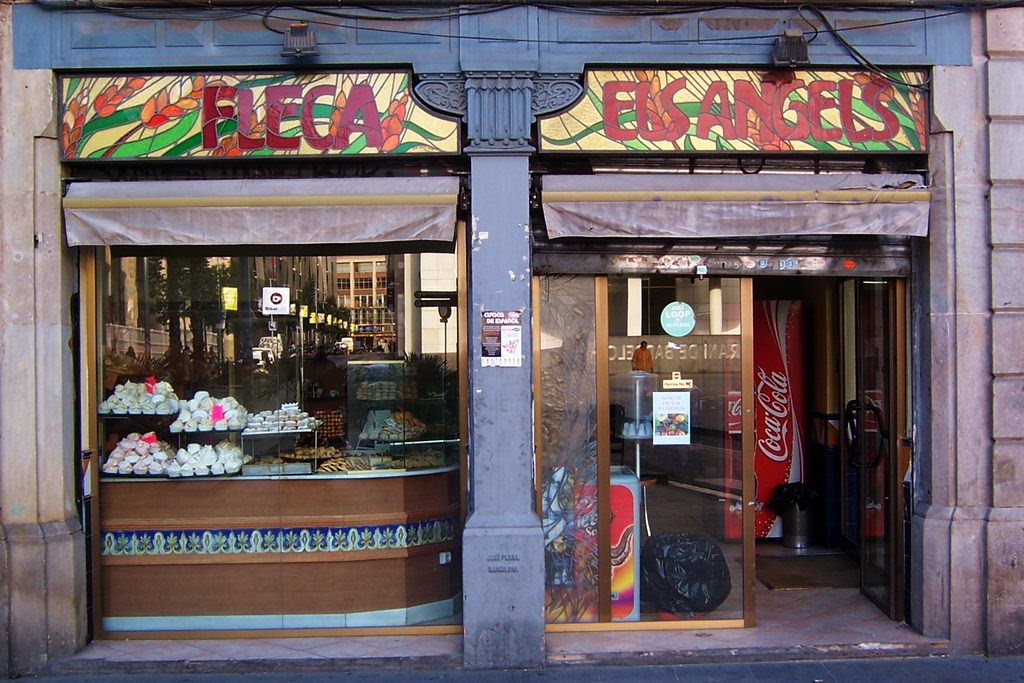
Barcelona’s flea market, the Fira de Bellcaire, one of the oldest in Europe, had occupied fifteen thousand square meters of open ground on Carrer Dos de Maig since 1928. On September 25, 2013, it moved to the other side of Plaça de les Glòries, into a fifty-seven-million-euro building with a canopy of golden mirrors — award-winning, spectacular, visible from a long way off.
I’ve never been back since. I knew the old one, not the new one.
So what I know is documented, not lived. The open-outcry auction at Els Encants was unique in Europe. Señor Ramon ran it Mondays, Wednesdays, and Fridays from seven in the morning, and in duros, a unit of account that had outlived the peseta. Today it has a new auctioneer, it starts at eight, it ends at nine-thirty, it’s held in euros, and there are forty auction stands instead of fifty-one. Señor Ramon was compulsorily retired; his last auction, one Friday in September 2013, was called through tears.
The blanket sellers — the ones who laid their goods out on the ground itself, in the middle of the grounds, with no fixed stand — mostly couldn’t afford the investment a place in the new building required.
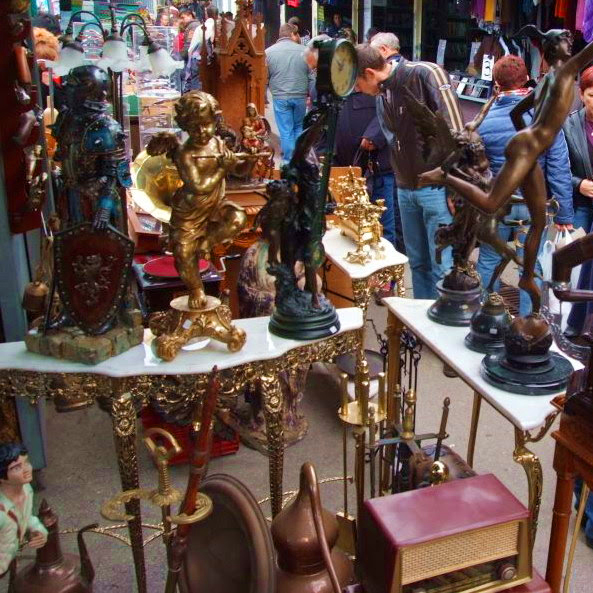
And the building itself is a linear route across three sloping levels. You can’t get lost in it anymore.
Ten years on, the traders say they’ve gained space, hours, and dignity, and lost “a certain bohemianism.” A woman who’s sold there forever puts it better than I can: “We get buyers who come because they know us, but who admit to us that Els Encants isn’t what it was. They come, they park the car in the garage, they buy, and they leave.”
That’s why I wanted this example, and why it has nothing to do with rising rents. Nobody was driven out by the market. The city built its traders an award-winning building, they all moved in, the market still works and the auctions go on. The rescue succeeded, and something died anyway. It’s the opposite of the usual story, and I’ve seen it nowhere else.
What I can’t tell you is what it feels like to walk in there today. That’s what I dread most about coming back.
And the third? Monsieur Pollo is gone.
He retired, quite simply. The premises changed hands: on the corner of Gran Via and Carrer d’Indíbil, you’ll now find El Rincón de Vaz-Yiyi.
There was no battle, no petition, no article in La Vanguardia. Nobody was driven out, no investor is to blame, and it would ill become me to hold it against a man for stopping work. And yet it is, by far, what I miss most, and I’m aware how trivial that sounds next to a two-hundred-year-old bar and a fourteenth-century market.
I notice, in passing, that my three places tell three retirements. Señor Ramon, compulsorily retired by a municipal regulation. Monsieur Pollo, who left the day he decided to. And José Lamiel, still behind his counter in the third generation because the city bought the walls. We talk a great deal about rents and tourists; we rarely talk about the fact that a city changes above all when the people who held it stop.
Sandra’s salon, for its part, is still standing. Same sign, same window, same Carrer de Sant Germà. Run by someone else.
I think that’s the truest picture of those ten years: signs outlast people.
And despite the changes, you’re coming back. Why Jean-Benoit ?
Yes — and not because Barcelona has become better. It hasn’t necessarily, and I’m not going to sell it to you.
I’m coming back because I’ve compared. Not everyone gets to: I lived ten years in a big southern city, then several years in the largest city in my own country, and I can set them side by side without romanticizing anything. The neighbor knocking at eight on a Saturday on one side. The goodwill, the culture within everyone’s reach, and the empty beach at seven in the morning on the other.
And I’m coming back knowing what I’ll lose there. The Sunday chicken is already gone, so is the auction in duros, and the absinthe is now drunk in front of people who’ve seen the Rosalía video. I’m not coming back to look for 2007. I’m coming back to a city that has gone on changing without me — which is, after all, the opposite of mourning.
Jean-Benoît Kauffmann has run vivreabarcelone.com since 2009. He returns to live in Barcelona in early 2027.
More: Rating the Spanish Cities



Leave a Reply