Not Cuckoo for Spain. Why this Expat is moving back to Switzerland.
I love this interview just because of how brutally honest Stefanie is. She lived and worked in Spain for 9 years before calling it quits and moving back to Switzerland.
Many people reading this won’t relate. In fact, most interviews are enthusiastic about living in Spain. But I think people also have to know about the less positive aspects of Spain (some of which we can all relate to). That’s why this interview is so interesting.
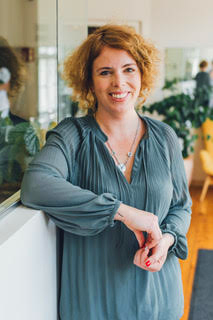
Name: Stefanie Gründler
Age: 42
Country of Origin: Austria, 10 years in Switzerland
Number of years in Spain: 9
Websites: Linkedin, Professional
Hi Stefanie! Thank you for doing this interview. I’m very interested in your story. Firstly: how did you end up deciding to move to Spain?
I moved to Spain because I was looking for a very specific kind of life.
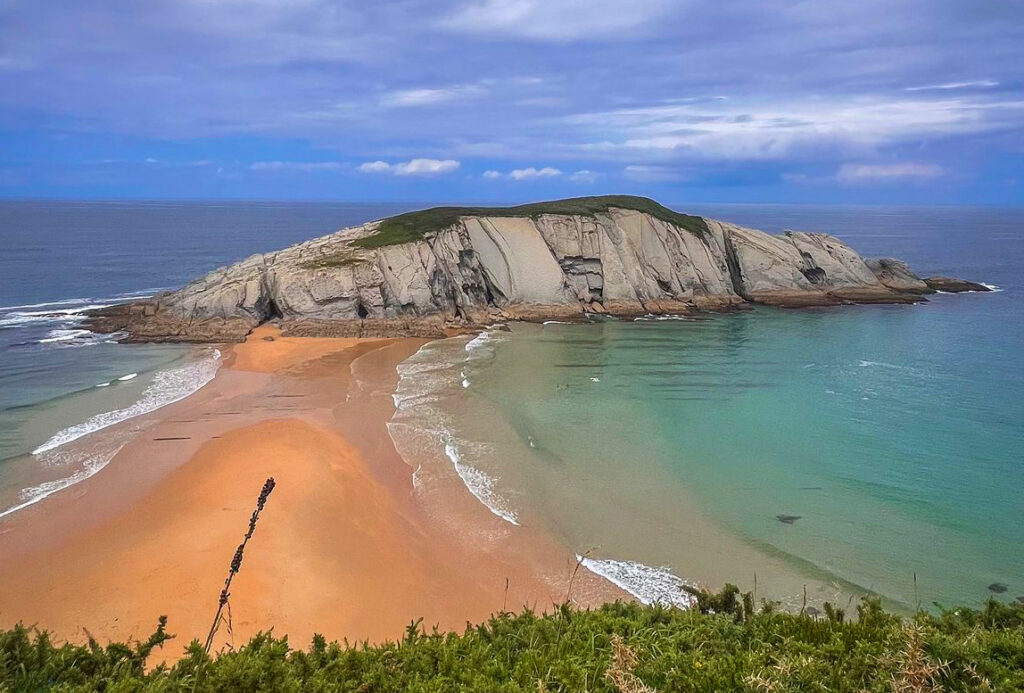
I wanted a house with space, nature around me, and the possibility to live in a more rural setting. It was important that it was still reachable by car from Austria. And I never wanted to move to the south of Spain – I was always drawn to the north, to the green landscape and the climate.
Even today, I still love the landscapes. It’s beautiful, calm, and very grounding. I renovated the house myself and put a lot of heart, time and energy into it.
But over the years, my reality changed. I’m a single mother and I work independently in IT and EdTech. We develop software, but Spain is not our market. While I earn enough on paper, the combination of taxes, social contributions and structural disadvantages for self-employed people means that, in practice, there is barely enough left to live on.
After eight years, I had to admit to myself that this constant financial pressure was not sustainable for me. It affected my health and overshadowed everything else. At some point, you realise that loving a place is not enough if the conditions make everyday life a permanent struggle.
That insight didn’t come easily – but it was an important one.

A few useful Resources
Buying Private health insurance in Spain. We recommend Innoinsure, they make it easy and offer different policies through various providers. And you don’t need a Spanish bank account – you can pay with foreign credit cards. More info here.
Spartan FX. Buying a house or car in Spain and need to transfer and exchange a large sum of money? More here.
Wise. For everyday transfers and exchanges of money from your home country. Nobody should be using banks anymore. More here.
Why did you decide to settle in Cantabria? What is your living situation?
People often ask why Cantabria. The answer is simple: it’s green, it’s not unbearably hot, and yes — it even has snow 😊. That combination alone already feels like a small miracle.
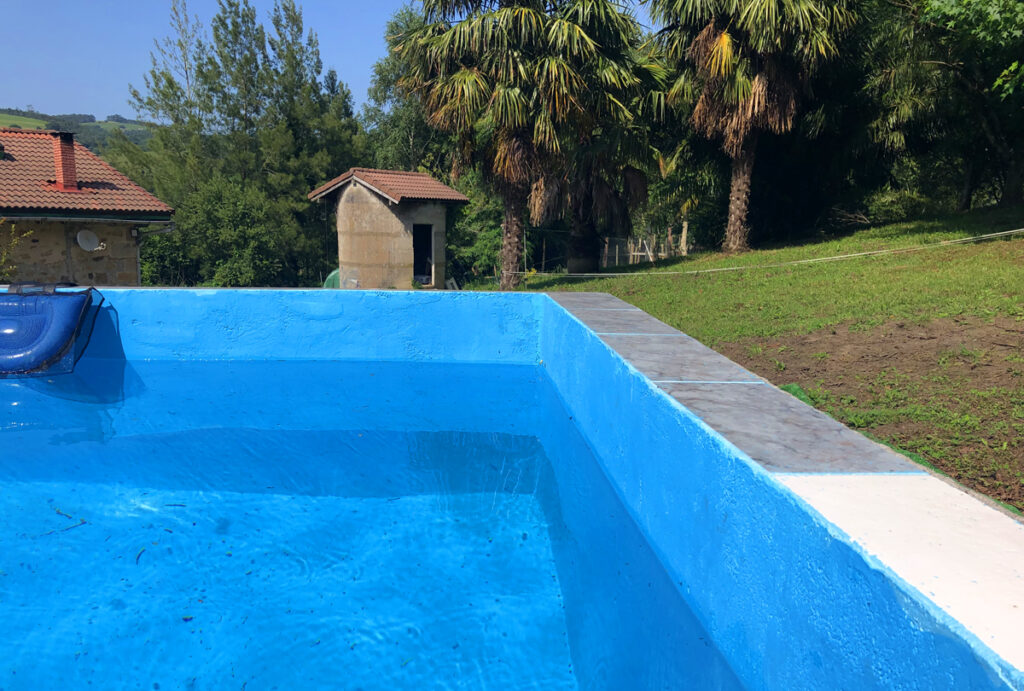
I had an old stone house surrounded by 4.5 hectares of land. It’s genuinely beautiful — the kind of place that makes you believe, at least briefly, that life might slow down and make sense.
I run an EdTech company in Switzerland and used to work entirely from home, so on paper it sounded like the perfect setup: nature, space, flexibility, and meaningful work carried out remotely.
Reality, as it tends to do, added a few unexpected footnotes.
How is your Spanish and how well have you been able to integrate into life in Cantabria?
My Spanish is high level. I think it’s close to a C2, so I don’t have language issues. Yet I found it hard or nearly impossible to integrate. Even with a small son, I only have contact with expats.
You mentioned that Spain isn’t for you. I’ll ask about that in a minute. But when you first moved to Cantabria, did you like it? How long did the honeymoon period last?
Yes, I liked it and I thought that all these weird stories just occurred because expats didn’t integrate well, that they just didn’t organize their things well… My honeymoon period lasted about a year.
What’s happened Stefanie? What has changed your outlook on Spain?
I have a long list.
I had a severe problem with my third world electric installation. I called 20 electricians and nobody showed up.
Living in Spain felt a bit like running a financial obstacle course on expert mode. I earn well, I work hard, I’m a single parent — which, surprisingly, earned me exactly zero bonus points. Taxes and social contributions, however, showed up like clockwork, enthusiastic and relentless, and together they did a remarkably efficient job of bending my spine into new and interesting shapes.
Eating healthy is presented as a theoretical concept rather than a practical option. I would genuinely have loved to feed my son and myself decent food, but the choices seemed to be greasy, sugary, unavailable, or priced like artisanal jewelry. Fresh and high-quality food exists — somewhere — but finding it feels like a scavenger hunt designed by someone who hates vegetables.
Logistics operate on a philosophy best described as “because we can.” If the delivery driver doesn’t feel like coming to your house, congratulations: you are now the proud owner of a 20-kilometer pilgrimage to a remote parcel station. Appeals are futile. The driver is king, the driver is law.
Customer service, meanwhile, is a fascinating social experiment in human endurance. It doesn’t exist in any recognizable form. Major companies seem to function primarily by confusing, exhausting, and occasionally gaslighting their customers. Case in point: I purchased a roaming package for Switzerland from Movistar — via their hotline, no less. Upon returning, I was greeted by a €600 bill and the calm explanation that such a package has never existed, and that the recorded call where I bought it had mysteriously vanished into the void. Five hours of hotline purgatory later, I had learned nothing except patience — and despair.
Communication follows a similarly avant-garde model. Emails and phone calls are largely decorative. If you want something done, you must appear in person, repeatedly, and preferably with snacks. Everything takes forever. Urgency is considered impolite.
Driving is an adventure sport. Braking randomly on highways, parking wherever physics allows, and treating roundabout rules as optional creative suggestions are all part of the national charm. Survival is a skill you acquire quickly.
Processes are gloriously complicated. Everything is supposedly digital, modern, and online — until it isn’t. In the end, nothing works, and you’re told to print a form, sign it, and bring it to an office that closes before you finish reading the opening hours.
Northern cuisine proudly ignores the Mediterranean diet altogether. Meat, sausages, fat — repeat. Fresh products are not only expensive but also noticeably worse than what you’d find in Central Europe, which is impressive in its own right.
Infrastructure adds a touch of suspense to daily life. Power supply reliability feels more like a suggestion than a promise, and I’ve seen developing countries handle it with more confidence.
There’s also a strong collective suspicion toward anyone who works, earns money, or — heaven forbid — owns a business. Rent out an apartment at market prices, and you’re not a landlord, you’re a villain. Productivity is frowned upon; success is deeply suspicious.
Another thing that became impossible to ignore is how deeply subsidy-driven everyday life has become. A surprising number of people seem to live from subsidies rather than toward ideas. Initiative, innovation, and entrepreneurial thinking are often replaced by an almost ritualistic belief that there must be a grant for everything — preferably applied for through a process so slow and complex that momentum dies somewhere between form A and form Z.
Waiting becomes a lifestyle. Progress is postponed until funding is approved. Risk is avoided, not managed. The result is a system where survival is subsidized, but ambition quietly starves.
Of course, not everyone fits this pattern. But the mindset is normalized enough that it shapes the culture — rewarding patience over creativity and compliance over courage.
The secondhand market thrives — mainly on optimism. Every broken chair and questionable appliance is sold at prices suggesting historical significance.
And finally, the national pastime: complaining. About everything. Constantly. Without changing anything. It creates a pervasive low-grade grumpiness, a background noise of collective dissatisfaction that seeps into the atmosphere and gives the whole place a distinctly bad vibe.
You’ve decided to move back to Switzerland. How do you feel about that? Happiness, sadness, disappointment..?
Yesterday, I officially moved my residency to Switzerland. And I am genuinely happy about it.
Spain taught me a lot. It pushed me to my personal limits — sometimes gently, often not. I grew in ways I hadn’t planned, learned patience I didn’t ask for, and discovered strengths I didn’t know I would need.
Most importantly, I gained something immeasurably valuable: my son. He exists because I went there. For that alone, Spain will always have a place in my life. I don’t regret the decision. Not for a second.
But relief is also an emotion worth acknowledging. Relief to be back in a place where things work more predictably, where systems feel less like improvisation, and where daily life demands less emotional endurance.
Some chapters are meant to shape you — not to keep you forever. And this one did exactly that.
I’m grateful. I’m wiser. And I’m relieved to be home.
What advice would you give anyone thinking of moving to Spain Stefanie?
Don’t do it unless you desperately need a European citizenship as easy as possible. Buy a house there but stay less than 180 days to not become a resident.
Thank you for this interview Stefanie!
Related: What’s it like living in Almuñécar? (and why it didn’t work out for this couple)
Related: Things I wish I had known before moving to Spain



I love it here. self employed.
where do you live that fresh food is so expensive. we buy lots of fresh fruit/veg / bread and meat/fish that is not expensive compared to uk.
certainly no need to feed your child sugary food.
She summed up exactly why we remain UK residents and just visit for less than 180 days. My Spanish is fluent yet I’d dread being subjected to the stubborn bureaucracy that is woven through the culture. Staying for 5/6 weeks and ‘skimming’ the surface as holidaymakers suits us fine. I have many UK friends there and a good number have burned their bridges financially and can’t come home. They are more than a bit fed up with Spain, the oppressive heat, and awful service culture – yet are trapped forever.
I purchased a home in Costa Brava about a year ago. Things are going well overall but as a foreign citizen that can stay in Spain for up to 180 days (no more than 90 days consecutively) I find the following from the interview to be good advice if you can afford it ⬇️..
“What advice would you give anyone thinking of moving to Spain Stefanie?
Don’t do it unless you desperately need a European citizenship as easy as possible. Buy a house there but stay less than 180 days to not become a resident.”
Very true John.
I just sat and read the interview with my Peruvian wife and we couldn’t stop laughing, we have literally had all the same experiences, and when I say all I really mean all, from impossible to contact anyone via phone or mail, but have to come in person only to get told you need an appointment, patience is really needed, nothing work’s easily after five years I finally have my seguro médico card, the rest of the family no problem, but for me it was a marathon because I was a EU citizen, then when I finally got the card they had completely erased my medical history I want to cry, scream sometimes.
Problems with companies trying to scam you and having to fight with the bank to get it stopped, and were talking insurance companies, FNAC and other reputable companies including my own bank Sabadell they sold me insurance no problem, but when I wanted to cancel renewal it was again made almost impossible. And the list just goes on and on.
Fire in my electric cable’s inside the wall’s with wiring so thin it should end badly.
And no body signalling when leaving a roundabout or anywhere else for that matter, it’s a guessing game even police local and Guardia Civil doesn’t use they’re blinkers.
Being met in the hospital by staff not observing the most basic hygiene wearing ring’s from even in ICU, think about it they go to the restroom wash hands yes but without removing their ring’s it’s basic knowledge that’s caring bacteria from one fragile patient to another, and being met with everything is the fault of gringo’s driving up price’s ect. Etc.
We have been in Spain over 5 years and can’t integrate.
I can 100% relate too her story.
Thank you Mads!
Very well described and engaging. She should write novels!
I love living here but so many of those things are true. I can’t imagine coming to Spain to work here, but for retirement, sure.
Wow! What an interview! I really appreciate the different perspectives. Sometimes it ‘s not worth accepting the good with the not-so-good. Life is short.
A fantastic interview. I was deeply moved by the author’s honesty and openness in sharing her experience. The list, and the almost poetic way she describes everyday frustrations, really show that she has gained new skills in distancing herself from trivial matters.
We are of a similar age, and I believe the same issues mentioned — passivity instead of creativity and the lack of an entrepreneurial mindset — would bother me as well. It’s one thing to choose Spain as a place for retirement, and quite another when you want to work, grow, and develop professionally. A similar sentiment came through in the interview with the Mexican–German couple from Tarifa, who also decided to pack their bags.
Once again: a great piece — thought-provoking and truly valuable. Stefanie comes across as a beautiful, sensitive person, and I wish her all the best, and finding a place where she can truly thrive.