Travel Guide to the Alhambra (Granada) – Spain’s most visited attraction
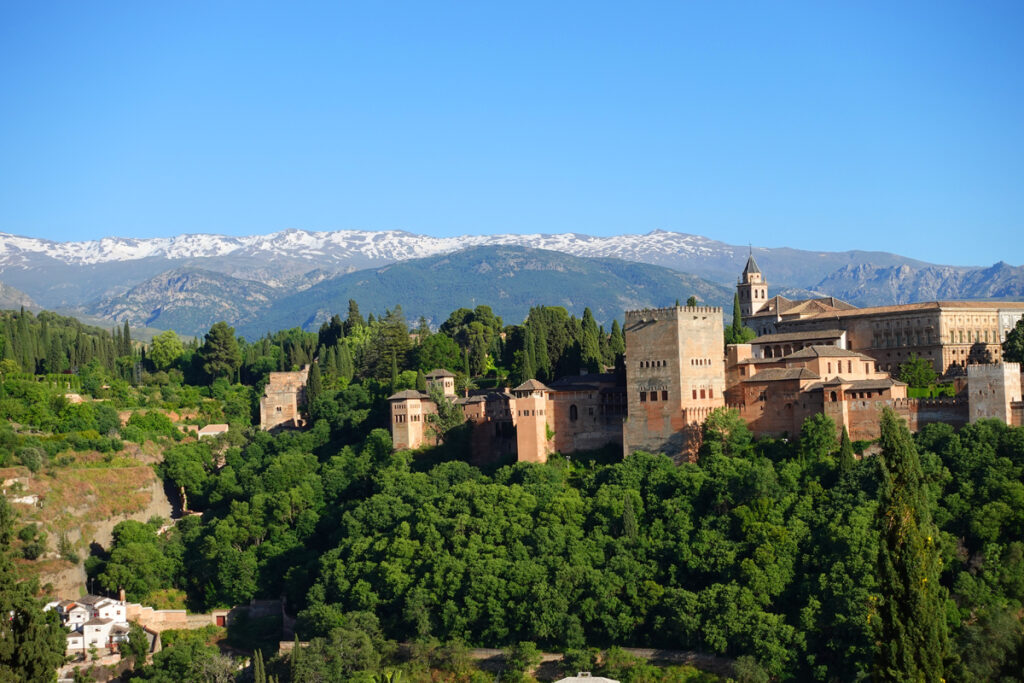
Granada is home to the Alhambra, a UNESCO World Heritage site and one of Spain’s most visited historical attraction. It is incredible, with palaces, gardens, fortress walls, as well as an amazing location looking over the city of Granada.
I tell you all about the Alhambra in this post, covering the highlights and giving you lots of tips. I also tell you about parts of the Alhambra complex that are always FREE – a lot of people don’t know that you can walk in a wander the grounds of the Alhambra, even without a ticket (we’ve lived in Granada, it’s something we do all the time).
Accommodation recommendations: High-end: Áurea Washington Irving (a short walk to the Alhambra), mid-range: Carmen de la Alcubilla del Caracol (beautiful spot, also an easy walk to Alhambra), Budget: Toc Hostel Granada. Many more options in this post: The Best Hotels in Granada (for all budgets).
Why is the Alhambra historically relevant?
The Alhambra was the last stronghold of a Great Muslim empire that at one point included most of Spain and Portugal. In 1492, the last Moorish sultan of Granada (and head of the Nasrid dynasty), surrendered his city and handed over the keys of the Alhambra to the Catholic monarchs Ferdinand II of Aragon and Isabella I of Castile. It would be the culmination of over 700 years of Moorish rule on the Iberian peninsula.
What exactly is the Alhambra?
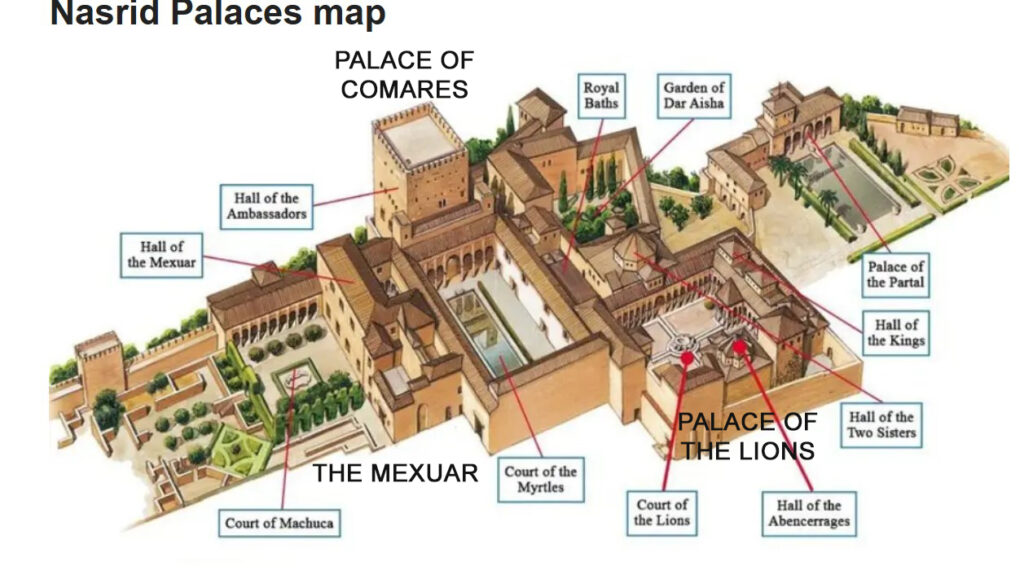
The Alhambra was built by the Nasrid Dynasty in 1232. It was both a palace and a fortress with 1,730 meters (about 1 mile) of walls with thirty towers enclosing a city of about 26 acres. The highlight of the Alhambra are the 3 palaces within the walls: The Mexuar or Meshwar, the Comares Palace, and the Palace of the Lions. These palaces were where the Sultan carried our official functions and also where the royal family lived. After the palaces, the Alcabaza (the fortress part of the Alhambra) is the most impressive part of the complex with its high towers and ramparts. Connected to the Alhambra by a little bridge over a ravine, are the Generalife Gardens which was the summer palace of the Nasrid rulers. There you’ll find gardens, fountains, pools and great views looking at the Alhambra.
When you buy a ticket to the Alhambra, your ticket grants you access to the 3 above-mentioned parts of the complex. I cover them below.
But there are more things that you can see that are totally free. I will cover those further on as well.
The Highlights of the Alhambra
The absolute highlight of the Alhambra are the Nasrid Palaces. They are spectacular.
1. The Nasrid Palaces
The Mexuar
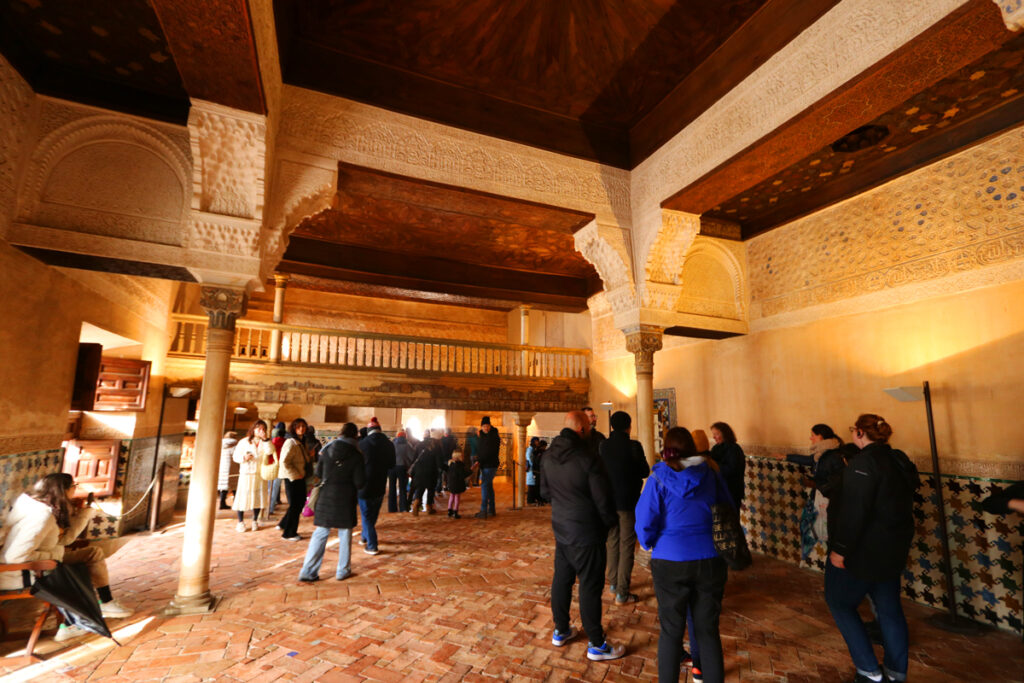
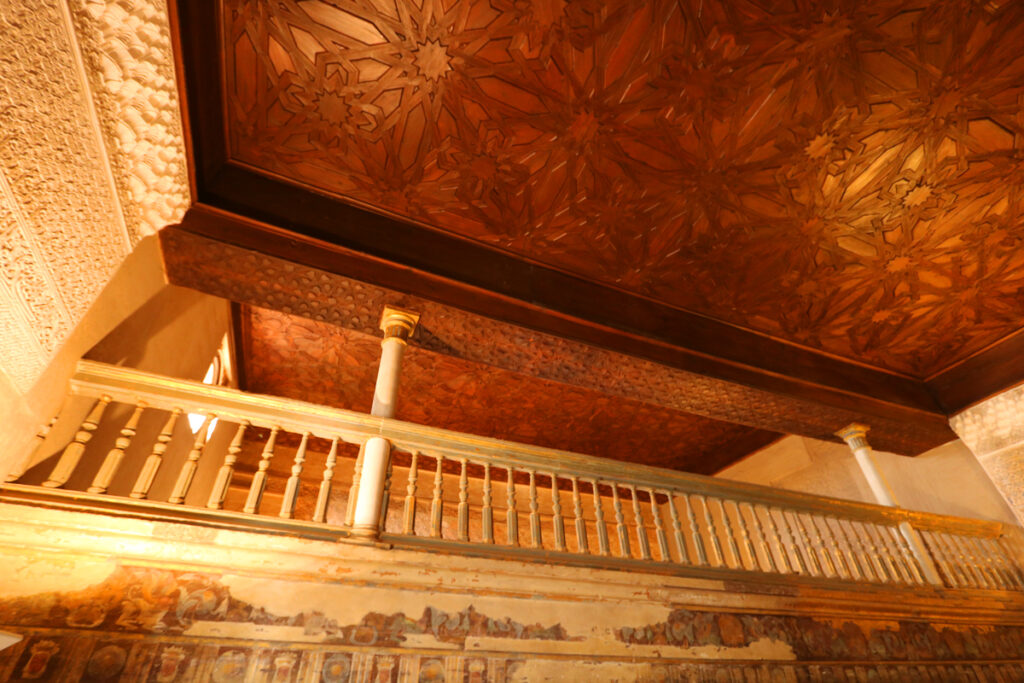
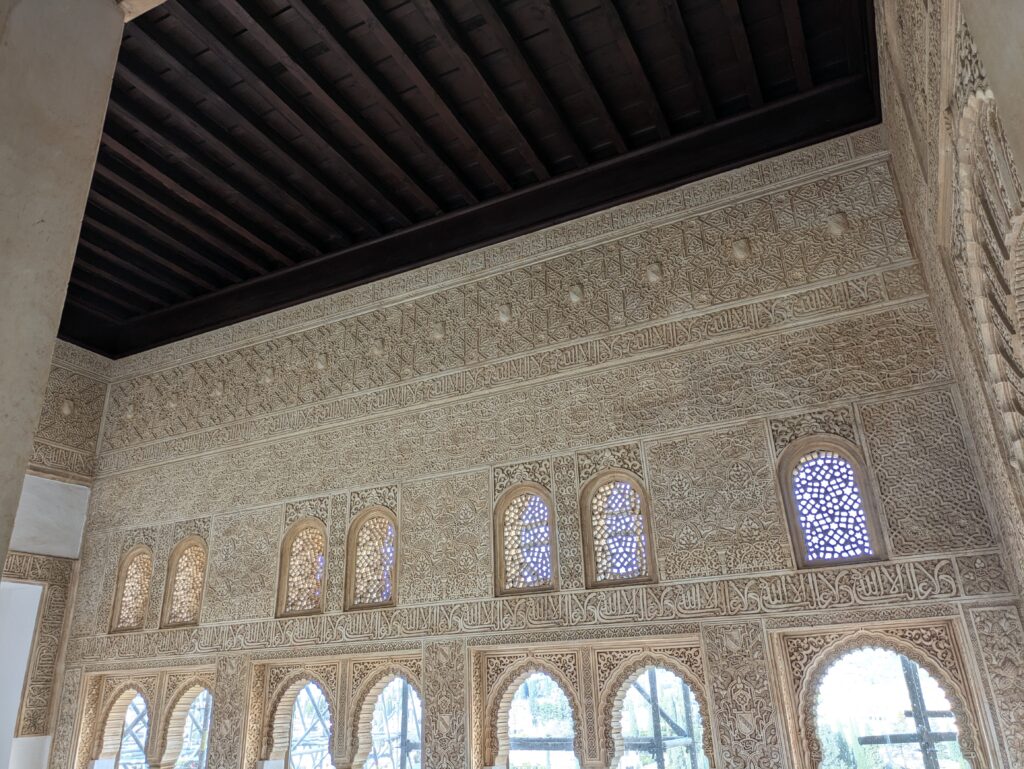
The Mexuar is the first part of the Nasrid Palaces, the place you first enter on your visit. It is the least impressive of the 3 palaces but it’s role was important – it was a space to hold audiences and also to carry out justice.
Palace of the Comares
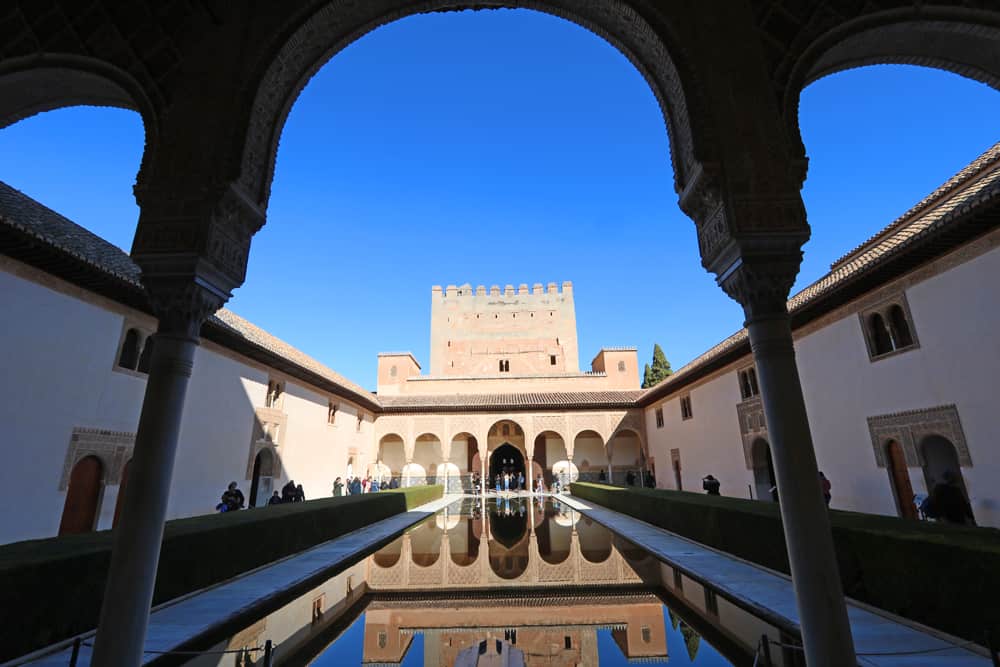
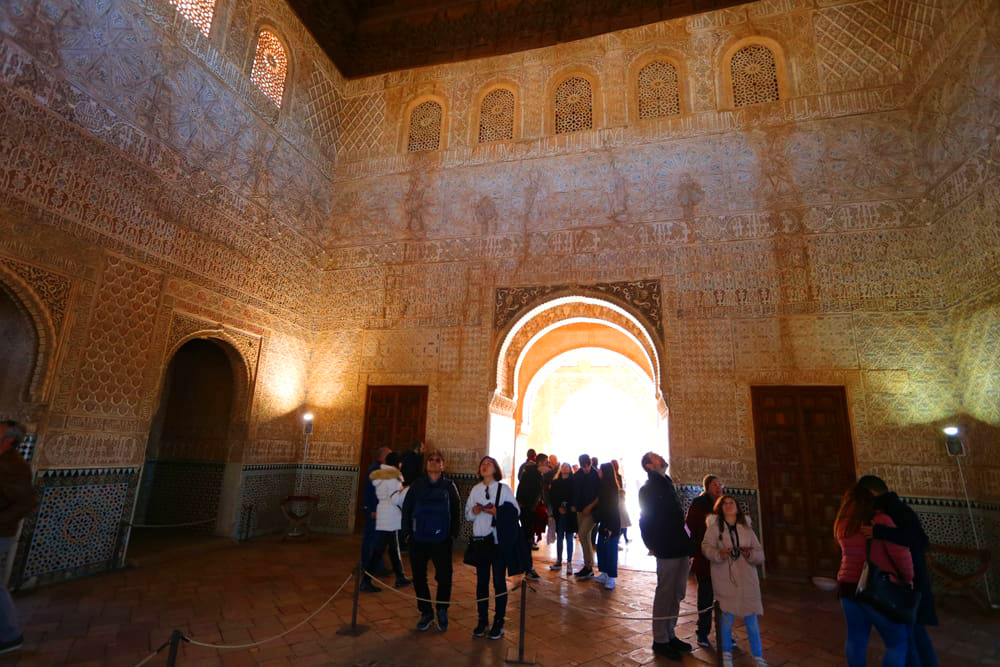
Continuing through a series of rooms and passages, you will enter a large open courtyard. This is the Patio de los Arrayanes (indicated as Court of the Myrtles on the map. Historically, several different names have been used), part of The Palace of the Comares. The Palace is considered the most important of the palaces, being the official residence of the Sultan and place where the throne room was located. The Patio is divided by a pool measuring 34 meters, with 2 marble basins at either end. On the long sides of the Patio are rooms, while on the short sides arches with detailed inscriptions praising Allah.
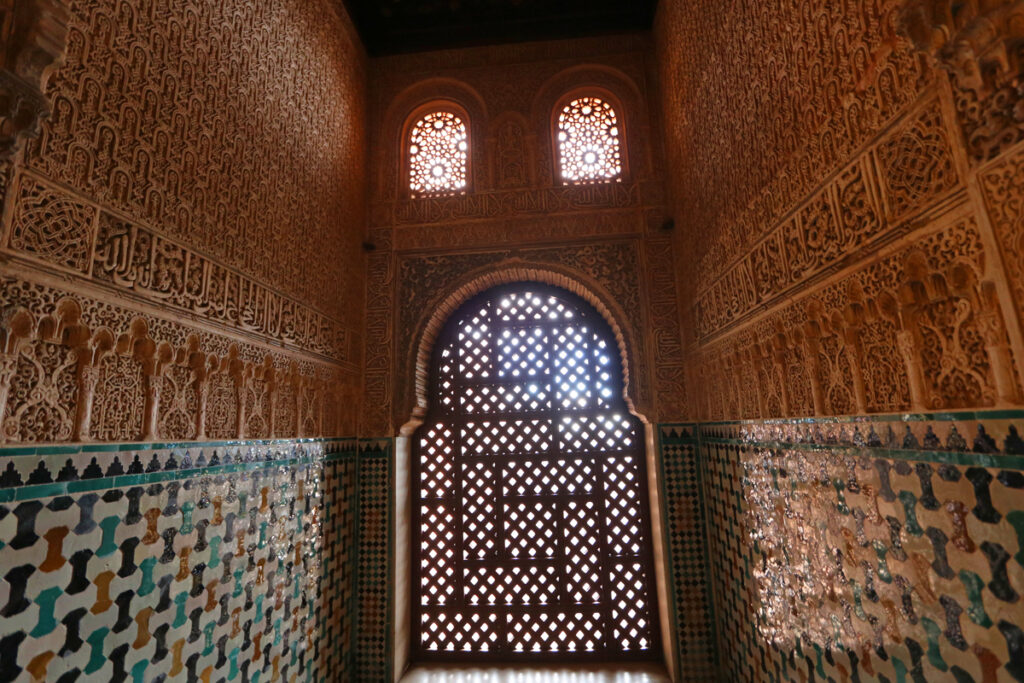
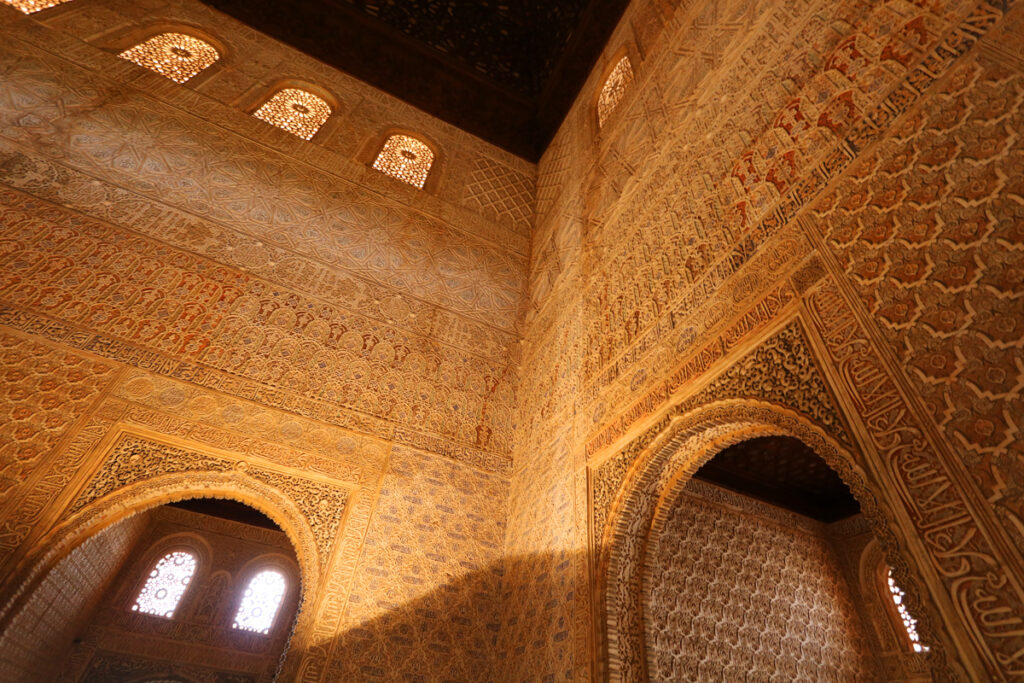
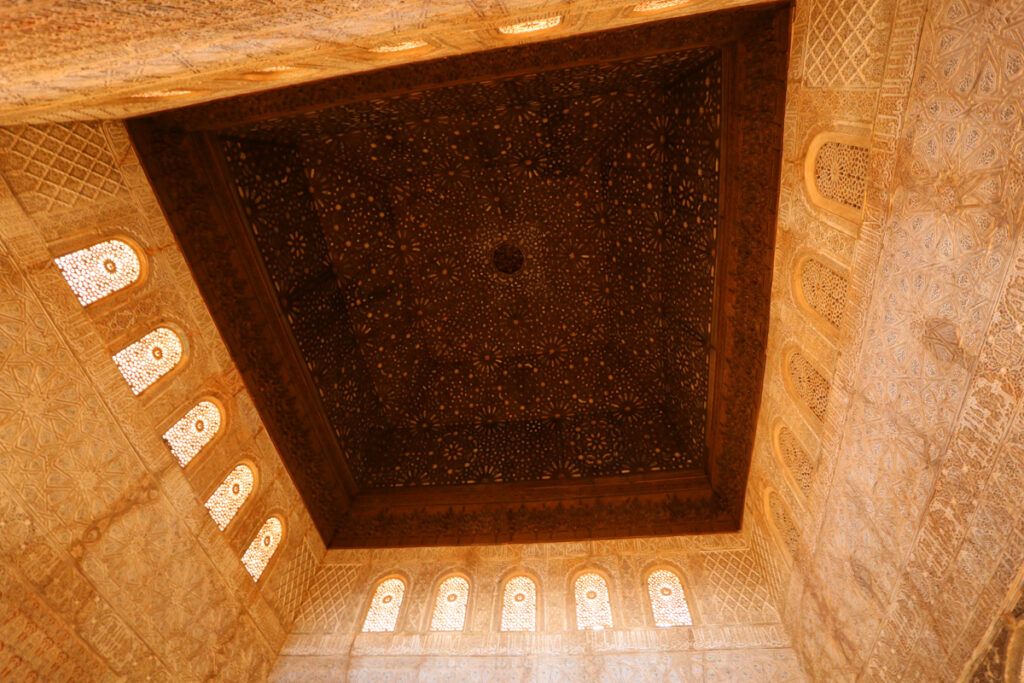
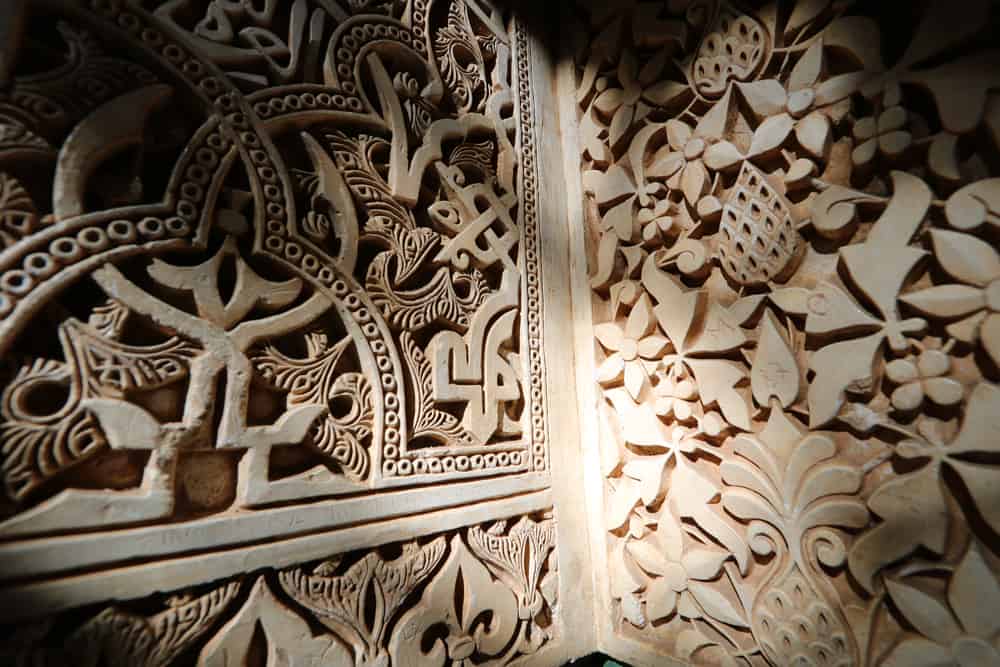
Off the patio is the incredible Hall of the Ambassadors. It is where the throne was and where official receptions took place. The hall is completely covered by decorative inscriptions: niches, arches, walls and dressing rooms all covered by poems dedicated to god. The majestic ceiling is a representation of the Seven Heavens of the Islamic Paradise.
Palace of the Lions
The Palace of the Lions is known as the most spectacular of the Palaces. Constructed in the late 1300’s, they were the private rooms of the Royal family.
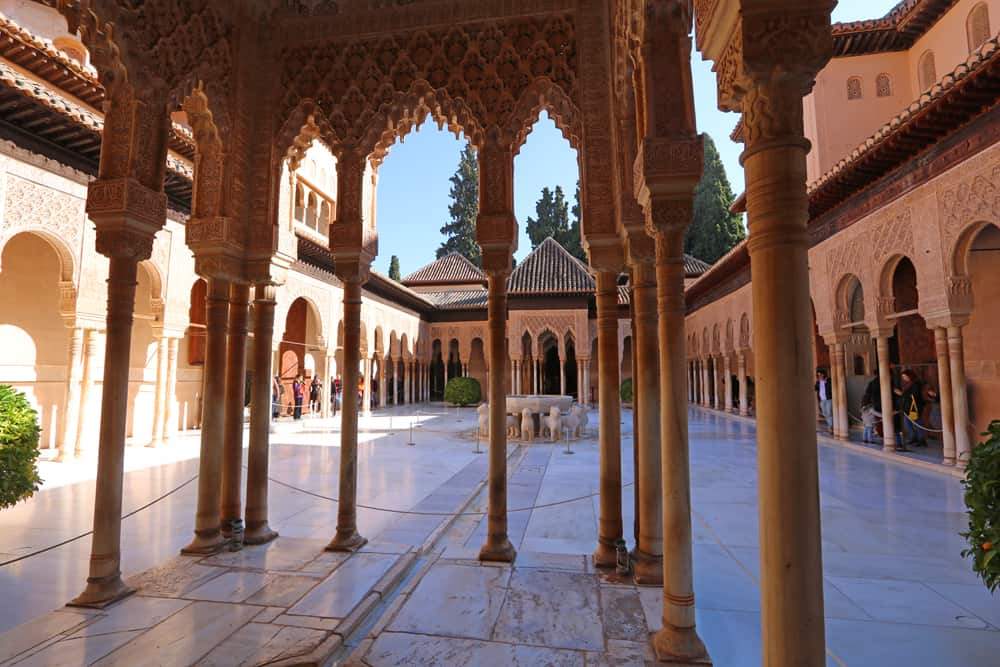
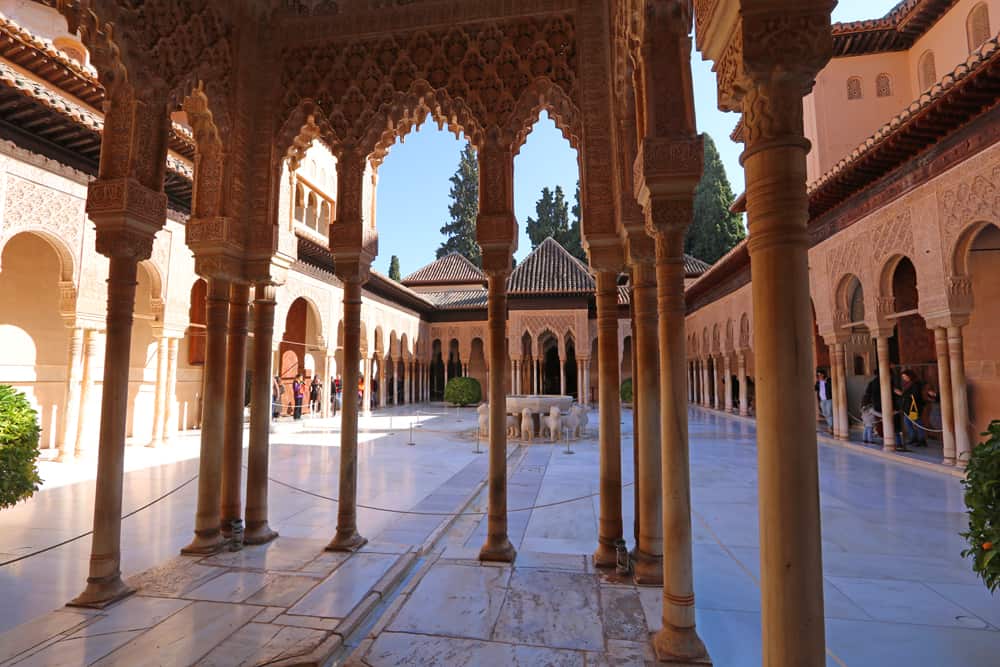
At its center is the Court of the Lions, a large patio highlighted by a marble fountain with 12 lions throwing jets of water. The patio is surrounded by a gallery in the style of a Christian cloister, with 124 white marble columns and decorated arches.
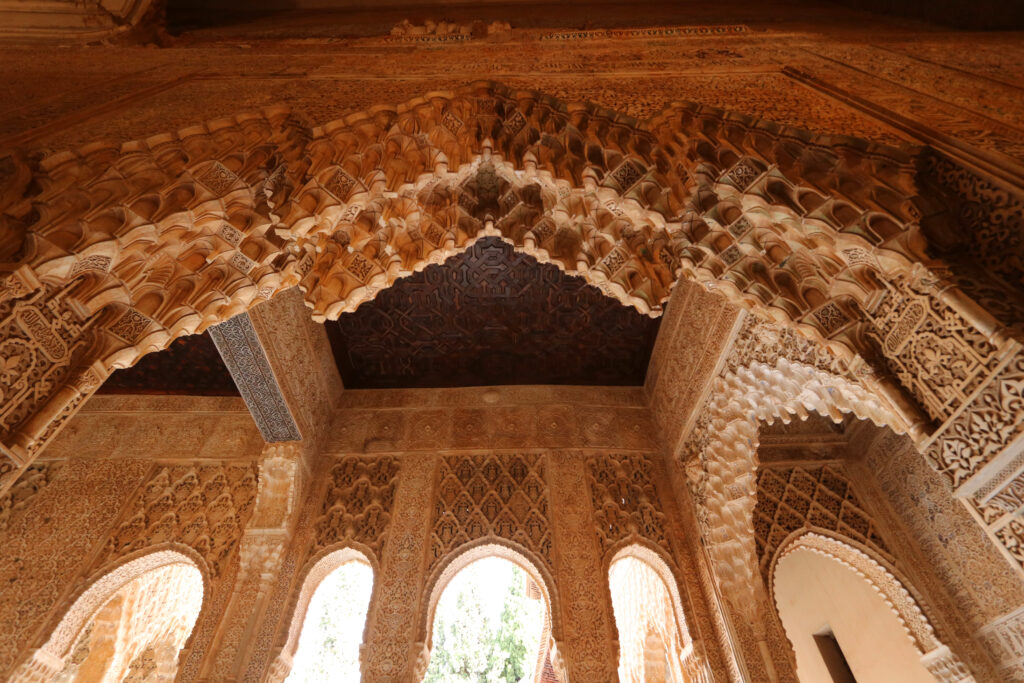
Off the Patio are several rooms, the most spectacular being the Abencerrajes room. This was the sultan’s bedroom. On the sides are bedchambers, with arches exquisitely decorated, blue capitals and painted ceilings.
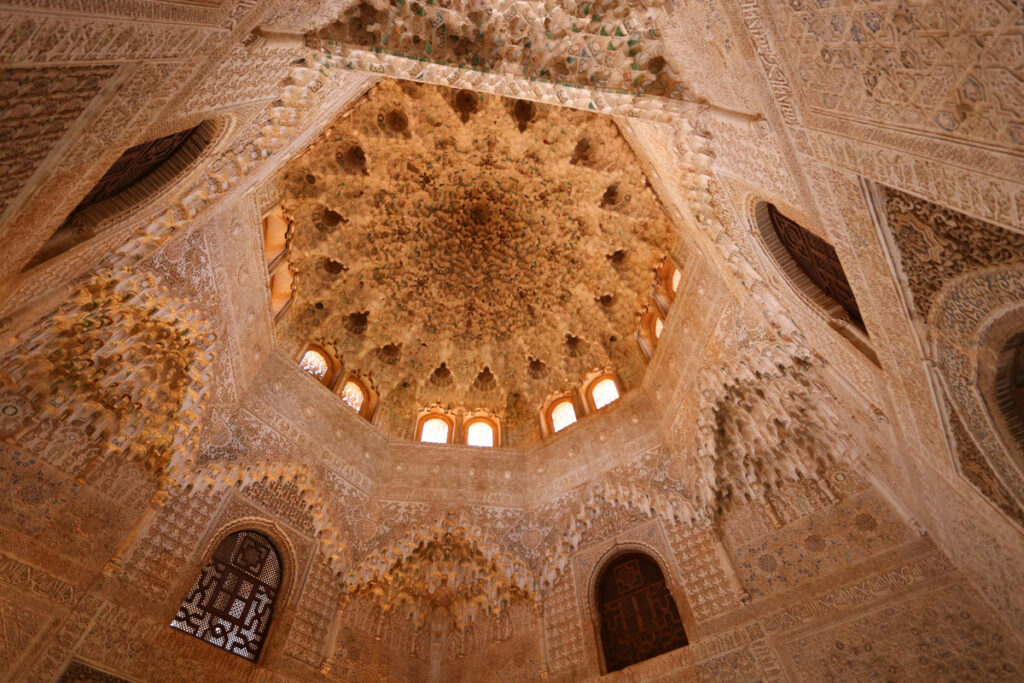
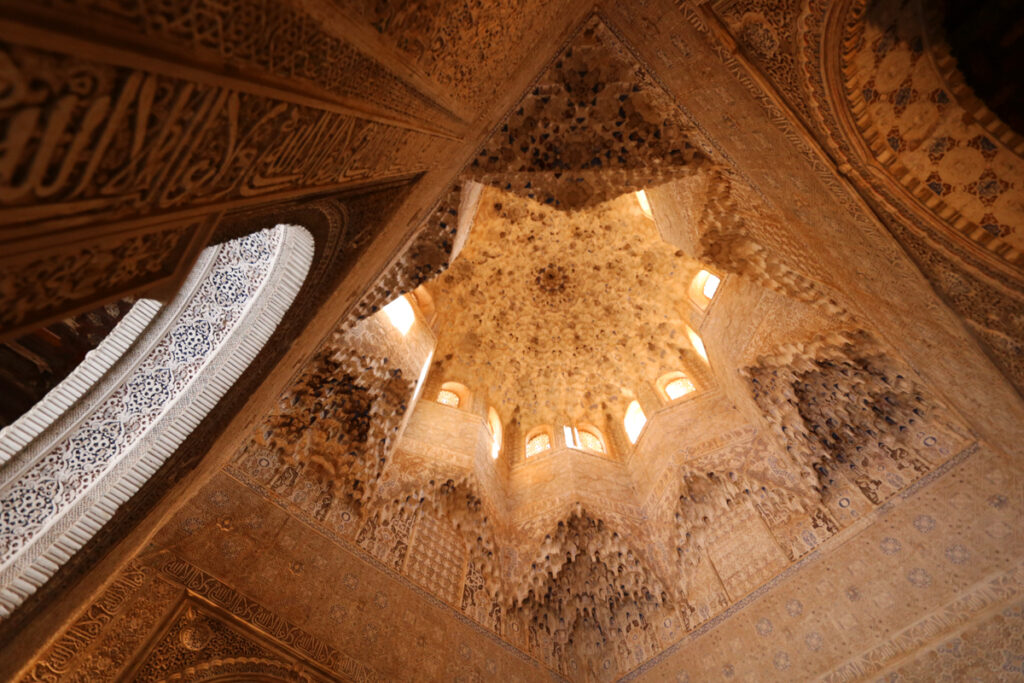
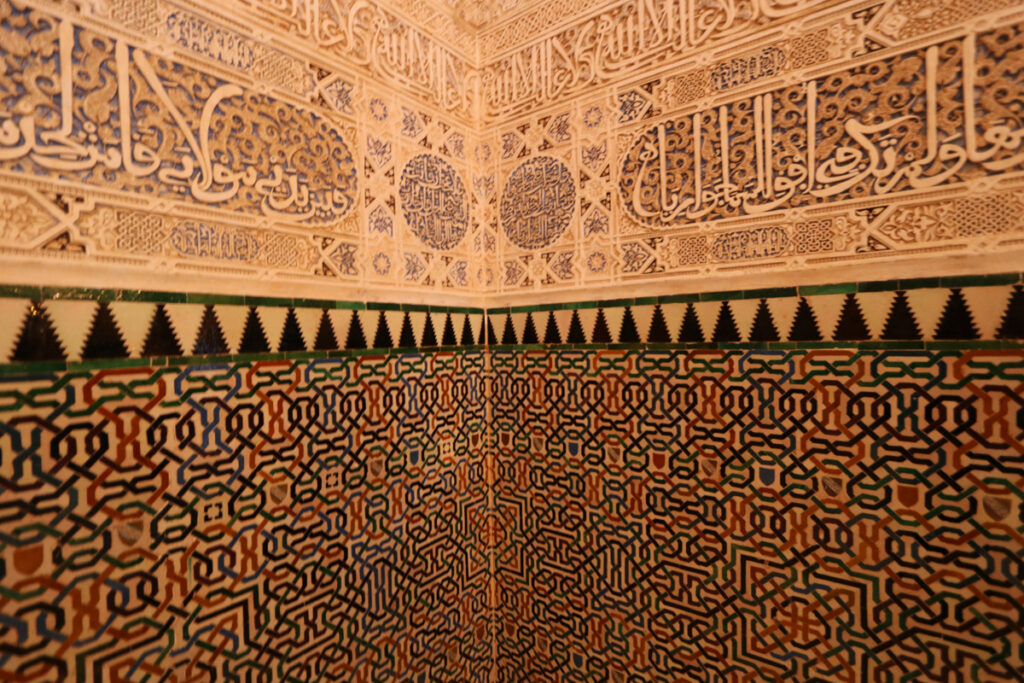
Also spectacular is the Sala de Dos Hermanas (the room of the two sisters). This hall was the center of a series of rooms that served as the residence of the Sultana and her royal family.
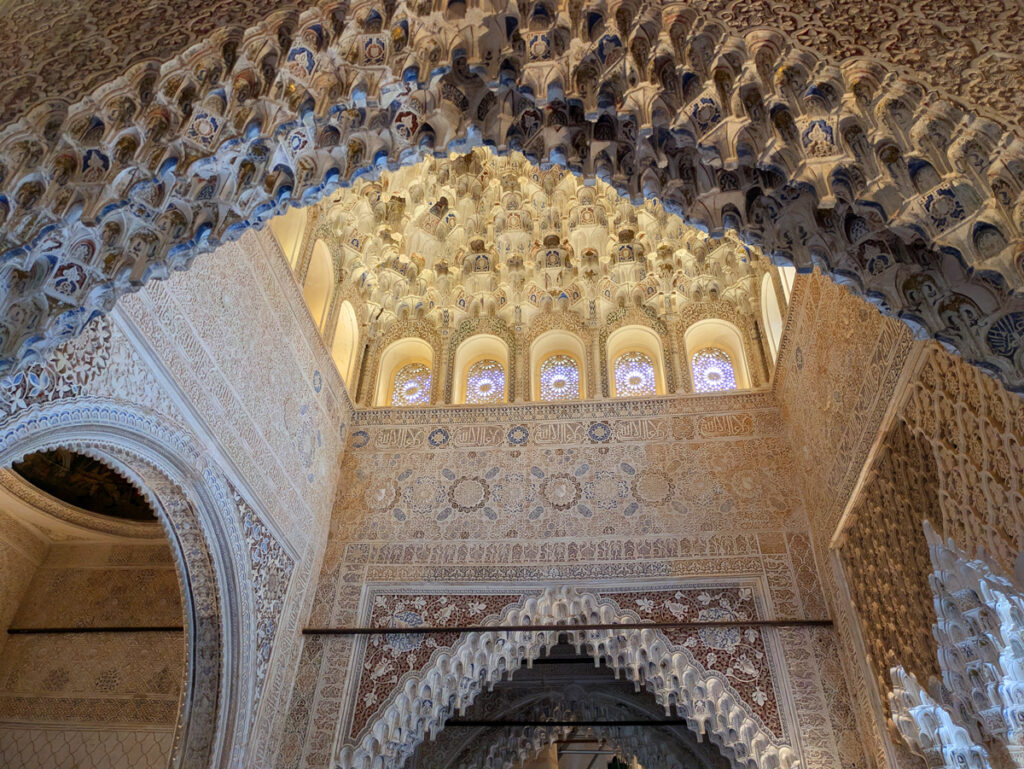
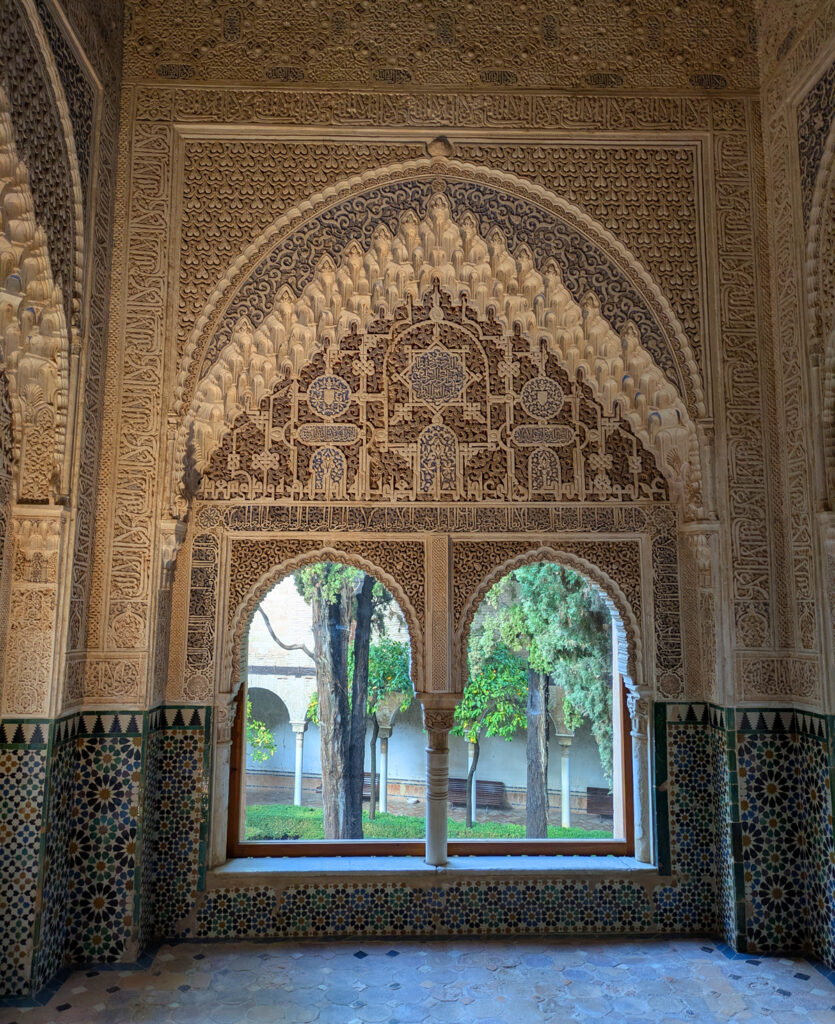
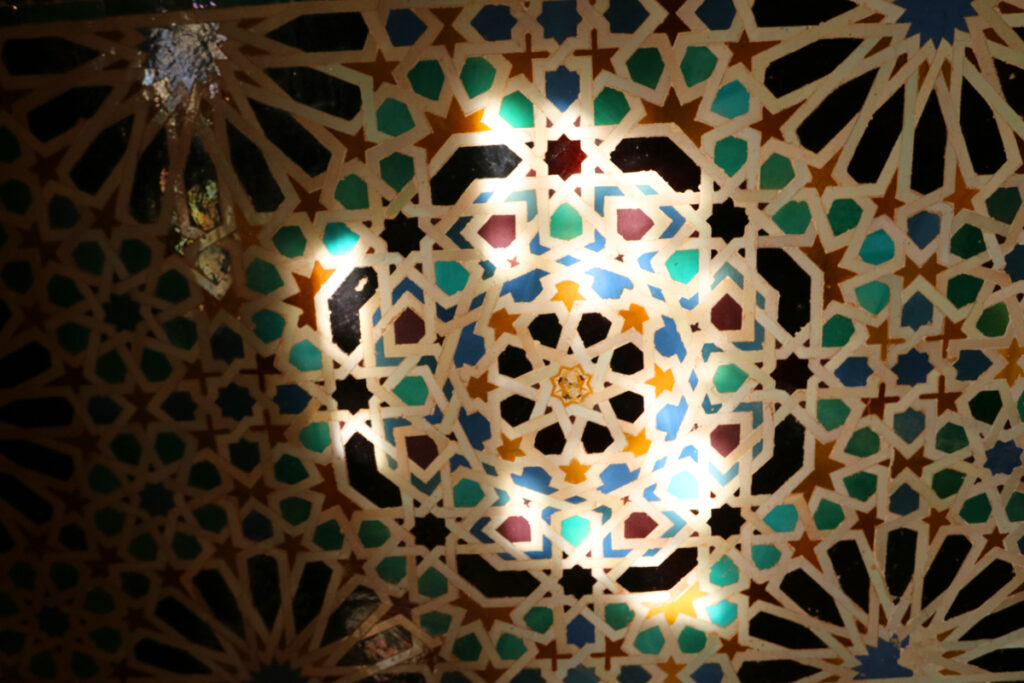
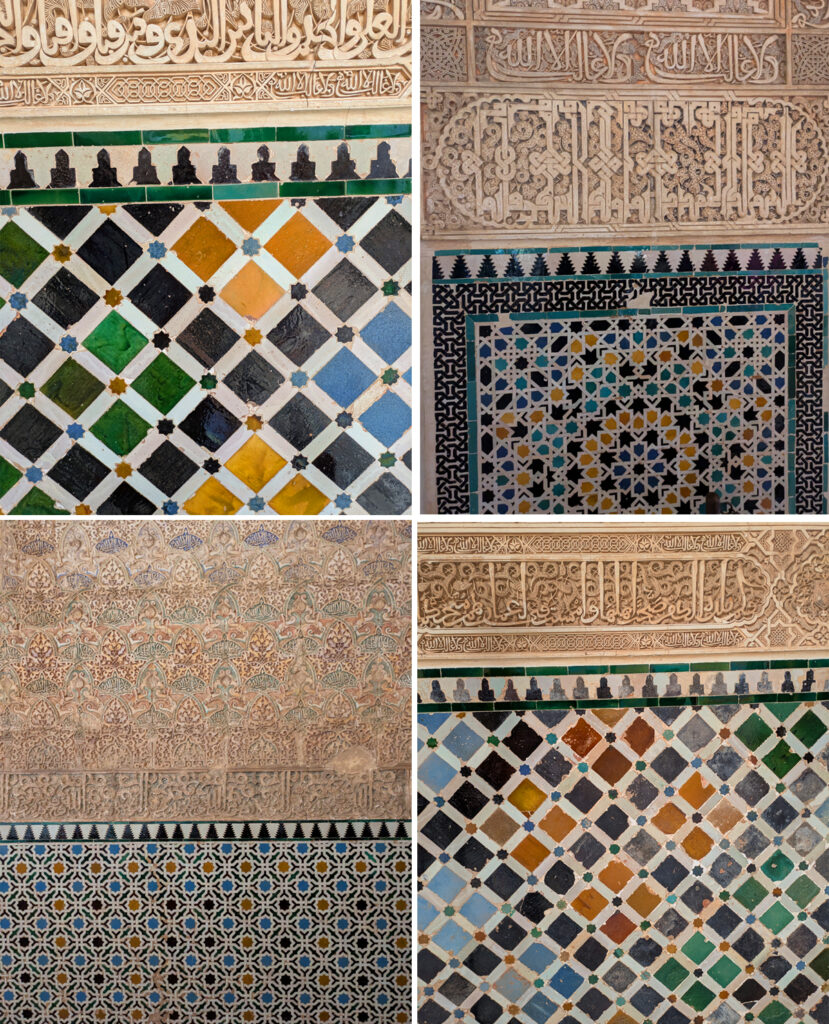
The above are the highlights of the Nasrid Palaces but cover only part of what there is to see – also included in the grounds are gardens, lookouts and many rooms, pools as well as other structures. And everywhere you look you’ll see intricate inscriptions and colourful azulejos (tiles).
2. The Alcazaba
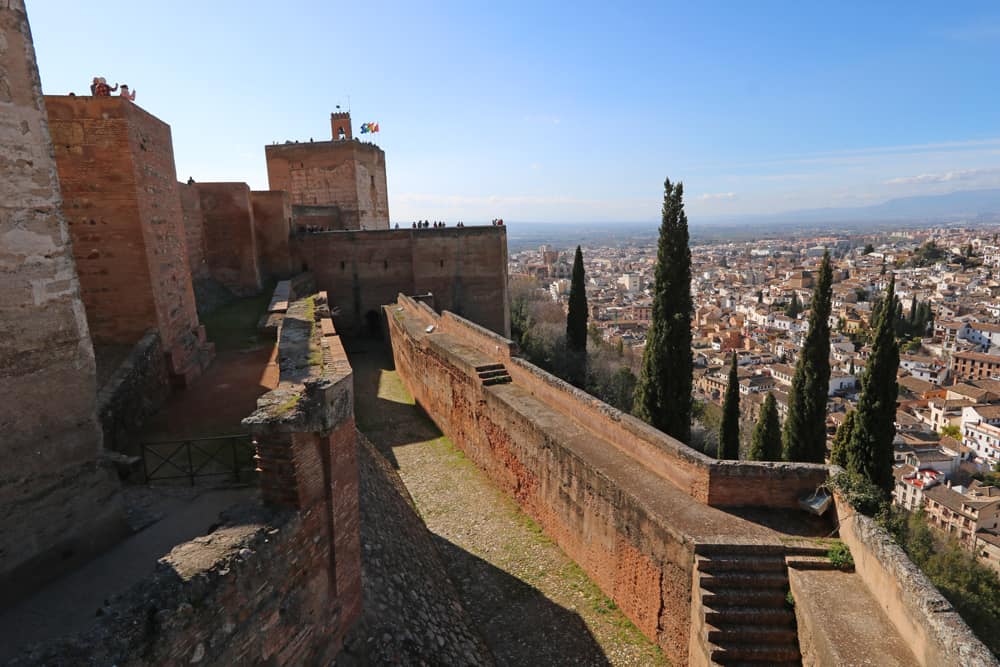
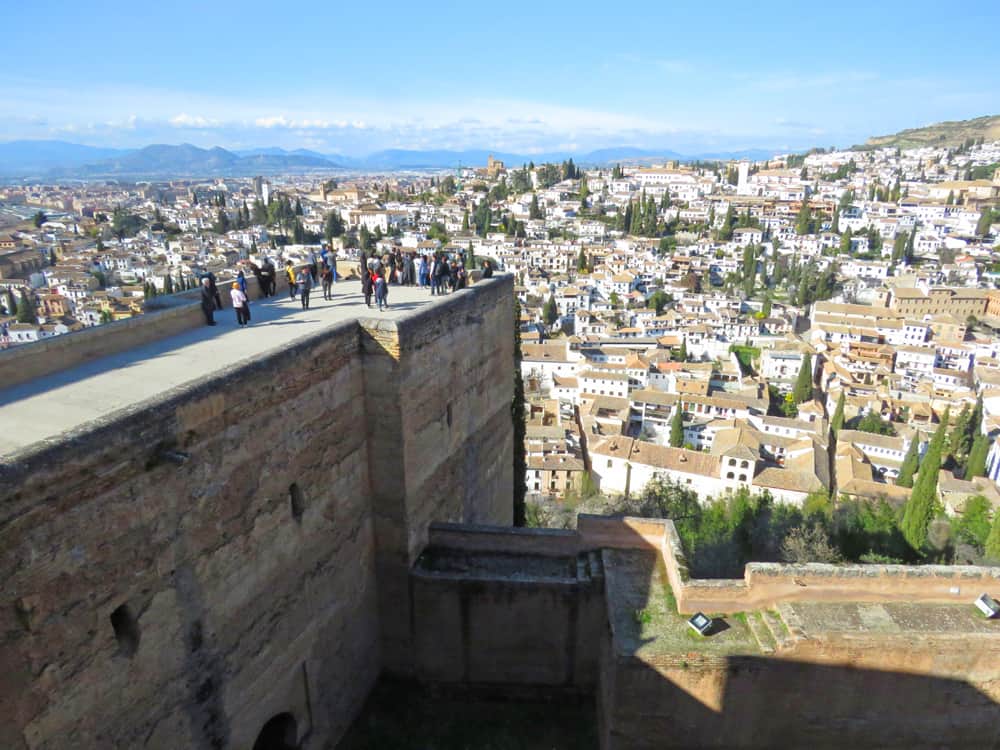
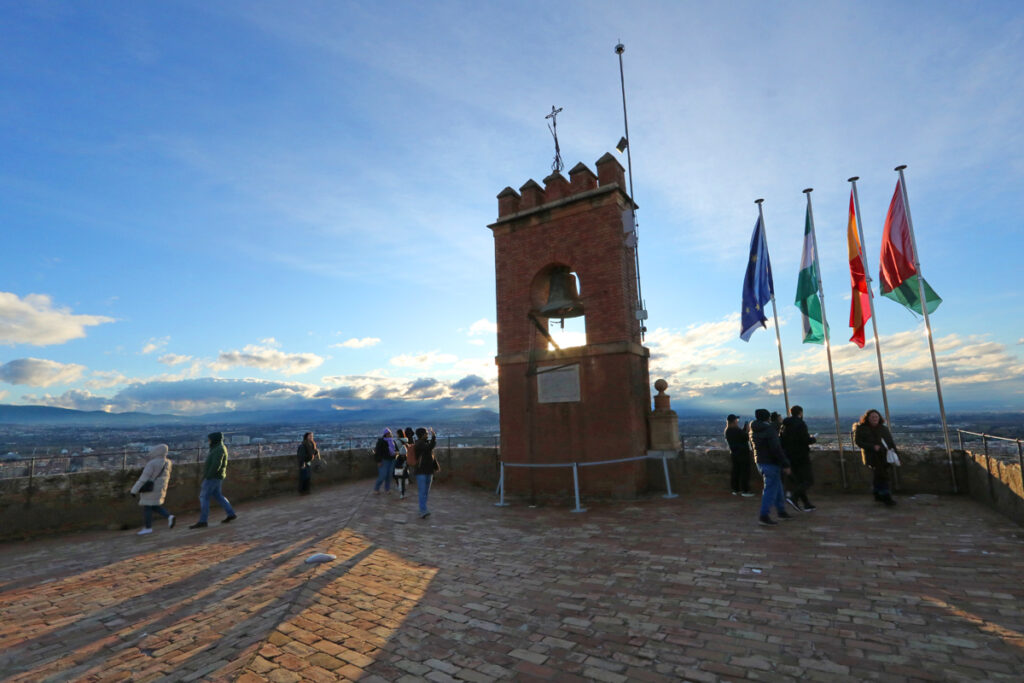
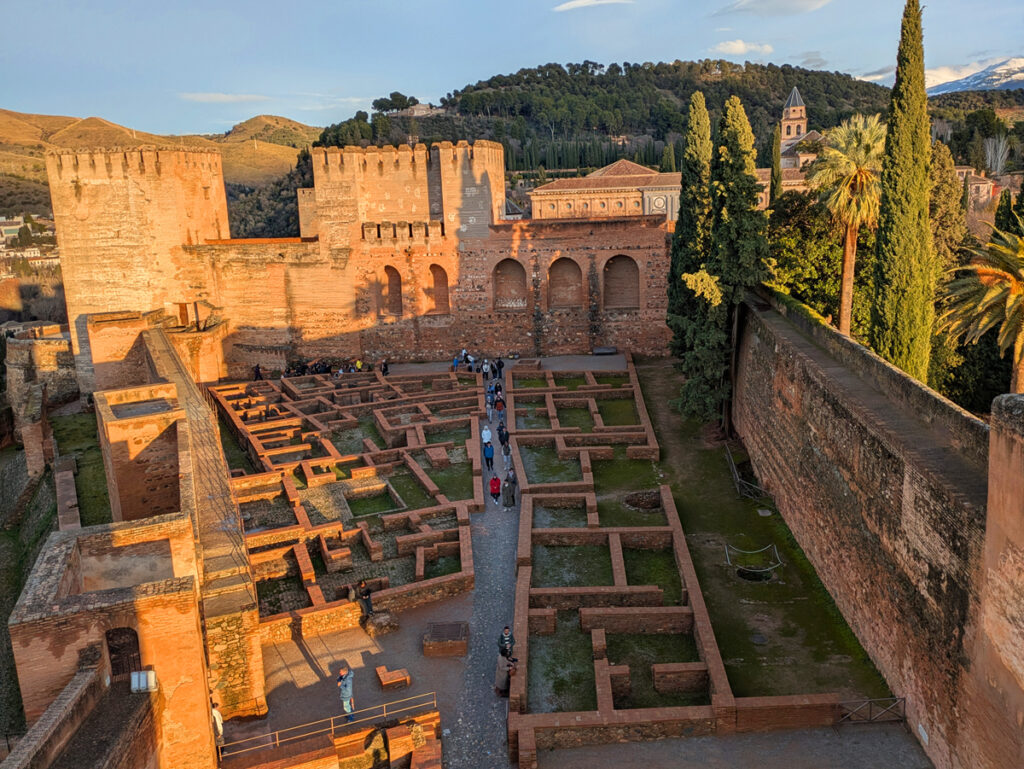
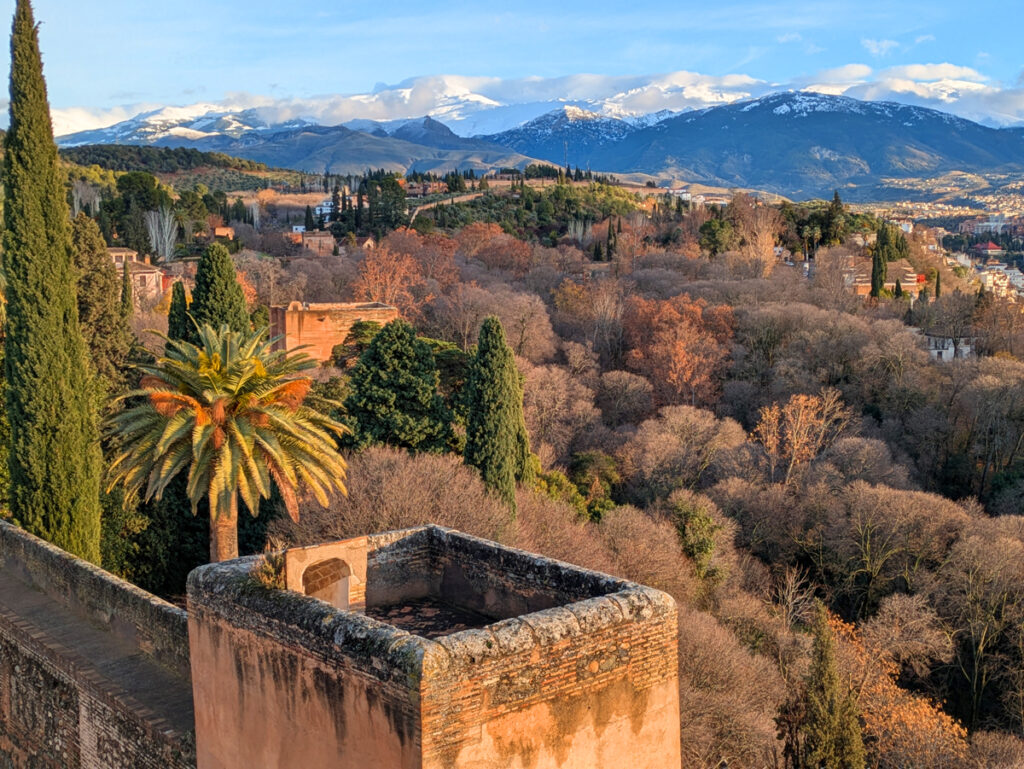
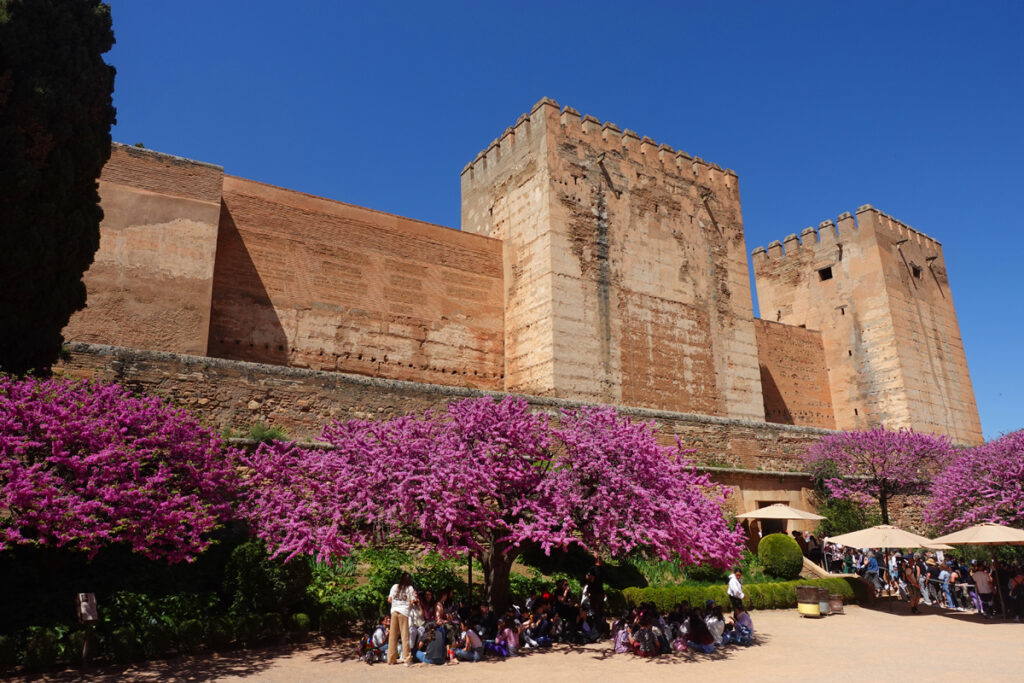
The Alcazaba (fortress) takes up a large part of the Alhambra complex and is the oldest part of the Alhambra. What is remaining today are the fortress walls and 3 towers, the highest being the Torre de Homenaje. The views over the city and Sierra Nevada are incredible.
3. Generalife Gardens
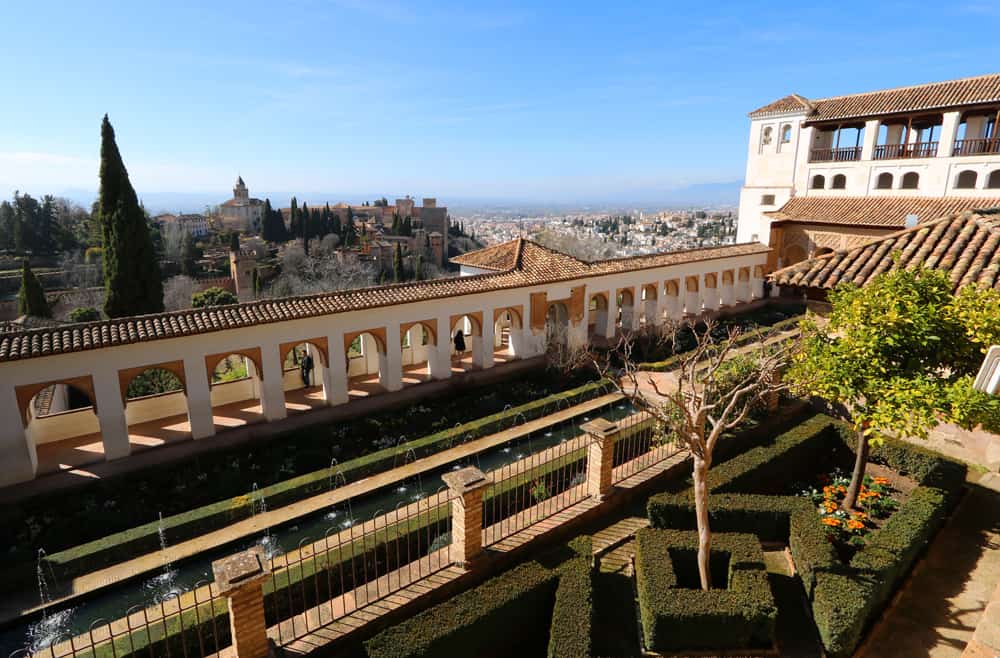
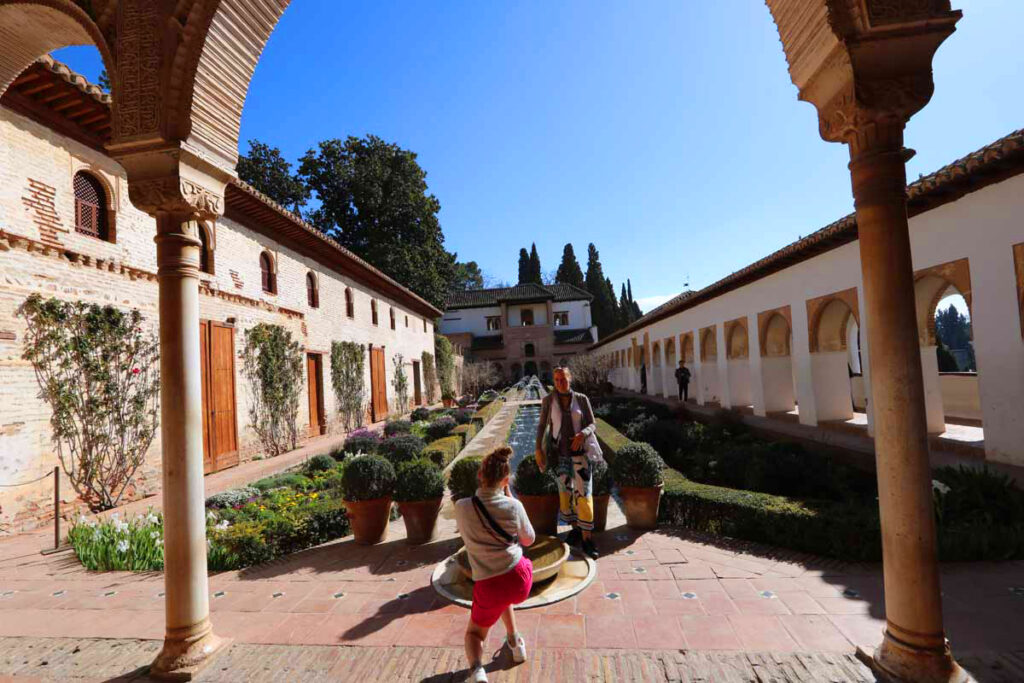
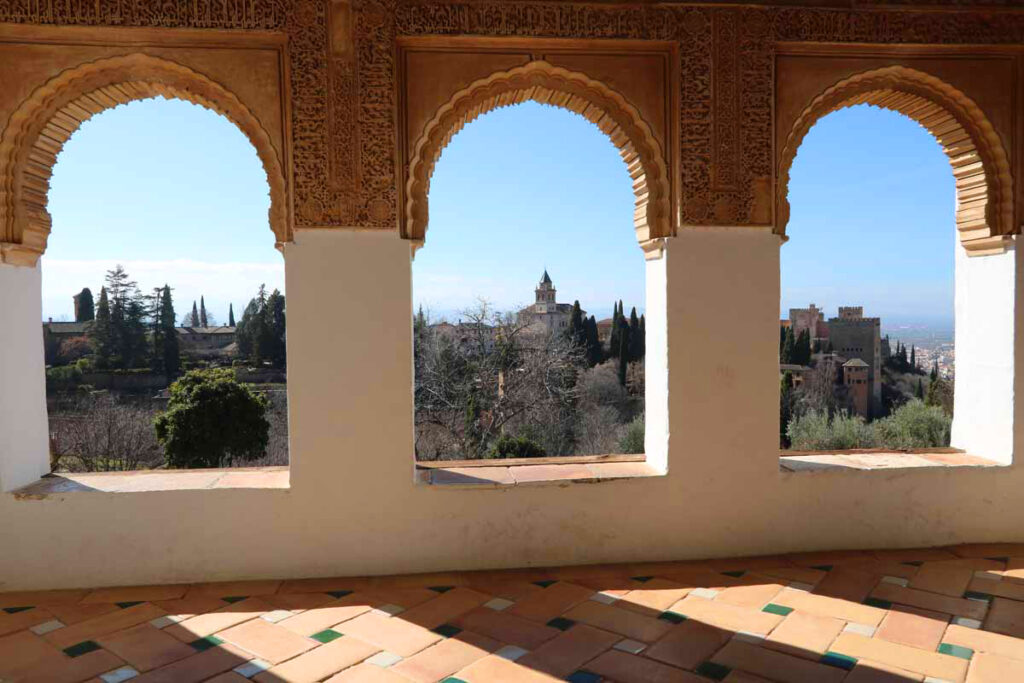
I mentioned that when you buy your ticket to the Alhambra that you get access to the Nasrid Gardens, the Alcazaba and the Generalife Gardens. The buildings of the Generalife Gardens became the summer palace of the Nasrid rulers when they wanted to get away from the official affairs of the Palace. Here you’ll find gardens, fountains, pools and great views looking at the Alhambra.
4. More Alhambra highlights (Free)
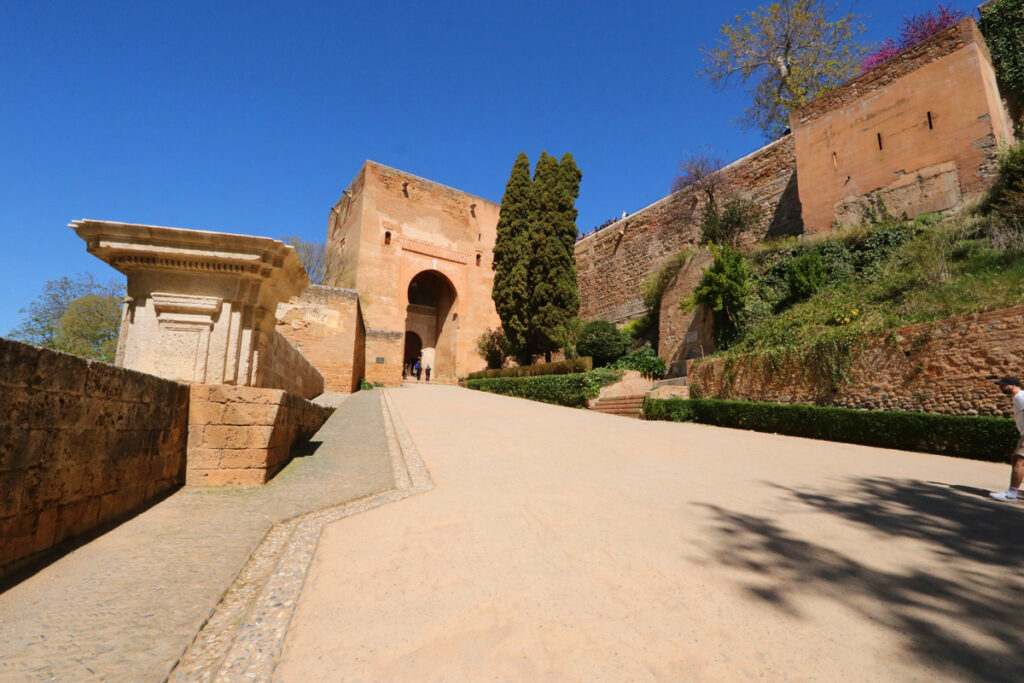
Most people don’t know that you can access the Alhambra and see many of it sights for free. Firstly, enter at the Puerta de la Justicia – it’s the easiest to access from the city center (a 15 minute walk from Plaza Nueva). It’s a beautiful walk and the gate is gorgeous. Just walk in, no problem. There might be a security check (especially around Christmas time) but otherwise no ticket is necessary to enter.
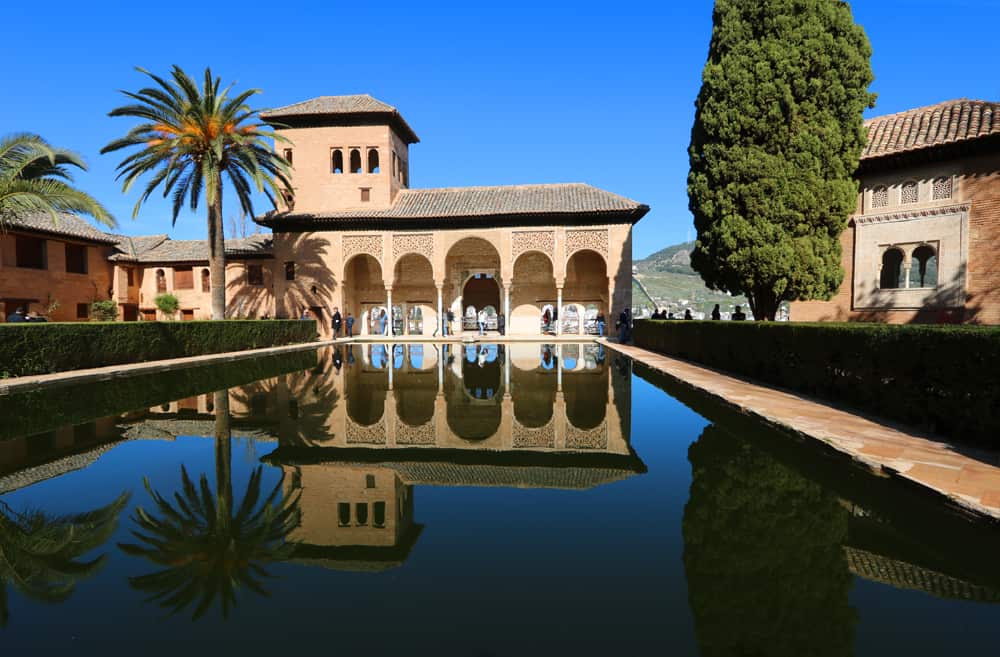
Free highlights: the Palace of Carlos V, the Arab Baths and the church of Santa Maria. You can also go to Granada’s Parador for a coffee, drink or lunch.
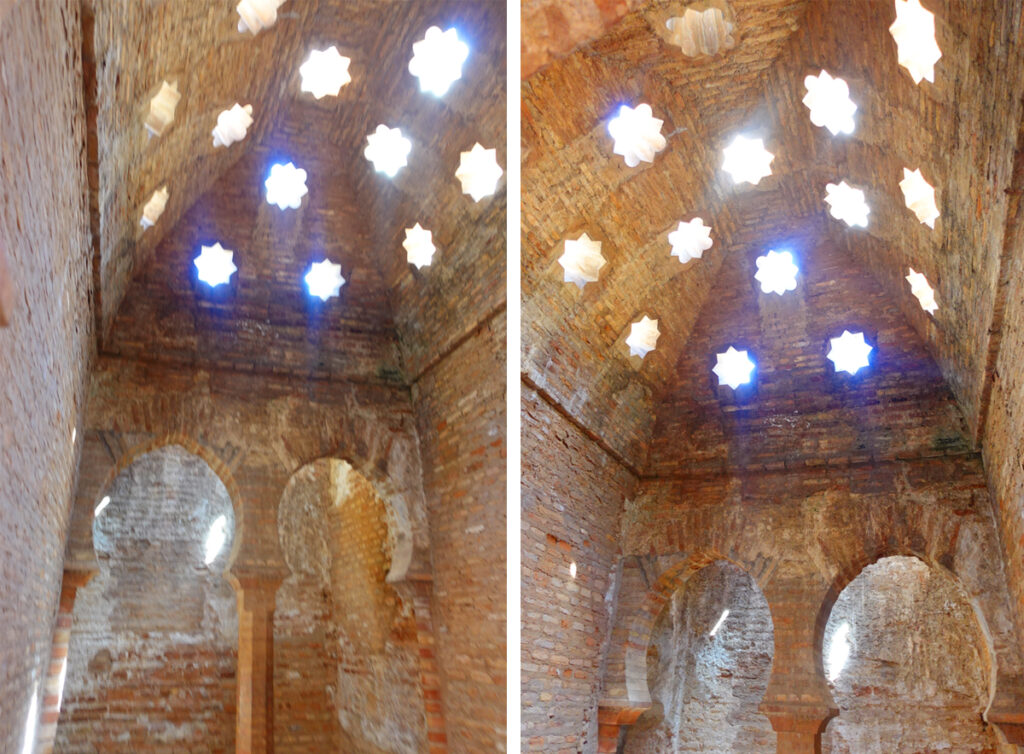
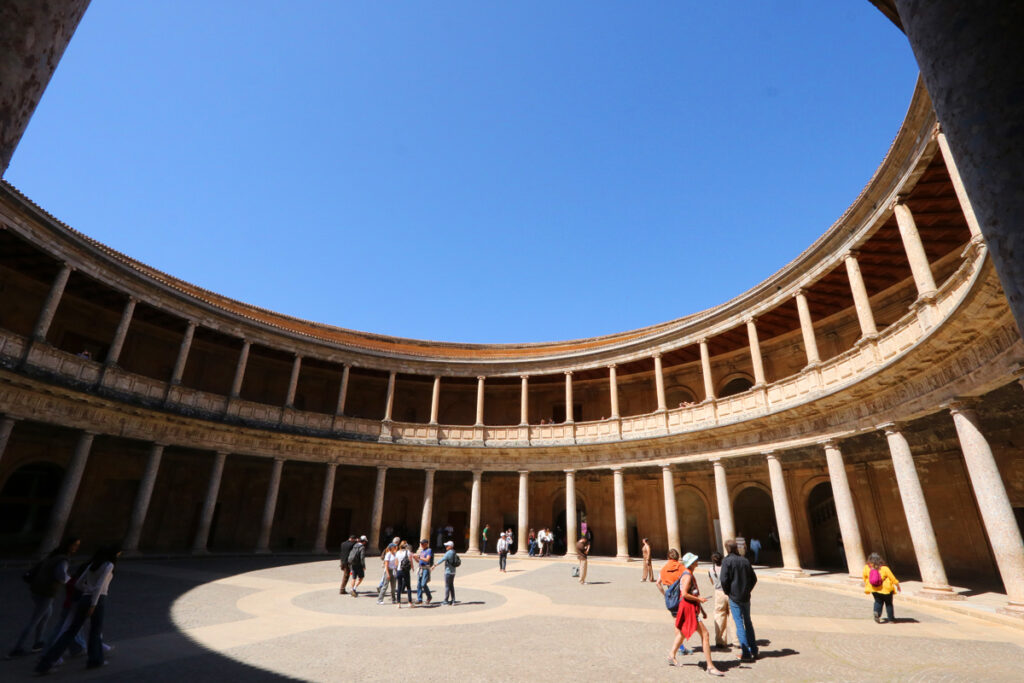
And when you’re done, walk the scenic route outside the Alhambra to get back downtown.
Tips and practical information
You have to book your tickets far in advance to get into the Alhambra. I recommend at least 2 weeks in advance using the official website. You have to choose the time that you want to see the Nasrid palaces (the highlight of the Alhambra) and you will have to stick to that time when visiting. Note however that once in the palaces you won’t be limited in the amount of time you can explore them (we spent 90 minutes in the palaces).
When booking, take note that 1) the Alhambra opens at 8:30 am 2) the Nasrid palaces are at least 20 minutes walk from the main gate. Better to enter at the Puerta de la Justicia. If you haven’t pre-purchased your tickets you have a couple of other options (see this post).
Note: Unlike many attractions in Granada, there are no FREE times for entrance to the paying parts of the Alhambra. The only exception is if you are a resident of Granada, in that case you can get in for free. All in info on that here. You’ll have to provide ID as well as a recent padron showing you are registered in Granada.
Important: bring your identification document that you indicate on your ticket purchase. You might have to show it (it’s completely random…but I was asked to show my passport at one of the many checkpoints).
Take the C30 or C32 bus to get to main gate. You can take the bus from the plaza Isabel la Catolica in Granada (the bus stop is up the street from the fountain on the right hand side). The bus takes about 20 minutes to take you to the main gate (note that the main gate is at the far end of the Alhambra, the furthest end from town). Alternatively, you can walk from town (about 20 minutes from Plaza Nueva) and enter at the Puerta de la Justicia gate which is closest to the Nasrid palaces (I have a map down below to help you).
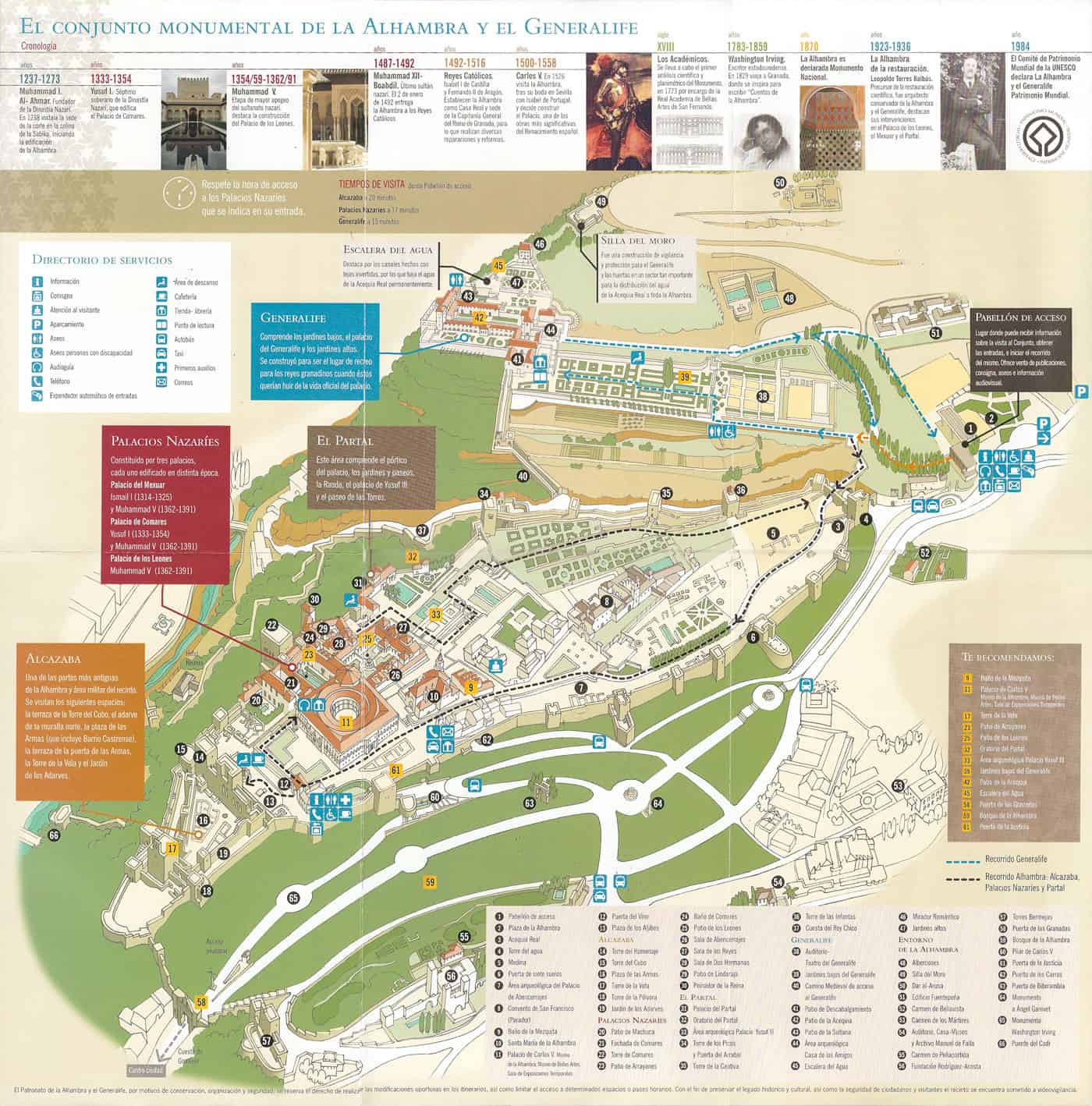
Note: you don’t have to print your tickets (contrary to what a lot of websites will tell you). The electronic copy of the ticket that you get from booking on the website is sufficient (it will be scanned many times during your visit). If you don’t have a modern phone, you’ll have to print your tickets in advance or access the Alhambra at the main gate where you can get the ticket printed.
You need a full day to properly see the the whole of the Alhambra. The highlight without a doubt are the Nasrid palaces. But everything is stunning, from the Generalife Gardens to the Alcazaba to the Carlos V palace…
Want to take a tour? They take care of all the arrangements for you and you’ll get lots of in-depth information on all aspects of the Alhambra. This tour is one of the few that includes the Nasrid Gardens as part of the Alhambra tour. Again, book early because tickets go fast.
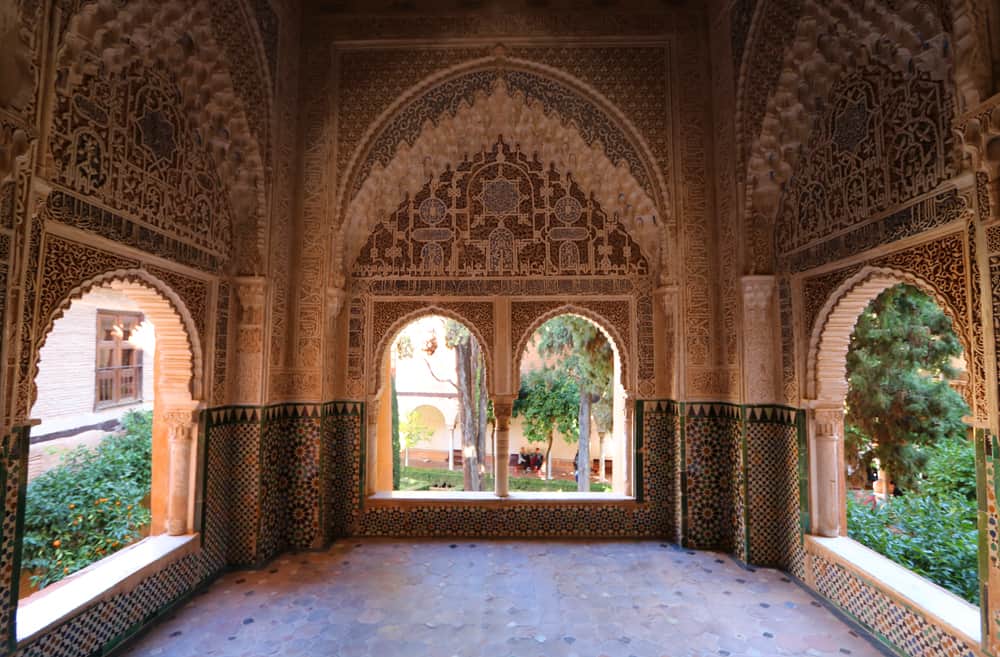
Suggested itinerary if visiting the Alhambra on your own: choose a time around noon to see the Nasrid palaces. Arrive early at the main gate, explore the Generalife Gardens. Cross the little bridge into the Alhambra. Walk on the trail to the left, seeing the hedges and gardens along the way. Go to the Nasrid Palaces for your reservation. If you’re early, explore the Carlos V Palace right next to it (also home to extensive museum exhibits). Show up about 10 minutes early for your Nasrid palace appointment time. You’ll probably be exploring the palaces for the next 90 minutes or so. You might want to wander the gardens around the exit of the Nasrid Palaces. Next you should explore the Alcabaza, the fortress part of the Alhambra. The fortifications are impressive and the views over the city incredible.
When you’re done, exit the Alhambra at la Puerta de la Justicia gate (which is itself very impressive). Outside you’ll see the Pilar de Carlos V (a beautiful fountain). Follow the trail into Granada (you’ll get to Plaza Nueva in about 20 minutes).
Related: 2 Days in Granada

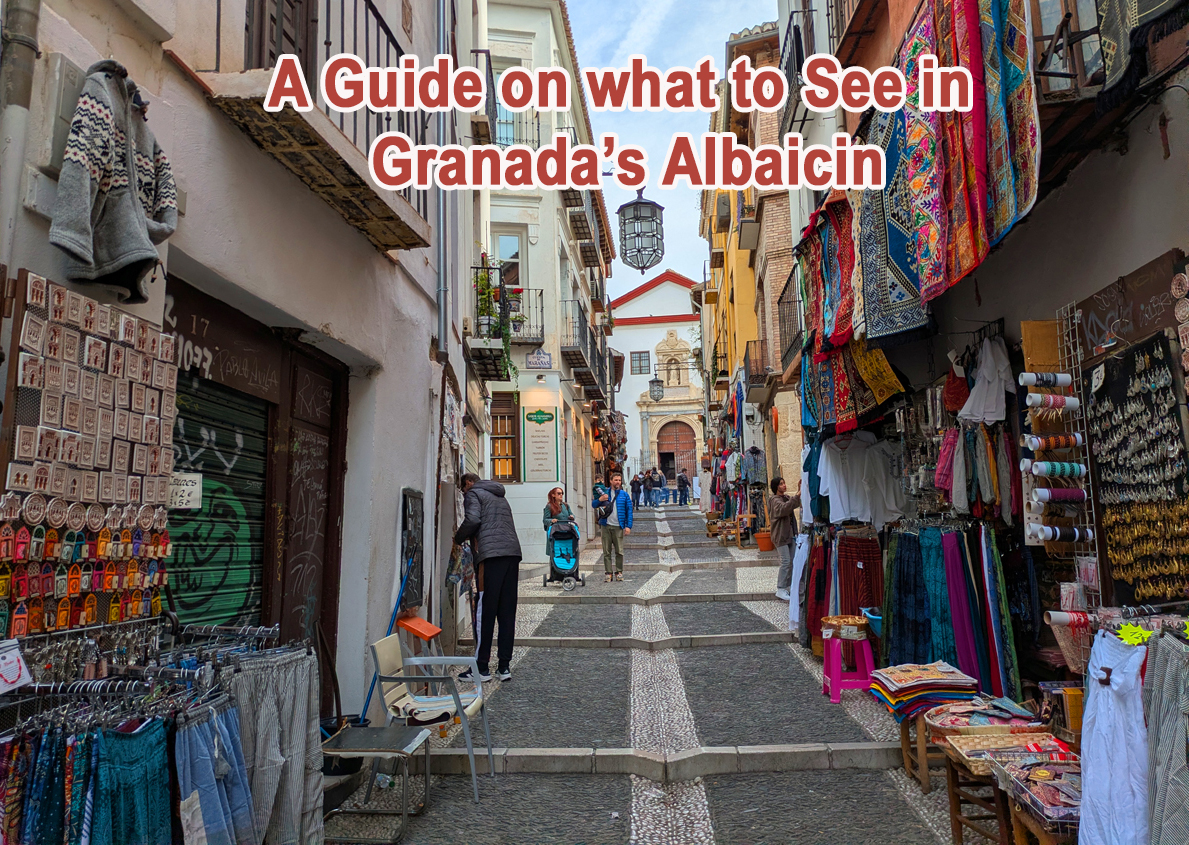
Related: A Guide on what to See in Granada’s Albaicin
Related: The Best Paradors in Spain




I lived in Seville over fifty years ago and did not have to wait to enter the Cathedral. The Alhambra was also a walk up tour which was magnificent. The people make any visit memorable. My guitar teacher was of the Ibarra family. A friend did research in the library of Columbus. Seville is remarkably like the city I grew up in – Tampa FL. Thank you for blogging.
Wouldn’t it be great if we could all got back in time to 50 years ago? So much fewer tourists everywhere.
Sorry, I’m not familiar with the Ibarra family (?)